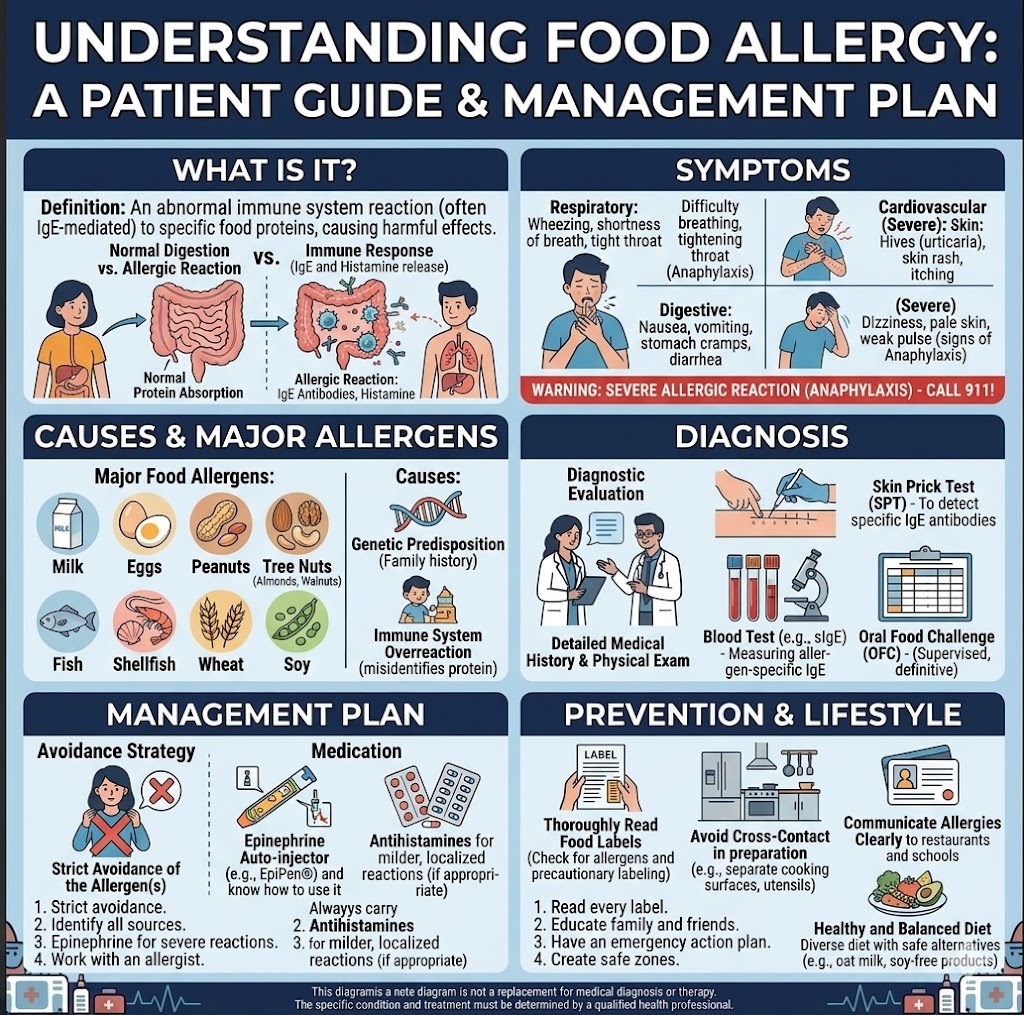
A food allergy is a serious immune system reaction that occurs shortly after eating a specific food. Your immune system mistakenly identifies a harmless food protein as a threat, triggering a protective response. Even a very small amount of the allergy-causing food can lead to symptoms, ranging from mild discomfort to a severe, life-threatening reaction called anaphylaxis.Food allergies affect a significant number of people, including an estimated 8% of children under five and up to 4% of adults. While there is no cure, some children do outgrow their food allergies as they get older.It is important to distinguish a food allergy from a food intolerance. A food intolerance typically involves the digestive system and causes less severe symptoms like stomach upset, without involving the immune system or posing a life-threatening risk. With an intolerance, you might be able to eat small amounts of the food or prevent symptoms with aids, which is generally not safe with a true food allergy.When you have a food allergy, your immune system creates special antibodies (immunoglobulin E or IgE) to recognize the specific food protein (allergen). The next time you consume that food, these IgE antibodies signal your body to release chemicals, such as histamine, into your bloodstream, which cause allergic symptoms.
Understanding the Condition
Understanding Food Allergies: A Guide for Non-Medical Readers
Understanding the Condition
A food allergy is a serious immune system reaction that occurs shortly after eating a specific food. Your immune system mistakenly identifies a harmless food protein as a threat, triggering a protective response. Even a very small amount of the allergy-causing food can lead to symptoms, ranging from mild discomfort to a severe, life-threatening reaction called anaphylaxis.Food allergies affect a significant number of people, including an estimated 8% of children under five and up to 4% of adults. While there is no cure, some children do outgrow their food allergies as they get older.It is important to distinguish a food allergy from a food intolerance. A food intolerance typically involves the digestive system and causes less severe symptoms like stomach upset, without involving the immune system or posing a life-threatening risk. With an intolerance, you might be able to eat small amounts of the food or prevent symptoms with aids, which is generally not safe with a true food allergy.When you have a food allergy, your immune system creates special antibodies (immunoglobulin E or IgE) to recognize the specific food protein (allergen). The next time you consume that food, these IgE antibodies signal your body to release chemicals, such as histamine, into your bloodstream, which cause allergic symptoms.
Common Symptoms
Common Food Allergy Symptoms (Mild to Moderate): These symptoms typically appear within a few minutes to two hours after eating the offending food, though rarely they can be delayed for several hours:- Tingling or itching sensation in the mouth.- Hives (itchy red bumps), general itching, or patches of eczema on the skin.- Swelling of the lips, face, tongue, throat, or other body parts.- Digestive issues such as belly pain, diarrhea, nausea, or vomiting.- Respiratory symptoms like wheezing, stuffy nose, or difficulty breathing.- Feelings of dizziness, lightheadedness, or fainting.
Severe Allergic Reaction (Anaphylaxis): Anaphylaxis is a life-threatening allergic reaction that can be frightening and dangerous. It requires immediate medical attention and may include:- Severe constriction and tightening of the airways, making breathing extremely difficult.- A swollen throat or the sensation of a lump in your throat, which further obstructs breathing.- A sudden and severe drop in blood pressure, leading to shock.- A rapid or weak pulse.- Intense dizziness, lightheadedness, or loss of consciousness.
Consultation Guide
Which Specialist to Meet
Before your appointment, keep a detailed record of any symptoms you experience, including the foods eaten, when symptoms appeared, their severity, and how long they lasted. Note any family history of allergies, asthma, or eczema. Prepare a list of questions to ask your doctor.
Book a doctor visit near me
Emergency Epinephrine Autoinjector: This device is a critical self-treatment for severe allergic reactions (anaphylaxis). It delivers a rapid dose of medication that quickly counteracts life-threatening symptoms such as airway constriction and dangerously low blood pressure. Individuals at risk of severe reactions should carry this device at all times. (Duration: Immediate action, followed by urgent medical attention and observation.)
Strict Avoidance of Allergenic Foods: The most effective way to prevent allergic reactions is to identify and completely avoid the foods that trigger your allergy. This requires diligent attention to food labels, understanding food preparation, and careful choices when dining out or at social events. (Duration: Lifelong)
Diagnostic Procedures
If you suspect you have a food allergy, begin by consulting your primary care doctor. They can provide initial guidance and may refer you to an allergist/immunologist, a specialist trained in diagnosing and managing allergies.
Preparations Before Your Visit
These tests expose your skin to tiny amounts of suspected allergy-causing substances (allergens) to see if a reaction occurs. They are widely used to help diagnose various allergic conditions.
What to Expect
During a skin prick test, a healthcare professional will place small drops of various liquid food extracts onto your forearm or back. They will then gently prick or scratch the surface of your skin to allow the allergen to enter. You'll wait about 15 to 20 minutes to observe any reaction. If you're allergic to a substance, a small, raised, red, itchy bump (similar to a mosquito bite) will typically appear. Skin tests are generally safe for adults and children, including infants. However, certain medications or skin conditions might make this test unsuitable, in which case a blood test may be recommended.
Blood Tests for Allergies
These tests, sometimes called in vitro immunoglobulin E (IgE) antibody tests, measure the levels of specific IgE antibodies in your blood that react to particular foods. They are useful when skin tests cannot be performed.
What to Expect
A blood sample will be drawn, usually from a vein in your arm. This sample is then sent to a laboratory where it is tested for specific IgE antibodies that your immune system produces in response to different food proteins. High levels of these specific IgE antibodies can indicate a food allergy. Blood tests offer an alternative to skin tests if you are taking medications that interfere with skin test results or have extensive skin conditions.
Prevention & Long-Term Wellbeing
Prevention
Early Introduction of Peanuts (Under Medical Guidance): For infants at high risk of peanut allergy (e.g., those with severe eczema, egg allergy, or both), introducing peanut products regularly between 4 to 6 months of age, under the guidance of a healthcare professional, has been shown to significantly reduce the risk of developing a peanut allergy later in life.
Long-Term Management and Safety
Diligent Food Label Reading: Always carefully read ingredient lists on all packaged foods. Learn to identify common allergens and understand 'may contain' or 'processed in' warnings to avoid accidental exposure.
Wear Medical Alert Identification: If you have a history of severe allergic reactions, wear a medical alert bracelet or necklace. This vital information can inform others about your allergy in an emergency, especially if you are unable to communicate.
Communicate Allergies When Dining Out: Clearly inform restaurant staff, including your server and the chef, about your food allergies. Emphasize the need to prevent cross-contamination during food preparation to ensure your meal is safe.
Plan Meals and Snacks in Advance: When traveling or attending social events, consider bringing safe, allergen-free meals and snacks. This ensures you always have a suitable option and can participate in celebrations without feeling excluded.
Manage Co-existing Conditions: Conditions such as asthma and eczema are often linked with food allergies and can increase the risk of severe reactions. Effectively managing these other conditions is important for overall health and reducing food allergy risks.
Tags & Topics
Notice an error or need an update?
Help us keep medical information accurate. Report incorrect info or suggest an edit.


