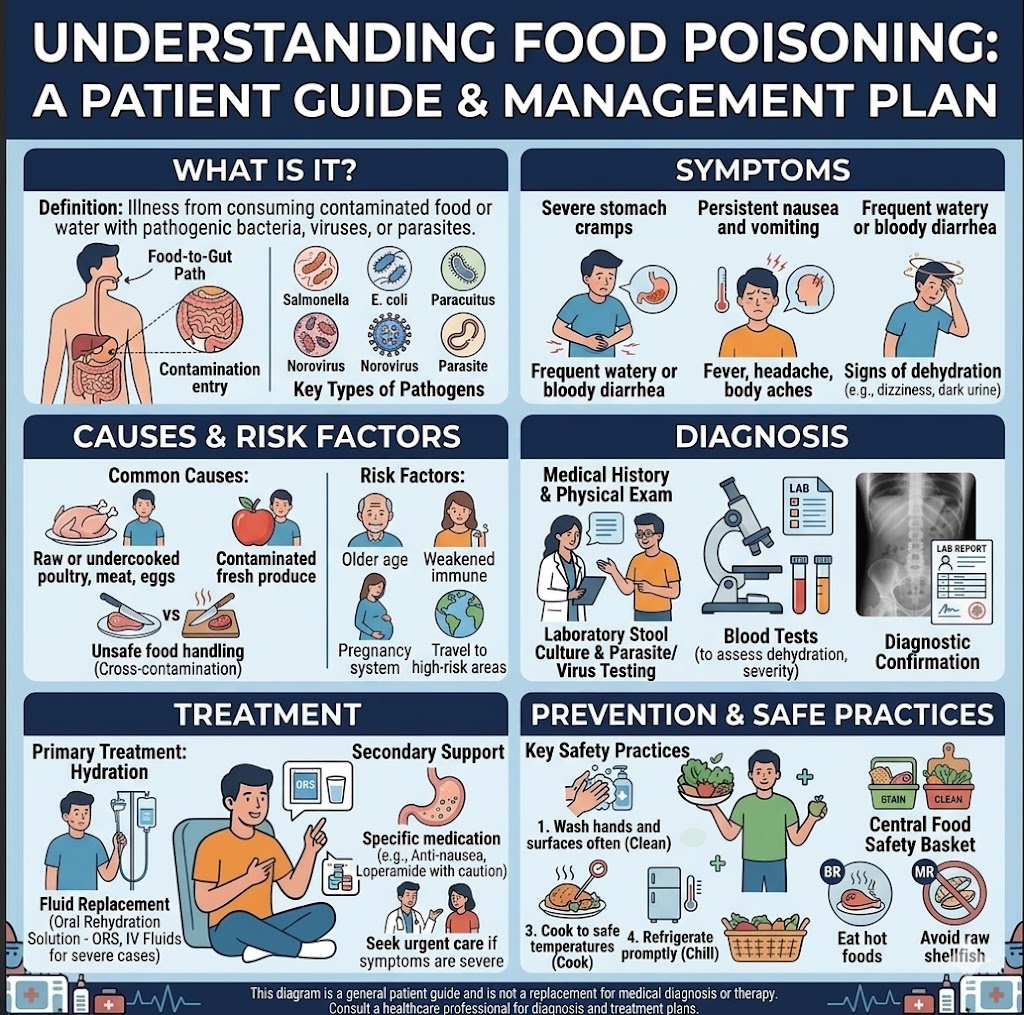
Food poisoning, also known as a foodborne illness, occurs when a person becomes sick from consuming contaminated food or drink. This contamination is typically caused by harmful germs (like bacteria, viruses, or parasites) or toxins (poisons) produced by these germs or chemicals present in the food. While most cases of food poisoning are mild and resolve on their own, some can lead to severe illness or complications, especially in vulnerable populations such as young children, older adults, pregnant individuals, or those with weakened immune systems.
Understanding the Condition
Food Poisoning: Understanding Symptoms, Causes, and Care
Understanding the Condition
Common Symptoms
Upset Stomach and Digestion Issues: This commonly includes general stomach discomfort, nausea, vomiting, and loose stools (diarrhea), which can sometimes contain blood. Abdominal pain and cramping are also frequent symptoms.
Severe Dehydration: Persistent vomiting and diarrhea can rapidly lead to a significant loss of body fluids and essential salts, known as dehydration. This is particularly dangerous for infants, young children, and older adults, potentially causing serious health problems if not addressed promptly.
Neurological Symptoms (Less Common): In rare but serious cases, certain types of food poisoning can affect the nervous system. Symptoms may include blurred or double vision, tingling or numbness in the skin, and a loss of muscle movement in arms and legs, referred to as paralysis.
Consultation Guide
Which Specialist to Meet
For most mild cases, a general practitioner or family doctor is the appropriate specialist. In severe cases, especially with signs of dehydration or neurological symptoms, an emergency room physician should be seen immediately. Depending on the cause and complications, an infectious disease specialist may be involved.
Preparations Before Your Visit
Before your visit, be prepared to describe your symptoms in detail, including when they started, how severe they are, and how frequently they occur. Make a list of any foods or drinks you consumed recently, especially in the 24-72 hours before symptoms began. Inform your doctor about any recent travel, if anyone else you ate with also became sick, and a list of all current medications and medical conditions you have. This information helps the doctor identify potential causes and determine the best course of action.
Book a doctor visit near me
Hydration: Drinking plenty of clear fluids, such as water, clear broths, and oral rehydration solutions (specially formulated to replace lost salts and minerals), is crucial to prevent and treat dehydration. (Duration: Continue until symptoms resolve, typically several days.)
Rest: Allowing your body to rest helps it recover from the illness. (Duration: As needed, typically for a few days.)
Bland Diet: Once vomiting subsides, slowly reintroduce easily digestible foods like toast, rice, bananas, and applesauce. (Duration: Until symptoms improve, usually 1-3 days after vomiting stops.)
Consultation Guide
Food poisoning, also known as a foodborne illness, occurs when a person becomes sick from consuming contaminated food or drink. This contamination is typically caused by harmful germs (like bacteria, viruses, or parasites) or toxins (poisons) produced by these germs or chemicals present in the food. While most cases of food poisoning are mild and resolve on their own, some can lead to severe illness or complications, especially in vulnerable populations such as young children, older adults, pregnant individuals, or those with weakened immune systems.
Antibiotics or Antiparasitic Medications: If a bacterial or parasitic infection is confirmed and is severe or persistent, a doctor may prescribe specific medications to target the identified germ. These are not effective against viral causes. (Duration: Typically 3-10 days, depending on the specific infection and medication.)
Diagnostic Procedures
This test involves analyzing a sample of your stool to identify the specific germ (bacteria, virus, or parasite) causing the food poisoning. Identifying the culprit helps doctors choose the most effective treatment.
What to Expect
You will be given a special container to collect a small amount of your stool at home. Instructions will be provided on how to collect the sample cleanly and safely. The sample then needs to be returned to the clinic or laboratory for analysis. This is a non-invasive procedure.
Blood tests can help assess the severity of the infection, check for signs of dehydration, evaluate kidney function, and detect if the infection has spread beyond the digestive system into the bloodstream.
What to Expect
A healthcare professional will draw a small amount of blood, usually from a vein in your arm, using a needle. You might feel a brief sting or pinch. The process typically takes only a few minutes, and you can usually resume normal activities immediately afterward.
Treatment Options
Home Remedies and Supportive Care
Medications
Anti-diarrheal Medications: These medications can help reduce the frequency and urgency of diarrhea. However, they are generally not recommended for severe cases or if fever and bloody stools are present, as they can sometimes worsen the condition by slowing the removal of toxins from the body. Always consult a doctor before using. (Duration: Typically for 1-2 days, as directed by a doctor.)
Anti-emetic Medications: Prescription medications can help reduce severe nausea and vomiting. (Duration: As needed, usually for a few days.)
Hospital-Based Treatments
Intravenous (IV) Fluids: For severe dehydration, fluids and electrolytes may need to be administered directly into the bloodstream through an IV drip in a hospital setting. (Duration: Several hours to a few days, depending on the severity of dehydration.)
Management of Complications: In rare cases, food poisoning can lead to severe complications like kidney failure, neurological issues, or widespread infection (sepsis). Hospital care involves monitoring and specific treatments for these complications. (Duration: Varies widely based on the specific complication, from several days to weeks.)
Prevention & Long-Term Wellbeing
Prevention of Food Poisoning
Practice Good Hand Hygiene: Wash your hands thoroughly with soap and water for at least 20 seconds, especially after using the toilet, before and after handling food, and before eating.
Wash Produce: Rinse all fruits and vegetables under running water before eating, peeling, or cooking them, even if they have a peel.
Sanitize Kitchen Surfaces and Utensils: Clean cutting boards, knives, and other kitchen tools with hot, soapy water after they touch raw meats, poultry, seafood, or unwashed produce. Regularly clean the inside of your refrigerator.
Prevent Cross-Contamination: Keep raw meats, poultry, seafood, and eggs separate from other foods in the refrigerator. Use separate cutting boards for raw meats and ready-to-eat foods to prevent the transfer of germs.
Cook Foods to Safe Temperatures: Use a food thermometer to ensure meats are cooked through. Whole meats and fish should reach at least 145°F (63°C), ground meat to 160°F (71°C), and poultry (whole or ground) to 165°F (74°C). Reheat leftovers to 165°F (74°C).
Store Foods Safely: Refrigerate or freeze perishable foods promptly. Leftovers should be put into covered containers and refrigerated within two hours of cooking. Do not leave perishable food out at room temperature for extended periods.
When in Doubt, Throw it Out: If you are unsure if a food has been prepared, served, or stored safely, it's best to discard it. Food can be unsafe even if it looks and smells fine. Also, discard moldy soft fruits, vegetables, baked goods, and nuts. For hard foods like carrots or hard cheese, cut away at least one inch around the moldy area.
Tags & Topics
Notice an error or need an update?
Help us keep medical information accurate. Report incorrect info or suggest an edit.


