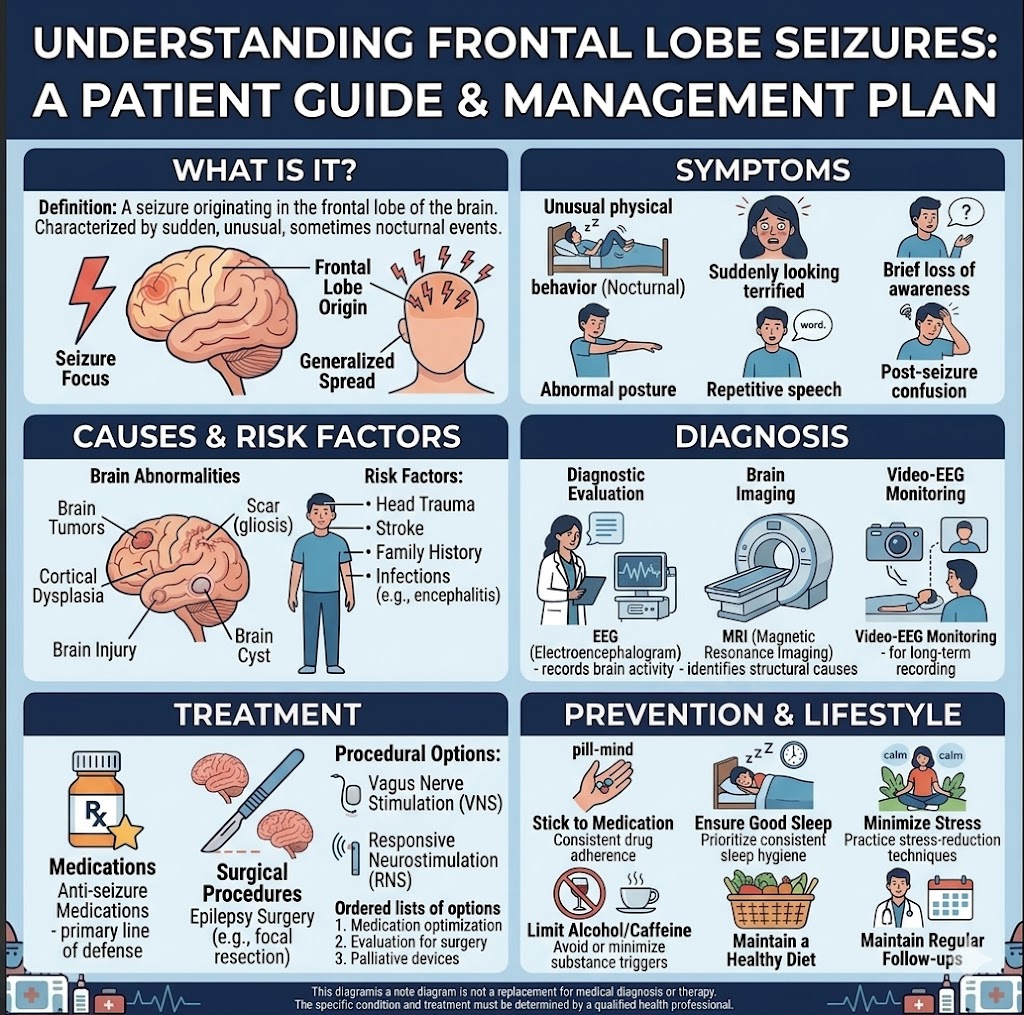
Frontal lobe seizures are a common type of epilepsy, a brain condition characterized by sudden, uncontrolled bursts of electrical signals from brain cells. These bursts cause involuntary movements and changes in behavior, known as seizures. Frontal lobe seizures specifically originate in the frontal lobe, the largest part of the brain responsible for critical functions like personality, planning, and movement. Due to its complex role, seizures starting here can produce unusual symptoms that might be mistaken for mental health issues or sleep disorders, as they often occur during sleep. Potential causes include changes in brain tissue, infections, injuries, strokes, or tumors. In about half of cases, the exact cause remains unknown. While they can be concerning, effective medications and other treatments are available to help manage or stop these seizures.
Understanding the Condition
Understanding Frontal Lobe Seizures
Understanding the Condition
Frontal lobe seizures are a common type of epilepsy, a brain condition characterized by sudden, uncontrolled bursts of electrical signals from brain cells. These bursts cause involuntary movements and changes in behavior, known as seizures. Frontal lobe seizures specifically originate in the frontal lobe, the largest part of the brain responsible for critical functions like personality, planning, and movement. Due to its complex role, seizures starting here can produce unusual symptoms that might be mistaken for mental health issues or sleep disorders, as they often occur during sleep. Potential causes include changes in brain tissue, infections, injuries, strokes, or tumors. In about half of cases, the exact cause remains unknown. While they can be concerning, effective medications and other treatments are available to help manage or stop these seizures.
Common Symptoms
Head and Eye Movement: The head and eyes may suddenly turn or deviate strongly to one side.
Communication Difficulties: The person may stop responding to others or experience significant trouble speaking during the seizure.
Unusual Vocalizations: This can include sudden, loud cries, laughter, or even shouting inappropriate words (profanities).
Peculiar Body Postures: Individuals might adopt strange or rigid body positions, such as extending one arm while bending the other, resembling a 'fencer's pose'.
Repetitive Movements: Actions like rocking back and forth, making bicycle-pedaling motions with the legs, or pelvic thrusting can occur repeatedly.
Duration and Urgency: Frontal lobe seizures often last less than 30 seconds, with immediate recovery. If you or someone you know experiences any seizure-like symptoms, it's important to seek medical advice. If a seizure lasts longer than five minutes, call emergency medical help immediately.
Consultation Guide
Which Specialist to Meet
You should seek a Neurologist, a doctor specializing in conditions of the brain and nervous system. For complex cases, an Epileptologist, a neurologist with advanced training in epilepsy, may be recommended.
Preparations Before Your Visit
Before your visit, gather your complete medical history, including any past head injuries, infections, or a family history of seizures or brain disorders. Keep a detailed log of your symptoms, noting when they occur, how long they last, what they look like, and any potential triggers. Make a list of all medications, supplements, and vitamins you are currently taking.
Book a doctor visit near me
Your doctor will ask about your medical history and perform various tests. These may include checking your reflexes, balance, coordination, muscle strength, vision, hearing, memory, and speech. The exam can be brief, lasting a few minutes, or extend up to an hour or more, depending on your symptoms and the initial findings.
Electroencephalogram (EEG)
Regular Medical Follow-ups: Maintain regular appointments with your neurologist to monitor your condition, adjust medication dosages as needed, and address any new symptoms or concerns.
Safety Precautions: Take steps to prevent injury during a seizure. This may involve avoiding activities like swimming alone or driving until seizures are well-controlled. Inform trusted family and friends about your condition and what to do if you have a seizure.
Prioritize Sleep and Stress Management: Ensuring adequate and consistent sleep, along with practicing stress-reduction techniques (like mindfulness or meditation), can support overall brain health and contribute to better seizure management.
Address Mental Health: Depression and anxiety are common in people with epilepsy. Seek support from mental health professionals if you experience these issues. Children with epilepsy may also have a higher risk of attention-deficit/hyperactivity disorder (ADHD), requiring appropriate assessment and intervention.
Consultation Guide
A comprehensive check-up designed to assess the functionality of your nervous system, including your brain, spinal cord, nerves, and muscles. It helps your doctor identify any issues and determine their potential cause.
Diagnostic Procedures
What to Expect
An EEG is a test that records the electrical activity of your brain. Brain cells communicate using tiny electrical impulses, and the EEG captures these signals as wavy lines, which helps identify abnormal patterns associated with seizures or other brain conditions.
What to Expect
Small, sticky metal discs called electrodes will be placed on your scalp. These electrodes are connected to a machine that records your brain's electrical signals. You will need to remain still, and you might be asked to perform simple tasks like breathing deeply or looking at a flashing light. The test is painless and typically lasts between 20 to 40 minutes, though sometimes longer recordings are needed, potentially including sleep.
Brain Magnetic Resonance Imaging (MRI)
A brain MRI is a sophisticated imaging test that uses powerful magnets and radio waves to create highly detailed, cross-sectional pictures of your brain. These images can reveal subtle changes in brain tissue, structural abnormalities, tumors, effects of stroke, or other conditions that might be causing seizures.
What to Expect
You will lie on a movable table that slides into a large, tube-shaped machine. The machine makes loud knocking or banging noises, so you may be offered earplugs or headphones to help. It's crucial to remain very still throughout the scan, which can last from 30 minutes to an hour or more. Some people may find the enclosed space uncomfortable. This test does not use radiation and is generally considered very safe.
Treatment Options
Medications
Anti-Seizure Medications: These are oral medications designed to reduce the frequency and severity of seizures by calming the abnormal electrical activity in the brain. They are the primary treatment for most people with frontal lobe seizures. (Duration: Typically long-term, often lifelong, with ongoing monitoring and dosage adjustments by your doctor.)
Vagus Nerve Stimulation (VNS): If medications aren't fully effective, a small device might be surgically implanted under the skin in the chest. A thin wire connects this device to the vagus nerve in the neck, which then sends regular, mild electrical impulses to the brain to help reduce seizure frequency and severity. (Duration: Long-term; the device battery typically lasts 5-10 years and then requires replacement through a minor procedure.)
Surgical Procedures
Epilepsy Surgery: For individuals whose seizures originate from a specific, identifiable area of the frontal lobe that can be safely removed without impacting vital brain functions, surgery may be an option. The goal is to remove this area to stop the seizures entirely or significantly reduce their occurrence. (Duration: A one-time procedure with the potential for long-term seizure control or, in some cases, a cure.)
Consistent Medication Adherence: Taking your prescribed anti-seizure medications exactly as directed by your doctor is crucial for effective seizure control and minimizing risks like dangerously long seizures (status epilepticus) or sudden unexpected death in epilepsy (SUDEP).
Prevention & Long-Term Wellbeing
Prevention & Management
Identify and Avoid Triggers: Pay attention to potential seizure triggers such as lack of sleep, high stress levels, alcohol consumption, or flashing lights. Avoiding these known triggers can help reduce seizure frequency.
Tags & Topics
Notice an error or need an update?
Help us keep medical information accurate. Report incorrect info or suggest an edit.


