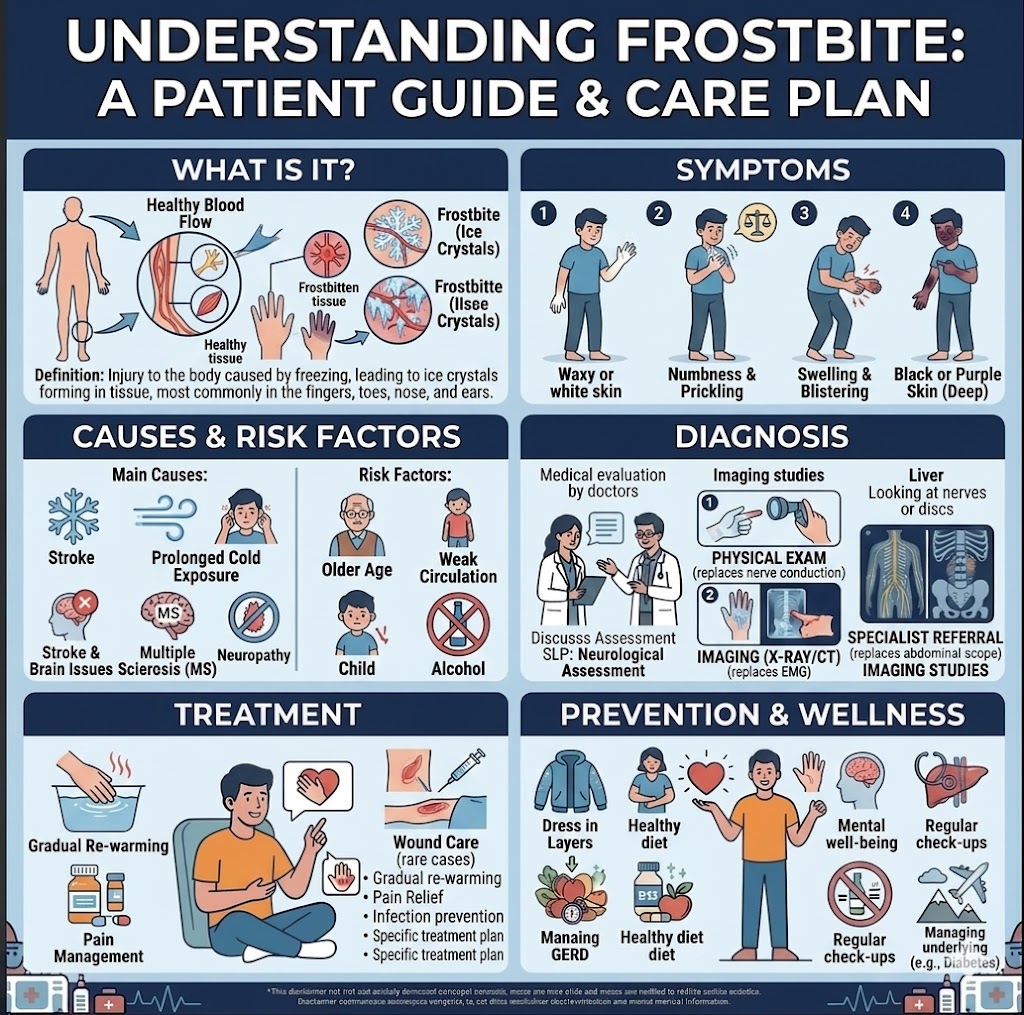
Frostbite is a serious injury that happens when skin and the tissues beneath it freeze. It often begins as 'frostnip,' a milder stage causing coldness and numbness, which doesn't lead to permanent damage. However, as frostbite worsens, affected areas can change color, become hard or waxy, and may result in lasting harm to skin, muscle, bone, and other tissues. While mild cases can recover with rewarming, anything more severe requires immediate medical attention to prevent permanent damage.
Understanding the Condition
Frostbite: A Guide for Non-Medical Persons
Understanding the Condition
Frostbite is a serious injury that happens when skin and the tissues beneath it freeze. It often begins as 'frostnip,' a milder stage causing coldness and numbness, which doesn't lead to permanent damage. However, as frostbite worsens, affected areas can change color, become hard or waxy, and may result in lasting harm to skin, muscle, bone, and other tissues. While mild cases can recover with rewarming, anything more severe requires immediate medical attention to prevent permanent damage.
Common Symptoms
Skin Color Changes: Affected skin may appear in shades of red, white, blue, gray, purple, or brown. The exact color depends on the severity of the frostbite and a person's natural skin tone. On darker skin, these changes might be harder to see, appearing as grayish or waxy areas.
Cold, Hard, or Waxy Skin: The skin in the affected area will feel unusually cold, hard to the touch, and may look stiff or waxy.
Before your visit, try to gather any relevant information, such as when and where the exposure occurred, how long you were in the cold, and what your symptoms are. Be ready to describe your medical history, including any existing health conditions (like diabetes or heart disease) and any medications you take. Also, think about any questions you have for the doctor.
Book a doctor visit near me
A doctor will carefully examine the affected areas of your skin, assessing their color, temperature, texture, and sensation. They will also inquire about your symptoms, cold exposure history, and overall health to determine the severity of the frostbite.
Recognize Early Symptoms: Be aware of early signs like slight skin color changes, prickling, or numbness. Seek warm shelter immediately if you notice these symptoms.
Plan Ahead for Cold Travel: When traveling in cold weather, carry emergency supplies like extra warm clothing. If in remote areas, inform others of your route and expected return.
Consultation Guide
Numbness, Tingling, or Pain: Initially, you might feel pain, tingling, or a prickling sensation, followed by a complete loss of feeling (numbness). Because of this numbness, you might not realize you have frostbite until someone else points it out.
Joint Stiffness and Clumsiness: Joints in frostbitten areas, like fingers or toes, can become stiff, leading to difficulty with movement and general clumsiness.
Blistering: After the skin has been rewarmed, fluid-filled blisters may form. These can appear 12 to 36 hours later in milder cases, or as large blood-filled blisters 24 to 48 hours later in more severe cases.
Swelling, Stinging, and Burning: As the skin begins to rewarm, the affected area may sting, burn, and swell significantly.
Blackened, Hard Tissue: In the most severe cases, weeks after the injury, the affected tissue may turn black and hard as it dies. This is a very serious sign.
Common Locations: Frostbite most frequently affects the fingers, toes, ears, cheeks, penis, chin, and the tip of the nose.
Consultation Guide
Which Specialist to Meet
An X-ray is a quick, painless imaging test that uses a small amount of radiation to create pictures of the bones and some soft tissues inside your body. It can help detect if frostbite has caused any damage to the bones, especially in severe cases or if there's suspicion of a fracture or other bone injury.
You will be asked to remove any metal objects from the area being X-rayed. You'll sit or lie on a table, and a technician will position the affected body part. You'll need to stay very still for a few seconds while the X-ray machine takes images. The process is quick and typically causes no discomfort beyond positioning.
Bone Scan (Nuclear Imaging)
Immediate Rewarming: Move to a warm place. Remove any wet clothing and replace it with dry, warm clothes or blankets. Immerse the affected area in warm (not hot) water, around 104-108°F (40-42°C), for 20-30 minutes, or until the skin becomes soft and returns to a more natural color. Do not rub the affected area, as this can cause further damage. Do not use direct heat sources like fires or heating pads. (Duration: Initial rewarming for 20-30 minutes, followed by ongoing warming measures.)
Avoid Alcohol in Cold: Do not drink alcohol before or during cold exposure, as it can cause your body to lose heat faster and impair judgment, increasing your risk.
Stay Nourished and Hydrated: Eat well-balanced meals and drink plenty of fluids, even before going out in the cold, to help your body maintain warmth.
Keep Moving: Light exercise can improve blood circulation and help you stay warm, but avoid pushing yourself to the point of exhaustion.
Long-Term Care and Monitoring
Increased Cold Sensitivity: People who have had frostbite are often more sensitive to cold temperatures in the affected areas and have a higher risk of future frostbite. Take extra precautions in cold weather.
Diagnostic Procedures
What to Expect
The doctor will look closely at your skin, gently touch it to check its firmness and temperature, and ask you to describe how it feels (e.g., numb, painful, tingling). This is usually the first and most crucial step in diagnosing frostbite.
What to Expect
A bone scan is a specialized imaging test that uses a small amount of a radioactive substance (tracer) injected into a vein. This tracer travels through your bloodstream and collects in areas of bone where there is increased activity or damage. A special camera then detects the radioactivity to create detailed images of your bones. This scan is more sensitive than an X-ray for detecting subtle bone injuries, infections, or other issues related to frostbite, particularly if there are concerns about long-term bone damage or complications.
What to Expect
First, a small amount of a radioactive tracer will be injected into a vein, usually in your arm. You'll typically wait for 2-3 hours for the tracer to travel throughout your body and be absorbed by your bones. During this waiting period, you might be encouraged to drink water. After the wait, you will lie on a table while a special camera (scanner) moves slowly over your body, taking pictures. This part of the scan can take 30-60 minutes, during which you must remain still. The procedure itself is generally painless, though lying still for an extended period might be uncomfortable.
Treatment Options
For suspected frostbite, especially anything beyond mild coldness or numbness, you should seek immediate medical attention. Start with a visit to an urgent care center or emergency room. Depending on the severity and complications, you might be referred to specialists such as a dermatologist (skin doctor), plastic surgeon, or a specialist in wound care or vascular surgery.
Preparations Before Your Visit
Emergency and First Aid Care
Pain Management: Over-the-counter pain relievers can help with discomfort during the rewarming process and afterward. Severe pain may require stronger prescribed medications. (Duration: As needed during recovery, potentially for several days to weeks.)
Medical Procedures and Therapies
Medically Supervised Rewarming: In a hospital setting, rewarming is done under strict medical supervision using circulating warm water baths to carefully raise the tissue temperature and restore blood flow. (Duration: Typically 20-30 minutes initially, followed by ongoing assessment and care.)
Medications to Improve Blood Flow: Certain medications can be given intravenously to help improve blood circulation to the damaged tissues, which can limit further injury and aid healing. (Duration: Administered over several days, depending on patient response and severity.)
Hyperbaric Oxygen Therapy: This therapy involves breathing pure oxygen in a special pressurized chamber. The increased pressure allows the lungs to gather much more oxygen than normal, which can significantly boost oxygen delivery to damaged tissues, promoting healing and reducing complications. (Duration: Typically involves a series of daily sessions, each lasting about 90 minutes to 2 hours, over several days to weeks.)
Surgical Procedures
Tissue Debridement: If tissues have died, a procedure to surgically remove the dead or damaged tissue may be necessary to promote healing and prevent infection. (Duration: A one-time procedure, but may require follow-up debridement depending on the extent of necrosis.)
Amputation: In severe cases where tissue has completely died and is causing serious health risks (like gangrene), amputation (surgical removal) of the affected limb or digit may be necessary to prevent the spread of infection or further complications. (Duration: A one-time surgical procedure, followed by a rehabilitation period of weeks to months.)
Persistent Numbness and Pain: Long-term numbness, tingling, or pain in the affected area is common. Manage discomfort with prescribed or over-the-counter medications as advised by your doctor.
Excessive Sweating (Hyperhidrosis): Some individuals may develop excessive sweating in the previously frostbitten areas. Discuss management options with your doctor if this becomes problematic.
Nail Changes or Loss: Fingernails or toenails in affected areas may change in appearance or even fall off. These usually regrow, but might have an altered appearance.
Growth Plate Issues in Children: If frostbite damages the growth plates in a child's bones, it can lead to growth problems or deformities, requiring regular monitoring by a specialist.
Ongoing Wound Care: For severe cases with tissue damage, ongoing wound care and potentially physical therapy may be needed for several months or longer to ensure proper healing and function.
Prevention & Long-Term Wellbeing
Wound Care and Infection Prevention: Affected areas are carefully cleaned, and any blisters are managed by medical professionals to prevent infection. Dressings are applied to protect the healing skin. Antibiotics may be prescribed if signs of infection appear. (Duration: Daily or every other day wound care for weeks to months, depending on healing.)
Prevention
Limit Cold Exposure: Minimize time outdoors in freezing, wet, or windy conditions. Pay attention to weather forecasts and wind chill readings, as the risk of frostbite increases rapidly with lower temperatures and wind.
Dress in Layers: Wear loose, layered clothing. Air trapped between layers provides insulation. Choose an inner layer that wicks moisture away, a middle layer of fleece or wool for warmth, and an outer layer that is windproof and waterproof. Change wet clothes immediately.
Protect Extremities: Wear a warm hat that covers your ears. Mittens offer better protection than gloves. Use glove liners under heavy mittens. Wear well-fitting, moisture-wicking socks and sock liners to keep feet warm and dry.
Tags & Topics
Notice an error or need an update?
Help us keep medical information accurate. Report incorrect info or suggest an edit.


