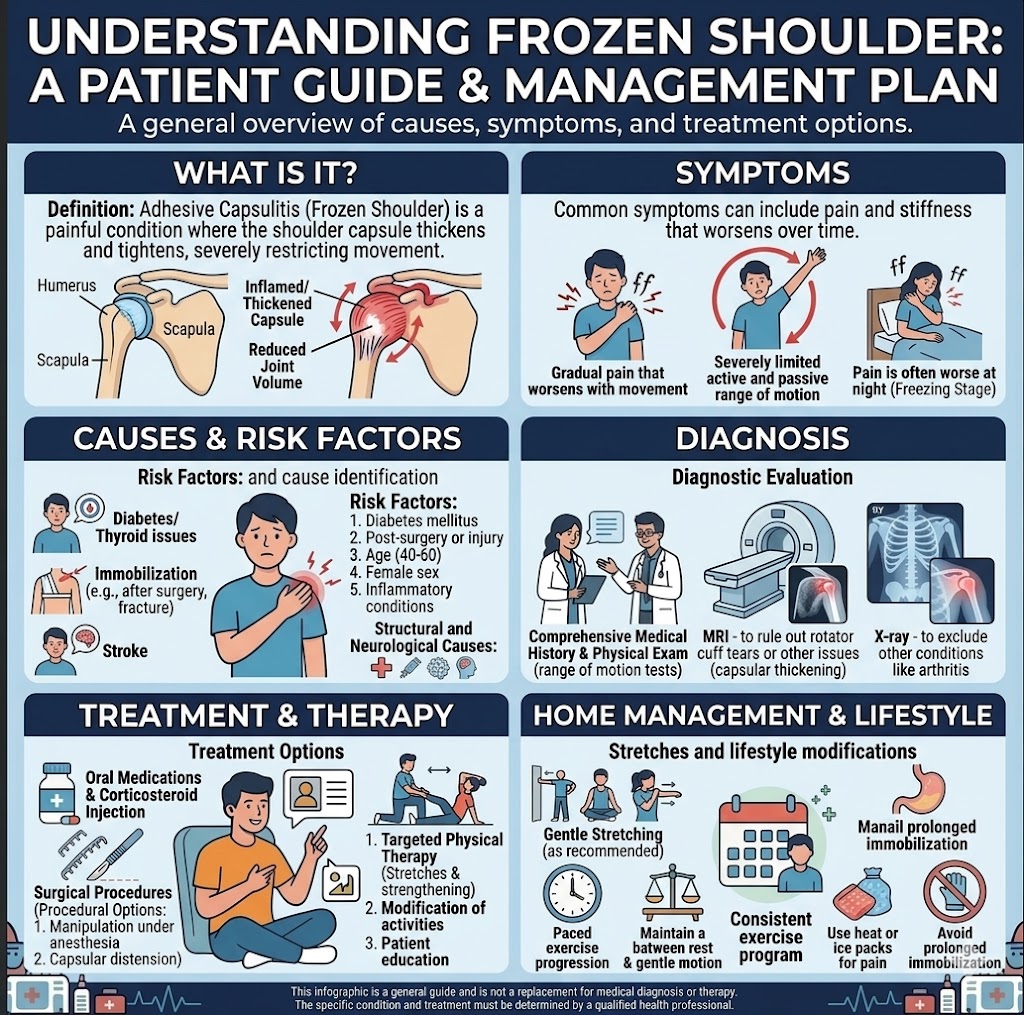
Frozen shoulder, medically known as adhesive capsulitis, is a condition that causes significant pain and stiffness in the shoulder joint. It develops slowly, often worsening over time before gradually improving. The entire process typically resolves within one to three years. A major risk factor for developing frozen shoulder is prolonged immobility of the arm, such as after an injury or surgery. Treatments focus on improving movement and reducing pain, ranging from exercises and injections to, in rare cases, surgery. It's uncommon for the condition to return in the same shoulder, though it can sometimes affect the other shoulder later on.
Understanding the Condition
Understanding the Condition
Common Symptoms
Before your appointment, be prepared to discuss your symptoms, including when they started, how they've progressed, and what activities make them better or worse. List any previous injuries or medical conditions, especially diabetes or thyroid issues. Be ready to describe any medications you are currently taking. Your doctor will likely perform a physical exam, assessing your shoulder's range of motion and tenderness.
Book a doctor visit near me
An X-ray is a quick, painless imaging test that creates pictures of the inside of your body, particularly bones. It helps rule out other problems like arthritis or bone fractures, which can cause similar symptoms to frozen shoulder.
Consistent Exercise and Stretching: Even after symptoms improve, continuing with a regular program of shoulder exercises and stretches, ideally guided by a physical therapist, can help maintain flexibility and strength, and prevent recurrence in the same or other shoulder.
Listen to Your Body: Pay attention to any new pain or stiffness in either shoulder and seek medical advice early if symptoms suggest a possible recurrence or development in the other shoulder.
Consultation Guide
Frozen shoulder, medically known as adhesive capsulitis, is a condition that causes significant pain and stiffness in the shoulder joint. It develops slowly, often worsening over time before gradually improving. The entire process typically resolves within one to three years. A major risk factor for developing frozen shoulder is prolonged immobility of the arm, such as after an injury or surgery. Treatments focus on improving movement and reducing pain, ranging from exercises and injections to, in rare cases, surgery. It's uncommon for the condition to return in the same shoulder, though it can sometimes affect the other shoulder later on.
Freezing Stage: Any shoulder movement causes pain, and the ability to move the arm becomes noticeably restricted. This stage usually lasts between 2 and 9 months.
Frozen Stage: Pain might decrease during this stage, but the shoulder becomes much stiffer, making it very difficult to use. This stage typically lasts 4 to 12 months.
You will be asked to move your arm in various directions, such as lifting it forward, out to the side, and rotating it. The doctor will also gently move your arm to feel for stiffness and tenderness. This might cause some discomfort, especially if your shoulder is painful.
Diagnostic Procedures
A doctor will examine your shoulder to assess pain and evaluate your active (when you move your arm yourself) and passive (when the doctor moves your arm for you) range of motion. This helps distinguish frozen shoulder from other conditions.
What to Expect
What to Expect
You will be asked to remove any metal objects or jewelry and wear a gown. You'll stand, sit, or lie on a table while a technician positions your shoulder for the X-ray images. You will need to remain still for a few seconds as the X-ray machine captures the images. The procedure is generally brief and pain-free.
Treatment Options
Home Remedies & Physical Therapy
Gentle Range-of-Motion Exercises: Specific exercises designed to gently stretch the shoulder capsule and improve flexibility. Examples include pendulum swings (leaning forward and letting your arm hang down, gently swinging it in circles or back and forth) and wall climbs (using your fingers to 'walk' your hand up a wall). These help maintain and regain mobility. (Duration: Daily, ongoing for several months to a year, or as advised by a therapist.)
Over-the-Counter Pain Relievers: Medications like acetaminophen or nonsteroidal anti-inflammatory drugs (NSAIDs) can help manage pain and reduce inflammation. (Duration: As needed for pain relief, typically for weeks to months.)
Corticosteroid Injections: An injection directly into the shoulder joint contains a potent anti-inflammatory medication (corticosteroid) and sometimes a local anesthetic. This can significantly reduce pain and inflammation, allowing for easier physical therapy. (Duration: Relief can last for several weeks to months. The number of injections is usually limited in a year due to potential side effects.)
Surgical Procedures
Arthroscopic Shoulder Release: In rare cases, if other treatments haven't worked, surgery may be considered. A surgeon uses small incisions and a tiny camera (arthroscope) to cut tight parts of the joint capsule, allowing the shoulder to move more freely. (Duration: A single procedure, followed by a recovery period of several weeks to months involving physical therapy.)
Early Movement After Injury or Surgery: If you've had a shoulder injury, arm fracture, or surgery that requires immobilization, it's crucial to discuss with your healthcare provider when and how to start gentle exercises. This helps prevent the shoulder joint from stiffening.
Managing Underlying Health Conditions: For individuals with conditions like diabetes, thyroid disorders, or Parkinson's disease, effectively managing these health issues can potentially lower the risk of developing frozen shoulder. Regular medical check-ups are important.
Prevention & Long-Term Wellbeing
Thawing Stage: The shoulder's range of motion slowly starts to improve, gradually returning to normal. This recovery stage can last from 5 to 24 months.
Nighttime Pain: For some individuals, the pain intensifies at night, often disrupting sleep.
- Consultation Guide
Which Specialist to Meet
You should consult with a primary care physician first, who can then refer you to an orthopedic specialist (a doctor specializing in bones and joints) or a physical therapist.
Preparations Before Your Visit
Prevention
Tags & Topics
Notice an error or need an update?
Help us keep medical information accurate. Report incorrect info or suggest an edit.


