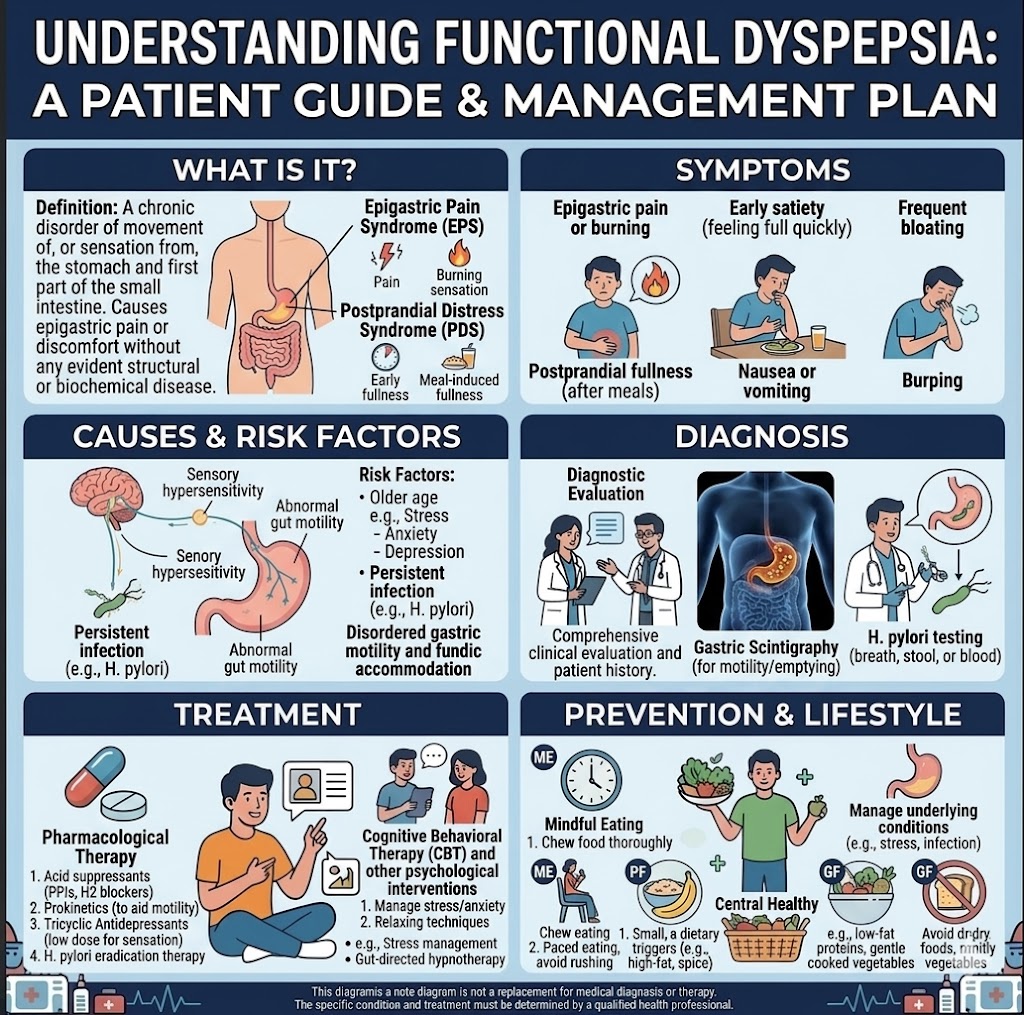
Functional dyspepsia is a common and chronic condition characterized by persistent upset stomach or indigestion that doesn't have an identifiable physical cause. Also known as non-ulcer dyspepsia, its symptoms resemble those of an ulcer, but diagnostic tests won't reveal one or any other specific disease. While a long-term condition, symptoms may not always be present.
Understanding the Condition
Functional Dyspepsia: Understanding Chronic Indigestion
Understanding the Condition
Functional dyspepsia is a common and chronic condition characterized by persistent upset stomach or indigestion that doesn't have an identifiable physical cause. Also known as non-ulcer dyspepsia, its symptoms resemble those of an ulcer, but diagnostic tests won't reveal one or any other specific disease. While a long-term condition, symptoms may not always be present.
Common Symptoms
Upper Abdominal Discomfort: Persistent pain or a burning sensation in the upper part of the belly, often occurring after eating.
Early Fullness: Feeling full very quickly after starting a meal, sometimes after only a few bites. This is also called early satiety.
Bloating and Excessive Burping: Frequent abdominal bloating or an unusual amount of burping.
Nausea: A feeling of sickness or an urge to vomit, especially after meals.
Varying Stomach Pain: Stomach pain that occurs unrelated to meals or temporarily improves after eating.
Consultation Guide
Which Specialist to Meet
If you experience symptoms of functional dyspepsia, you should consult a gastroenterologist, a medical doctor specializing in diseases of the digestive system.
Preparations Before Your Visit
If you have ongoing symptoms that are causing you concern, schedule an appointment with your healthcare provider. Seek immediate medical attention if you experience severe symptoms, such as: vomiting blood, passing dark and tar-like stools, experiencing shortness of breath, pain in your jaw, neck, or arm, or unexplained weight loss.
Book a doctor visit near me
Functional dyspepsia is diagnosed primarily by evaluating your symptoms and ruling out other conditions with similar presentations. Since there's no identifiable physical cause for the symptoms, standard diagnostic tests often appear normal.
Your doctor will ask detailed questions about your medical history, current symptoms (when they started, what makes them better or worse, and how they impact your daily life), and perform a physical examination. Blood tests or stool tests may be conducted to exclude other potential issues. The diagnosis of functional dyspepsia is made when typical symptoms are present, and more serious conditions that could cause similar symptoms have been ruled out.
Upper Endoscopy (Esophagogastroduodenoscopy)
This procedure uses a long, thin, flexible tube with a camera (endoscope) to visually examine the lining of your esophagus (food pipe), stomach, and the first part of your small intestine (duodenum). It helps identify or rule out other conditions like ulcers, inflammation, or structural problems that might be causing your symptoms.
Dietary Adjustments: Identify and avoid specific foods that trigger your symptoms, such as fatty foods, caffeine, or spicy dishes. Eating smaller, more frequent meals can also help manage discomfort. (Duration: Ongoing)
Stress Management: Since anxiety and depression can worsen symptoms, practicing relaxation techniques like deep breathing exercises, yoga, meditation, or mindfulness can be beneficial. (Duration: Ongoing)
Acid-Reducing Medications: These medications work by decreasing the amount of acid produced in your stomach, which can help alleviate pain and burning sensations. (Duration: As directed by a doctor, typically weeks to months for symptom control.)
Hypnotherapy: This therapy involves guided relaxation and focused attention to achieve a state of heightened suggestibility. It can help individuals gain control over symptoms, manage pain, and reduce anxiety related to their condition. A trained healthcare provider guides the process using verbal repetition and mental images. Most people feel calm, relaxed, and remain in control during sessions. It is considered a safe, complementary treatment, but caution is advised for individuals with severe mental illness. (Duration: Typically several sessions over weeks to months.)
Regular Medical Follow-ups: Maintain consistent communication with your healthcare provider to monitor your symptoms and adjust your treatment plan as needed for effective long-term management.
Manage Mental Health Conditions: Actively seek support and treatment for anxiety, depression, or a history of trauma through counseling or therapy, as these factors can significantly influence functional dyspepsia symptoms.
Adopt a Healthy Lifestyle: Maintain a balanced diet, engage in regular physical activity, and ensure adequate sleep to support overall digestive health and reduce stress, which can exacerbate symptoms.
Diagnostic Procedures
What to Expect
What to Expect
Low-Dose Antidepressants: Certain medications typically used for depression can be prescribed at lower doses to help manage pain perception and digestive discomfort, even if you are not diagnosed with depression. (Duration: Long-term, as determined by a doctor.)
Address H. pylori Infection: If a Helicobacter pylori bacterial infection is identified through testing, it should be treated promptly, as its presence can contribute to or worsen digestive issues.
Treatment Options
Before the procedure, you will typically be instructed to fast for several hours. You'll receive medication to help you relax (sedation), and your throat may be numbed. You will lie on your side, and the endoscope will be gently guided down your throat. You might feel some pressure, but it should not be painful. The camera sends live images to a screen for the doctor to review. Small tissue samples (biopsies) may be taken for further analysis. The procedure usually takes 15-30 minutes. Afterward, you will recover from the sedation for a short period and may experience a mild sore throat for a day or two. Due to the sedation, you will need someone to drive you home.
Medications
Prokinetics: These medications help improve the movement of food through your digestive tract, speeding up stomach emptying and potentially reducing feelings of fullness and nausea. (Duration: As directed by a doctor.)
Avoid Irritating Medications: Be mindful of over-the-counter pain relievers like aspirin and ibuprofen, which can irritate the stomach lining. Discuss alternative pain management options with your doctor if you use them regularly.
Prevention & Long-Term Wellbeing
Lifestyle and Home Remedies
Prevention and Long-Term Management
Tags & Topics
Notice an error or need an update?
Help us keep medical information accurate. Report incorrect info or suggest an edit.


