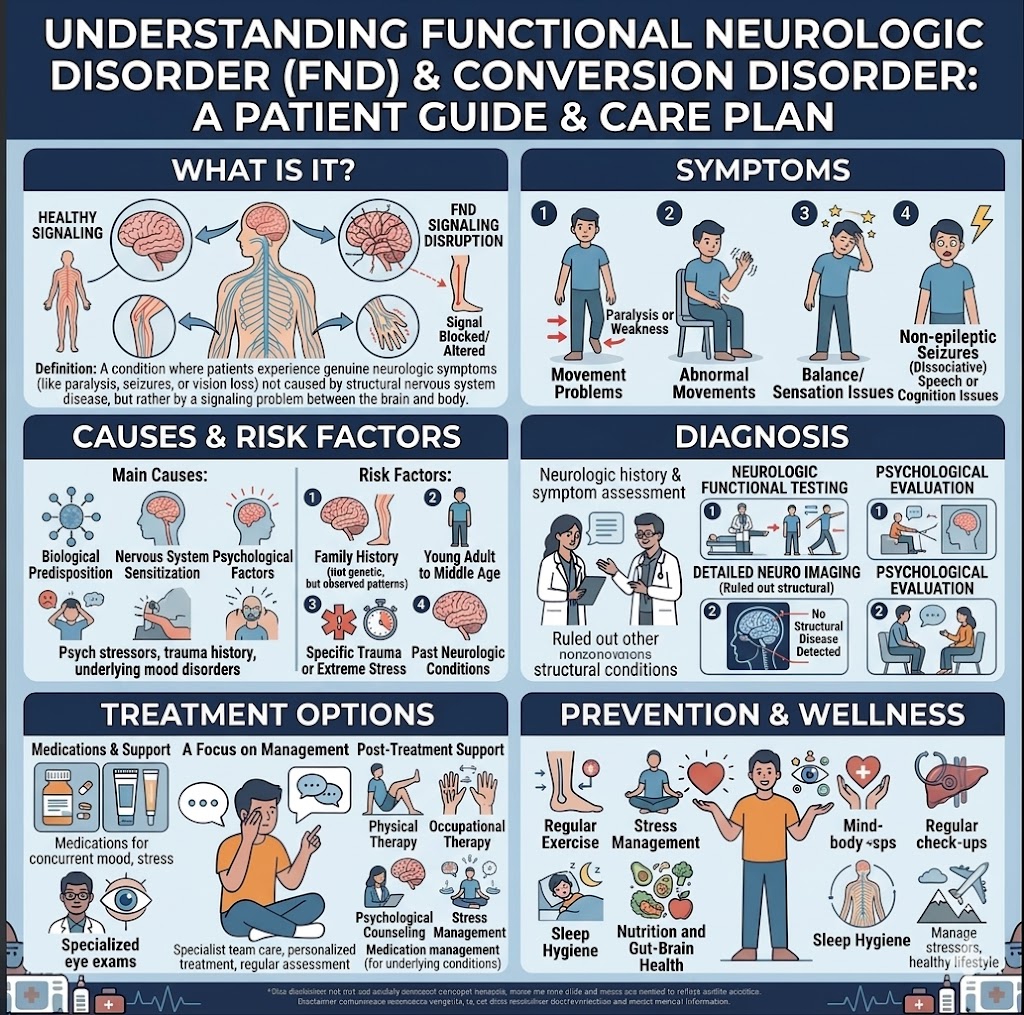
Functional Neurological Disorder (FND), historically known as conversion disorder, is a medical condition where patients experience genuine, real nervous system symptoms that cannot be explained by a structural neurological disease or other underlying medical conditions. FND is fundamentally a problem with how the brain sends and receives signals—similar to a software glitch in a computer, rather than a hardware breakdown like a broken screen or fried circuit. While the brain's structure remains intact, the symptoms significantly impact daily functioning, movement, and the senses. FND is not simulated or under the patient's voluntary control; the symptoms are involuntary and deeply distressing.
Understanding the Condition
Understanding Functional Neurological Disorder (FND)
Understanding the Condition
Functional Neurological Disorder (FND), historically known as conversion disorder, is a medical condition where patients experience genuine, real nervous system symptoms that cannot be explained by a structural neurological disease or other underlying medical conditions. FND is fundamentally a problem with how the brain sends and receives signals—similar to a software glitch in a computer, rather than a hardware breakdown like a broken screen or fried circuit. While the brain's structure remains intact, the symptoms significantly impact daily functioning, movement, and the senses. FND is not simulated or under the patient's voluntary control; the symptoms are involuntary and deeply distressing.
Common Symptoms
Movement and Motor Function Symptoms: This includes muscle weakness, temporary paralysis, tremors, abnormal posturing, or problems with walking and balance. Patients may also experience difficulty swallowing (dysphagia) or slurred speech.
Sensory and Cognitive Disturbances: This includes numbness, tingling, or a loss of touch sensation. Changes in vision (such as double vision or temporary blindness), hearing loss, or cognitive lapses like concentration difficulties are also common.
Non-Epileptic Seizures or Blackouts: Episodes of limb shaking, loss of consciousness, or unresponsive states that closely resemble epileptic seizures but do not show abnormal electrical brain waves.
Consultation Guide
Which Specialist to Meet
Before your visit, keep a detailed symptom diary tracking what symptoms occur, their duration, and any possible triggers. List all current medications, past medical events, and major stressors. Write down your primary questions regarding brain mapping, functional diagnoses, and rehabilitation.
Book a doctor visit near me
Imaging tests used to rule out physical, structural abnormalities in the bones, joints, or organs that might be mimicking or exacerbating neurological symptoms.
Cognitive Behavioral Therapy (CBT): A talk therapy that helps you identify and change negative thought patterns, behaviors, and physical stress responses that can trigger or worsen physical FND symptoms. (Duration: Generally 8 to 20 structured weekly sessions.)
Neurological and Specialized Procedures
Clinical Hypnosis (Hypnotherapy): A guided, deeply relaxed state of focused attention that allows a therapist to suggest behavior changes, help you gain control over involuntary symptoms, and process underlying emotional distress. (Duration: Usually 4 to 12 weekly sessions.)
Transcranial Magnetic Stimulation (TMS): A non-invasive procedure that uses magnetic fields to gently stimulate targeted nerve cells in the brain, helping to rebalance brain activity patterns associated with movement, mood, or pain control. (Duration: Usually administered 5 days a week for 4 to 6 weeks.)
Pharmacological Management
Symptom-Targeting Medications: While there are no specific medications to cure FND, doctors may prescribe medicines to treat underlying anxiety, depression, pain, or sleep disturbances that worsen FND symptoms. (Duration: Varies from several months to long-term maintenance, reviewed regularly by your doctor.)
Stress Reduction Techniques: Incorporate daily mindfulness, deep breathing exercises, or progressive muscle relaxation to reduce autonomic nervous system arousal and prevent symptom flare-ups.
Activity Pacing: Avoid the 'boom-and-bust' cycle where you overexert yourself on good days and crash on bad days. Instead, maintain a steady, moderate level of daily activity.
Early Education and Validation: Accepting and understanding that FND symptoms are real but reversible is one of the most powerful steps in retraining the brain and recovering function.
Routine Sleep Hygiene: Maintain a consistent sleep schedule to ensure your brain and nervous system have adequate recovery time, as fatigue is a major trigger for FND symptoms.
Diagnostic Procedures
If you suspect FND, you should see a neurologist for a definitive diagnosis. Your care team may also include a neuropsychiatrist or psychologist to help address stress-related triggers, and a physical or occupational therapist to assist with physical rehabilitation.
Preparations Before Your Visit
Neurological Examination
A head-to-toe clinical assessment used to evaluate how your brain, spinal cord, nerves, and muscles are functioning. The specialist looks for specific positive signs of FND, such as Hoover's sign (where weakness in one leg resolves when you focus on moving the other leg).
What to Expect
The doctor will test your reflexes with a small rubber hammer, check your muscle strength, examine your coordination and gait by asking you to walk, and test your response to light touch or vibrations.
Electroencephalogram (EEG)
A diagnostic procedure that monitors and records the electrical activity of your brain cells. It is crucial for distinguishing between epileptic seizures and the non-epileptic seizures often seen in FND.
What to Expect
Small metal discs (electrodes) will be attached to your scalp with a temporary, washable paste. You will rest comfortably in a chair or bed while a machine records your brain waves. You may be asked to look at a flashing light or breathe deeply during the test.
X-Ray and Diagnostic Imaging
What to Expect
You will be positioned next to an X-ray machine. You must remain completely still for a few seconds while the technician takes the image from an adjacent room. The procedure is entirely painless and takes only a few minutes.
Treatment Options
Physical and Psychological Therapies
Specialized Physical Therapy: Designed to retrain the brain to establish normal movement patterns through step-by-step physical exercises. Therapists help you bypass conscious control of your muscles to re-establish natural reflexes. (Duration: Typically 2 to 6 months of weekly or bi-weekly sessions, depending on individual progress.)
Prevention & Long-Term Wellbeing
Long-Term Management and Self-Care
Tags & Topics
Notice an error or need an update?
Help us keep medical information accurate. Report incorrect info or suggest an edit.


