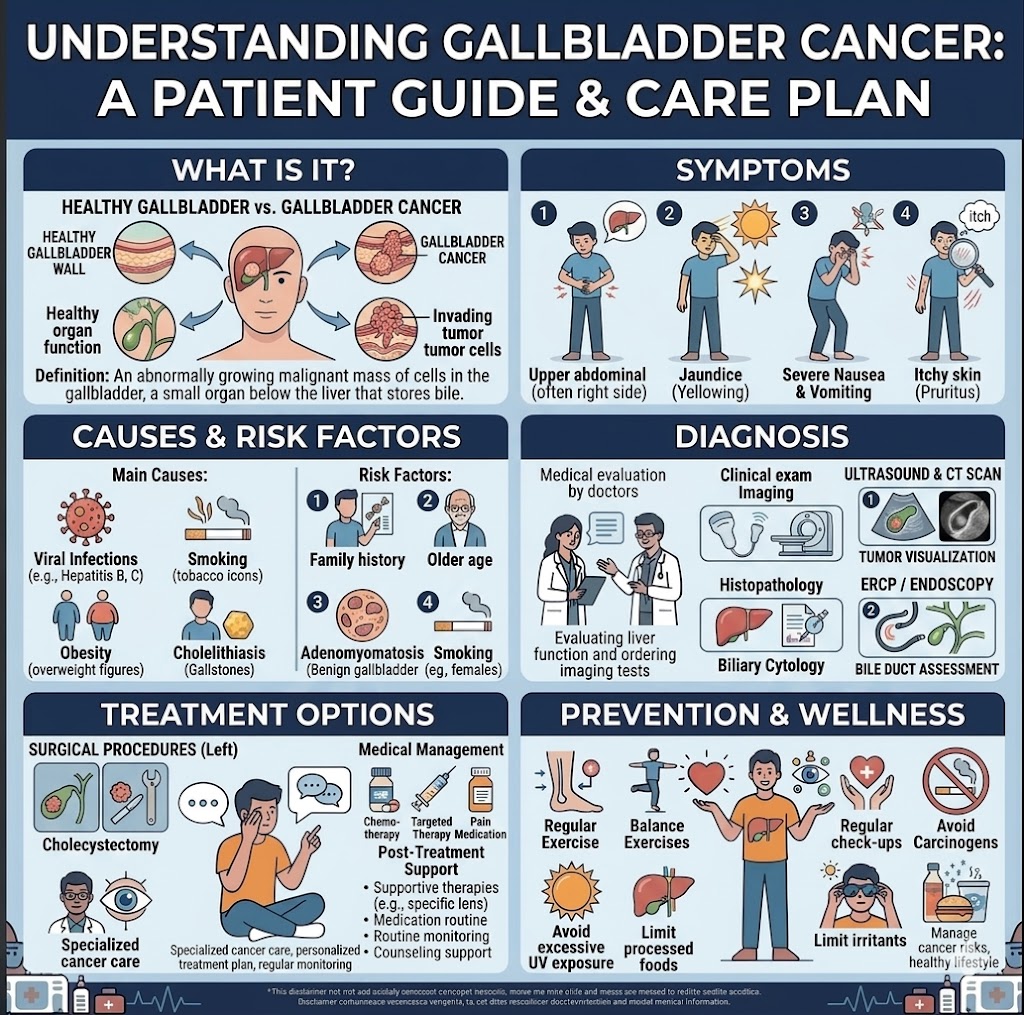
Gallbladder cancer is a rare condition where abnormal cells begin to grow in the gallbladder. The gallbladder is a small, pear-shaped organ located beneath the liver on the right side of your abdomen. Its main job is to store bile, a fluid made by the liver that helps digest fats. When detected early, while the cancer is small and contained within the gallbladder, the chances for a cure are better. However, most gallbladder cancers are discovered at a later stage, often after they have spread beyond the gallbladder. This makes treatment more challenging and reduces the likelihood of a full recovery. Early detection is difficult because symptoms may be absent or resemble other common issues, and the gallbladder's hidden location allows cancer to grow unnoticed.
Understanding the Condition
Gallbladder Cancer: Understanding the Condition and Care
Understanding the Condition
Gallbladder cancer is a rare condition where abnormal cells begin to grow in the gallbladder. The gallbladder is a small, pear-shaped organ located beneath the liver on the right side of your abdomen. Its main job is to store bile, a fluid made by the liver that helps digest fats. When detected early, while the cancer is small and contained within the gallbladder, the chances for a cure are better. However, most gallbladder cancers are discovered at a later stage, often after they have spread beyond the gallbladder. This makes treatment more challenging and reduces the likelihood of a full recovery. Early detection is difficult because symptoms may be absent or resemble other common issues, and the gallbladder's hidden location allows cancer to grow unnoticed.
Common Symptoms
Belly Pain: Often felt in the upper right side of the abdomen.
Belly Bloating: A feeling of fullness or swelling in the abdomen.
Noticeable Lump: A mass that might be felt through the skin in the abdominal area.
Before your appointment, it's helpful to write down your symptoms, including when they started and how they've progressed. Prepare a list of all medications you're taking, any known allergies, and your complete medical history, including any previous conditions or surgeries. Also, note down any questions you have for the doctor. This information will help your healthcare provider understand your condition better and guide discussions about diagnosis and treatment.
Book a doctor visit near me
Radiation Therapy: Radiation therapy uses high-energy beams, often X-rays, to precisely target and destroy cancer cells while minimizing harm to surrounding healthy tissues. It can be used after surgery to kill any remaining cancer cells, or to relieve symptoms like pain in advanced stages. (Duration: Usually given daily, five days a week, for several weeks (e.g., 4-6 weeks), depending on the treatment plan.)
Symptom Management and Supportive Care: Focus on managing any ongoing symptoms or side effects from treatment. Supportive care, often called palliative care, aims to improve quality of life by addressing pain, fatigue, nausea, and emotional distress throughout your cancer journey.
Consultation Guide
Managing Risk Factors: While there's no known way to fully prevent gallbladder cancer, addressing risk factors is important. This includes managing conditions like gallstones, gallbladder polyps, and chronic inflammation of the gallbladder. Regular medical check-ups can help monitor these conditions.
Diagnostic Procedures
This imaging test uses sound waves to create pictures of your internal organs, including the gallbladder. It's often a first step to check for issues like gallstones or growths.
What to Expect
You'll lie down while a technician moves a handheld device (transducer) with gel over your belly. It's usually painless and takes about 15-30 minutes. You'll likely need to fast for several hours before.
CT Scan (Computed Tomography)
A CT scan takes detailed X-ray images from various angles to create cross-sectional views of your body's tissues and organs. It helps identify tumors and check if cancer has spread.
What to Expect
You'll lie on a table that slides into a large ring-shaped scanner. You might receive a contrast dye, either by injection or by drinking it, to make structures clearer. You'll need to stay still and may be asked to hold your breath. The scan is typically quick, lasting 10-30 minutes.
Endoscopic Ultrasound (EUS)
This procedure uses an endoscope (a thin, flexible tube) with a tiny ultrasound device at its tip. It's passed down your throat to get close-up, detailed images of the gallbladder wall and nearby lymph nodes, helping determine the cancer's depth and spread.
What to Expect
You'll be given sedation to help you relax or sleep. The endoscope is gently guided down your throat. The procedure takes about 30-60 minutes, and you'll need someone to drive you home.
A biopsy is essential for a definitive cancer diagnosis. A small tissue sample from the suspicious area is removed and examined under a microscope. This can be done during surgery or via a needle guided by imaging like EUS or CT.
What to Expect
This varies based on the method. If done with EUS, it's part of that procedure. For a needle biopsy, the area is numbed, and a thin needle collects the sample, guided by imaging. You might feel pressure.
Regular Follow-up Care: After treatment, ongoing medical follow-up is crucial. This involves regular appointments and imaging tests to monitor for any signs of cancer recurrence or new issues. Your medical team will outline a personalized follow-up schedule.
Emotional and Psychological Support: Dealing with a cancer diagnosis can be emotionally challenging. Seeking support from family, friends, support groups, or mental health professionals can be very beneficial for coping and long-term wellbeing.
Treatment Options
Surgical Procedures
Surgical Removal (Cholecystectomy or More Extensive Surgery): If gallbladder cancer is detected early and hasn't spread, surgery to remove the gallbladder (cholecystectomy) is often the primary treatment. If the cancer has spread to nearby liver tissue or lymph nodes, a more extensive surgery may be performed to remove parts of the liver or affected lymph nodes to try and remove all cancer. (Duration: A single procedure, with recovery typically lasting several weeks to a few months depending on the extent of surgery.)
Therapies
Chemotherapy: This treatment uses powerful medications, usually given through a vein or by mouth, to kill fast-growing cancer cells throughout the body. It may be used after surgery to destroy any remaining cancer cells, before surgery to shrink a large tumor, or as the main treatment for advanced cancer that cannot be surgically removed. (Duration: Typically administered in cycles over several months, often for 3-6 months, depending on the specific drugs and cancer stage.)
Targeted Therapy: These medications focus on specific vulnerabilities within cancer cells, such as proteins or genes that help them grow and spread. By targeting these specific pathways, they can often be more precise than traditional chemotherapy and may have different side effects. (Duration: Can be used long-term, for months or years, as long as the treatment is effective and side effects are manageable.)
Immunotherapy: Immunotherapy uses medications that help your body's own immune system recognize and fight cancer cells. It essentially boosts your natural defenses to attack the cancer. This treatment is becoming an option for certain advanced cancers. (Duration: Can be given in cycles over several months or even longer, depending on the patient's response and side effects.)
Prevention & Long-Term Wellbeing
Unexplained Weight Loss: Losing weight without making any changes to diet or exercise.
Jaundice: Yellowing of the skin and the whites of the eyes. This happens when there's a buildup of bilirubin in the blood, often a sign that the cancer is more advanced and affecting bile flow. It might be less noticeable on darker skin tones.
- Consultation Guide
Which Specialist to Meet
Your journey typically begins with your primary care doctor. If gallbladder cancer is suspected, you may be referred to specialists such as a gastroenterologist (a doctor specializing in digestive system disorders), an oncologist (a cancer specialist), or a surgical oncologist (a surgeon specializing in cancer removal).
Preparations Before Your Visit
Prevention
Healthy Lifestyle Choices: Maintaining a healthy weight through a balanced diet and regular physical activity may help reduce the overall risk of many cancers. Focus on a diet rich in fruits, vegetables, and whole grains, and limit processed foods and red meat.
Long-Term Wellbeing
Tags & Topics
Notice an error or need an update?
Help us keep medical information accurate. Report incorrect info or suggest an edit.


