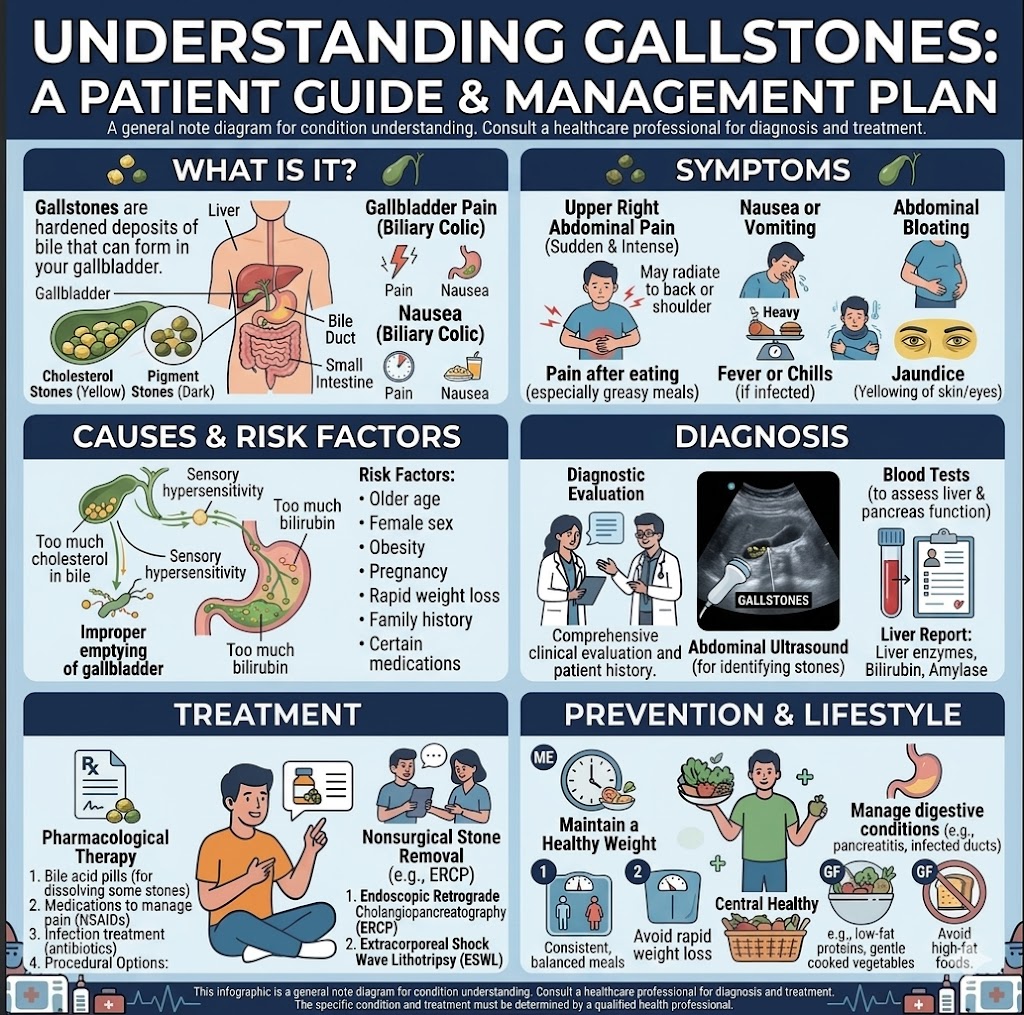
Gallstones are hard deposits of digestive fluid, specifically bile, that can form inside your gallbladder. Your gallbladder is a small, pear-shaped organ located on the right side of your abdomen, beneath your liver. It stores bile, a fluid produced by your liver that helps digest fats in your small intestine. Gallstones vary widely in size, from a tiny grain of sand to as large as a golf ball. Some individuals develop a single gallstone, while others may have many. Gallstones that cause symptoms typically require medical intervention, often surgery. However, those that do not cause any signs or symptoms usually do not need treatment.
Understanding the Condition
Gallstones are hard deposits of digestive fluid, specifically bile, that can form inside your gallbladder. Your gallbladder is a small, pear-shaped organ located on the right side of your abdomen, beneath your liver. It stores bile, a fluid produced by your liver that helps digest fats in your small intestine. Gallstones vary widely in size, from a tiny grain of sand to as large as a golf ball. Some individuals develop a single gallstone, while others may have many. Gallstones that cause symptoms typically require medical intervention, often surgery. However, those that do not cause any signs or symptoms usually do not need treatment.
Common Symptoms
Gallstone Attack (Biliary Colic): If a gallstone blocks a bile duct, it can lead to sudden, intensifying pain. This pain may occur in your upper right abdomen, the center of your abdomen (below the breastbone), radiate to your back between the shoulder blades, or to your right shoulder. Nausea or vomiting may also be present. This pain can last from several minutes to a few hours.
Serious Complications: Seek immediate medical care if you experience intense abdominal pain that prevents you from finding a comfortable position, yellowing of the skin or eyes (jaundice), or a high fever with chills. These can indicate a serious complication.
Consultation Guide
Which Specialist to Meet
Before your appointment, prepare a list of your symptoms, including when they started and how severe they are. Note any medications, vitamins, or supplements you are taking. Be ready to discuss your medical history and any relevant family medical history. Also, list any questions you have for your doctor.
Book a doctor visit near me
Laparoscopic Gallbladder Removal (Cholecystectomy): This is the most common surgical treatment for symptomatic gallstones. The surgeon makes several small incisions in the abdomen and uses a tiny video camera and specialized instruments to remove the gallbladder. It is a safe and effective procedure. (Duration: Typically performed as an outpatient procedure, allowing you to go home the same day or the next. Full recovery usually takes a few weeks.)
Follow-Up for Asymptomatic Gallstones: If you have gallstones but no symptoms, your doctor may recommend monitoring them over time. Be aware of potential symptoms and report any changes.
Consultation Guide
You will lie on a motorized table that slides into a large, doughnut-shaped machine called a gantry. You may hear humming or clicking noises as the machine operates. In some cases, a contrast dye may be injected into a vein to highlight specific areas, which might cause a temporary warm sensation. You will need to lie still during the scan, which can take from a few minutes to half an hour, depending on the area being examined.
HIDA Scan (Hepatobiliary Iminodiacetic Acid Scan)
Diagnostic Procedures
Gallstones: Understanding, Diagnosis, and Treatment
Understanding the Condition
An abdominal ultrasound uses high-frequency sound waves to create images of organs and structures inside your abdomen, including the liver, gallbladder, spleen, pancreas, and kidneys. It is a common and effective tool for detecting gallstones, inflammation of the gallbladder, or blockages in the bile ducts.
What to Expect
During the procedure, you will lie on an examination table. A clear gel will be applied to your abdomen. A trained technician will then press a small handheld device, called a transducer, against your skin and move it across the area. The transducer sends and receives sound waves, and a computer converts these into images displayed on a monitor. The procedure is typically painless and usually takes about 15-30 minutes.
CT Scan (Computerized Tomography Scan)
A CT scan uses specialized X-ray equipment and computer processing to create detailed cross-sectional images, or 'slices,' of the bones, blood vessels, and soft tissues inside your body. It provides more detailed views than standard X-rays and can help identify gallstones, inflammation, or other complications that might not be visible on an ultrasound.
What to Expect
A HIDA scan, also known as cholescintigraphy, is a nuclear medicine imaging test that tracks the production and flow of bile from your liver, through your gallbladder and bile ducts, and into your small intestine. It helps assess the function of your gallbladder and liver and can detect bile duct blockages or inflammation.
What to Expect
A small amount of a safe radioactive tracer will be injected into a vein, usually in your arm. This tracer travels to your liver and mixes with bile. A special camera (gamma camera) will then take images as the tracer moves through your biliary system. You will lie still on a table while the camera moves above or around you. The entire procedure can take one to four hours, and sometimes additional images are taken after a few hours.
Treatment Options
You should first consult your primary care doctor for an initial assessment. They may then refer you to a gastroenterologist, a specialist in digestive system disorders, or a surgeon, especially if treatment involves removing the gallbladder.
Preparations Before Your Visit
Oral Bile Acid Dissolution Therapy: Certain medications, containing bile acids, can help dissolve cholesterol gallstones over time. These are typically used for smaller gallstones and in patients who cannot undergo surgery. (Duration: Treatment can take several months to years, and gallstones may recur after stopping medication.)
Therapies
Shock Wave Lithotripsy (Sound Wave Therapy): This non-invasive procedure uses high-frequency sound waves to break gallstones into smaller pieces. These smaller fragments can then pass more easily through the bile ducts. It is typically considered for a limited number of small gallstones. (Duration: One or more sessions may be needed. The process of passing fragments can take weeks.)
Surgical Procedures
Open Gallbladder Removal (Cholecystectomy): In some cases, if laparoscopic surgery isn't possible (e.g., due to severe inflammation or scar tissue), a single larger incision is made in the abdomen to remove the gallbladder. This is a more invasive procedure. (Duration: Requires a longer hospital stay (several days) and a longer recovery period, often four to six weeks or more.)
Lose Weight Gradually: Rapid weight loss, such as from crash diets or bariatric surgery, can increase the risk of gallstone formation. If you need to lose weight, do so slowly and steadily.
Post-Surgical Dietary Adjustments: Most people can eat a normal diet after gallbladder removal. However, some may experience temporary digestive changes, such as loose stools, after surgery. Your doctor may advise a temporary low-fat diet.
Prevention & Long-Term Wellbeing
Prevention
Maintain a Healthy Weight: Obesity can increase the risk of gallstones. Aim for a healthy body weight through a balanced diet and regular physical activity.
Eat a Balanced Diet: Include plenty of fiber-rich foods like fruits, vegetables, and whole grains. Limit saturated fats and refined carbohydrates.
Stay Hydrated: Drinking enough water can support overall digestive health.
Long-Term Monitoring
Tags & Topics
Notice an error or need an update?
Help us keep medical information accurate. Report incorrect info or suggest an edit.


