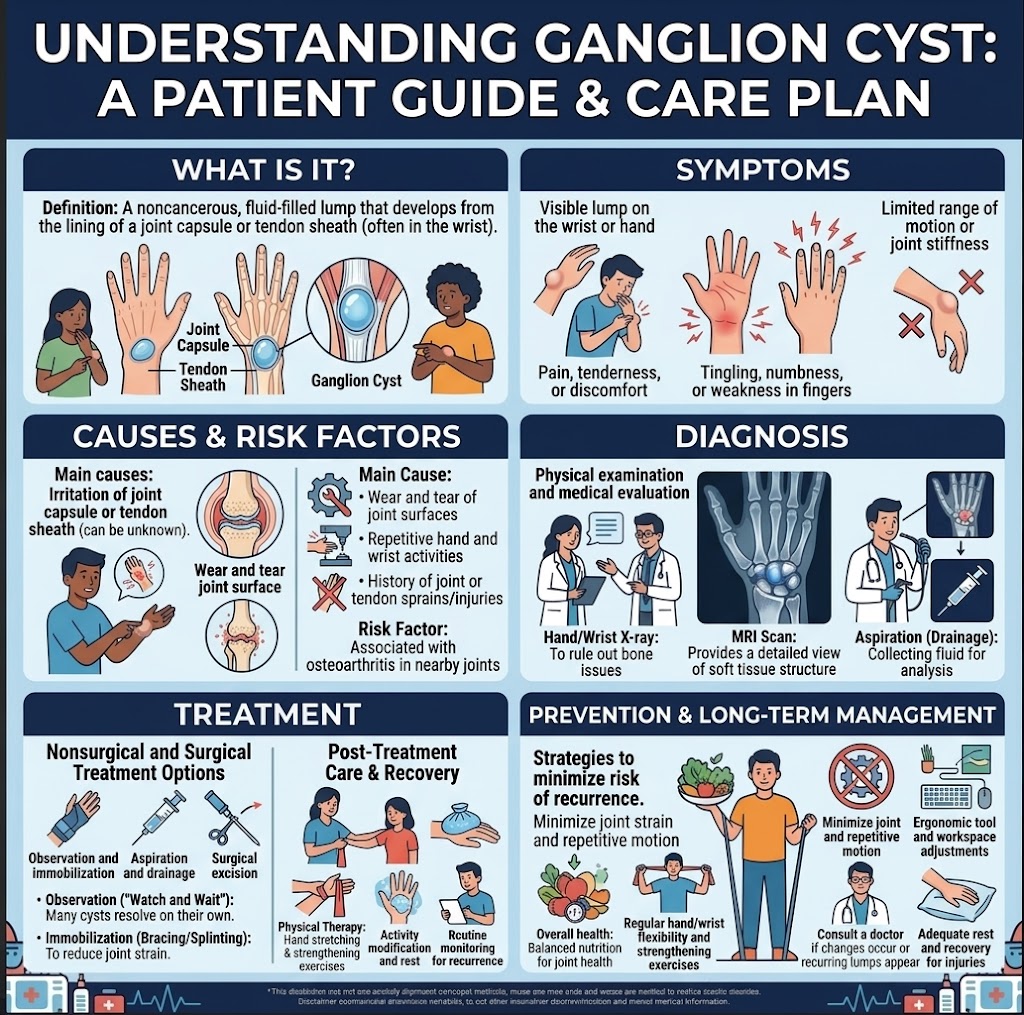
Ganglion cysts are common, non-cancerous lumps that typically form near the joints or tendons, most often on the wrists or hands, but also on ankles and feet. These lumps are usually round or oval and contain a jelly-like fluid. While they can vary in size, sometimes changing over time, they are often painless. However, if a cyst presses on a nearby nerve, it can cause discomfort or affect joint movement. Many ganglion cysts do not require treatment, as some may shrink or disappear on their own.
Understanding the Condition
Understanding Ganglion Cysts: A Guide for Non-Medical Individuals
Understanding the Condition
Common Symptoms
Location: Ganglion cysts most frequently appear on the wrists or hands, especially along tendons or joints. They can also occur on the ankles and feet, and occasionally near other joints throughout the body.
Shape and Size: These cysts are typically round or oval. Their size can range from very small (even undetectable) to pea-sized or larger. It's common for a cyst's size to fluctuate, sometimes becoming larger with increased joint movement.
Before your appointment, be prepared to discuss when you first noticed the lump, if its size has changed, if you've experienced any pain or other symptoms (like tingling or numbness), and any activities that seem to aggravate or improve your symptoms. Make a list of any questions you have. You may also want to wear loose, comfortable clothing that allows easy access to the affected area for examination.
Book a doctor visit near me
An X-ray uses a small amount of radiation to create images of the bones inside your body. While X-rays cannot directly show a soft-tissue cyst, they can help rule out other conditions like arthritis or bone tumors, which might present with similar symptoms.
Monitor Changes: If you have a ganglion cyst that is not causing symptoms, regularly observe it for any changes in size, shape, or if it starts to cause pain, tingling, or numbness. Report any significant changes to your healthcare provider.
Seek Medical Advice for Symptoms: Even if you've had a ganglion cyst before, consult a healthcare provider for any new lumps or pain in your joints or tendons. A professional diagnosis is important to rule out other conditions and determine if treatment is needed.
Consultation Guide
Ganglion cysts are common, non-cancerous lumps that typically form near the joints or tendons, most often on the wrists or hands, but also on ankles and feet. These lumps are usually round or oval and contain a jelly-like fluid. While they can vary in size, sometimes changing over time, they are often painless. However, if a cyst presses on a nearby nerve, it can cause discomfort or affect joint movement. Many ganglion cysts do not require treatment, as some may shrink or disappear on their own.
Pain and Other Sensations: While many ganglion cysts are painless, they can cause discomfort if they press on a nerve or other surrounding structures. This pressure might lead to pain, a tingling sensation, numbness, or even muscle weakness in the affected area.
Consultation Guide
Which Specialist to Meet
The doctor will visually inspect and gently press on the lump. They may ask you to move the affected joint in various ways to see if it causes discomfort or changes the cyst's appearance. This is typically a quick and painless part of the consultation.
Watchful Waiting: Many ganglion cysts are painless and do not cause problems. In such cases, no active treatment is needed, as cysts can grow and shrink or even disappear on their own over time. (Duration: Ongoing monitoring; may resolve spontaneously over weeks to years.)
Aspiration: This procedure involves draining the jelly-like fluid from the cyst using a needle. It can provide immediate relief from pain and reduce the cyst's size. However, there is a chance the cyst may return after aspiration. (Duration: A single office visit procedure, typically taking 15-30 minutes. Effects (size reduction, pain relief) are immediate, but recurrence can happen at any time after the procedure.)
Avoid Aggravation: If certain activities seem to make your cyst larger or more uncomfortable, try to modify those activities or take breaks. While the exact cause is unknown, repetitive stress or injury might play a role in their formation.
Maintain Joint Health: Engage in regular, gentle exercises that promote joint flexibility and strength. If you have conditions like osteoarthritis, managing it effectively can contribute to overall joint health and potentially reduce risk factors for certain cysts.
Diagnostic Procedures
If you notice a lump or experience pain in your wrist, hand, ankle, or foot, start by consulting your primary care physician. They can provide an initial diagnosis and guide you on whether further evaluation by a specialist, such as an orthopedic surgeon or a hand specialist, is necessary. These specialists are experts in bone, joint, and muscle conditions.
Preparations Before Your Visit
A healthcare provider will examine the lump, feeling its texture and evaluating its location and tenderness. They may also assess your range of motion and look for signs of nerve involvement.
What to Expect
What to Expect
You'll be asked to position the affected body part on a special plate. A technician will then step behind a protective screen while the X-ray machine quickly takes images. You might need to hold your breath for a second during the exposure. The procedure is quick, painless, and usually takes only a few minutes.
Ultrasound, or sonography, uses high-frequency sound waves to create live images of structures inside your body. This allows the doctor to see the exact size, shape, and content (fluid-filled vs. solid) of the lump, confirming if it's a ganglion cyst and if it's pressing on surrounding nerves or blood vessels.
What to Expect
You will lie down, and a clear gel will be applied to the skin over the lump. A small, handheld device called a transducer will be gently pressed against your skin and moved around the area. The sound waves produced by the transducer create images on a monitor. You may feel slight pressure from the transducer, but the procedure is generally painless and takes about 15-30 minutes.
Treatment Options
Conservative Management (No Treatment Needed / Home Remedies)
Prevention & Long-Term Wellbeing
Surgical Removal (Excision): If a ganglion cyst is painful, affects joint movement, or repeatedly returns after aspiration, surgical removal may be recommended. The surgeon removes the cyst along with a small portion of the joint capsule or tendon sheath from which it originates to reduce the chance of recurrence. (Duration: A single surgical procedure, typically lasting 30-60 minutes, followed by a recovery period of several weeks for complete healing and return to normal activities.)
Prevention and Long-Term Wellbeing
Tags & Topics
Notice an error or need an update?
Help us keep medical information accurate. Report incorrect info or suggest an edit.


