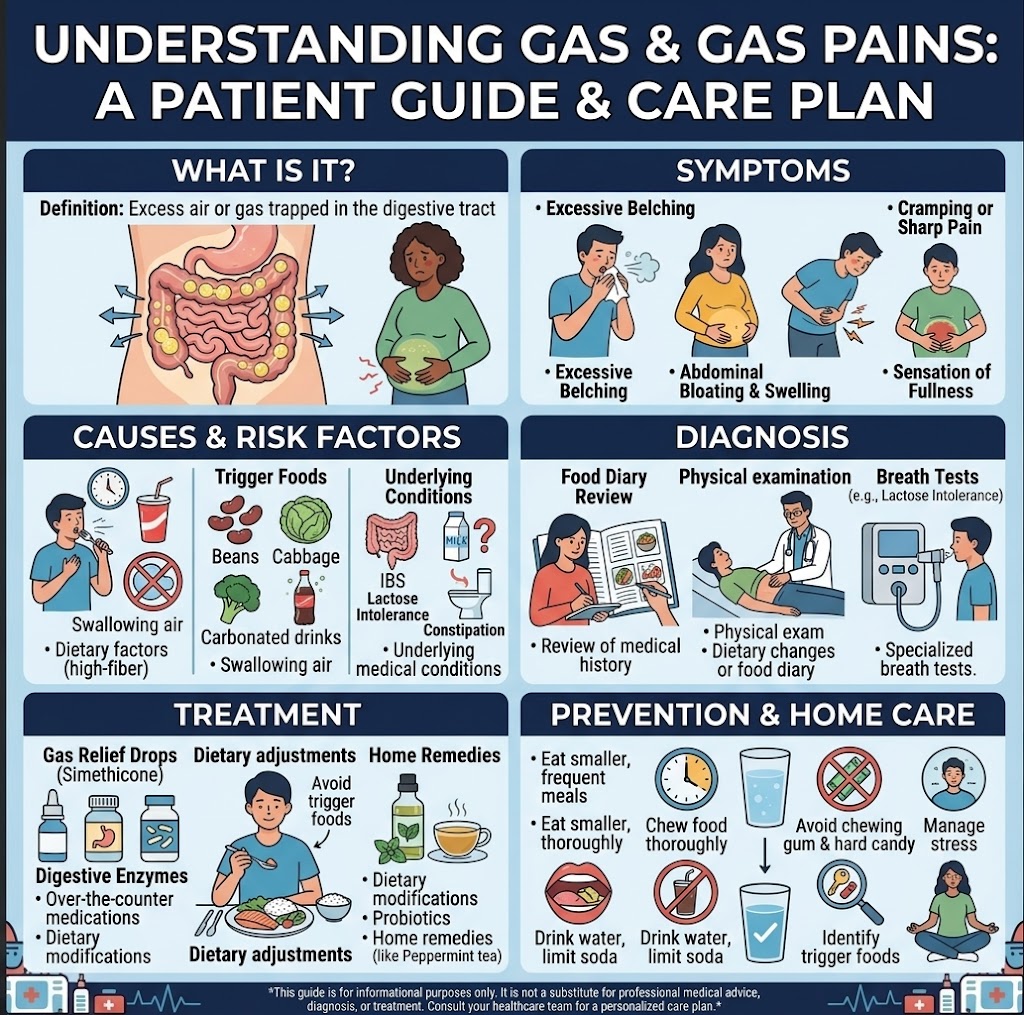
Gas in your digestive system is a normal byproduct of digestion. Your body typically gets rid of this excess gas through burping or passing gas. However, if gas gets trapped or doesn't move easily through your digestive tract, it can cause discomfort, leading to what's known as gas pains. These issues can often arise after eating certain foods known to produce gas. In many cases, simple changes to your eating habits can significantly reduce bothersome gas. Sometimes, an increase in gas or gas pains can point to underlying digestive conditions, such as irritable bowel syndrome (IBS) or celiac disease.
Understanding the Condition
Understanding Gas and Gas Pains
Understanding the Condition
Common Symptoms
Burping: While normal, especially during or after meals, frequent or excessive burping can be a sign of too much swallowed air.
Start by consulting your primary care provider. If your symptoms are persistent, severe, or suggest an underlying digestive disorder, they may refer you to a gastroenterologist, a specialist in digestive health.
Preparations Before Your Visit
Before your appointment, it's helpful to:* Keep a detailed symptom diary: Note the type, frequency, and severity of your gas and gas pains, as well as any triggers you've noticed.* Maintain a food diary: Record everything you eat and drink, noting when symptoms occur to help identify potential food triggers.* List all medications and supplements: Include both prescription and over-the-counter products you are currently taking.* Review your medical history: Be prepared to discuss past health conditions, surgeries, and family medical history.* Write down any questions: Prepare a list of questions for your healthcare provider.
Book a doctor visit near me
You'll share your diet, and the doctor will look for correlations with symptoms.
Used for severe symptoms (e.g., unexplained weight loss, bleeding) or inconclusive tests, these procedures use a flexible tube with a camera (endoscope) to visualize the upper digestive tract (endoscopy) or colon (colonoscopy).
Anti-Gas Agents: These break down gas bubbles for easier passage, offering symptomatic relief. (Duration: As needed)
Digestive Enzyme Supplements: Enzymes aid digestion of complex carbs or lactose, reducing gas from these foods. (Duration: Taken with trigger meals)
IBS Medications: Prescribed to manage symptoms like spasms or altered bowel habits, indirectly reducing gas. (Duration: As prescribed, typically long-term)
Acid Reflux/GERD Treatments: Medications to reduce stomach acid can lessen reflux symptoms and associated burping. (Duration: As prescribed, potentially long-term)
Stress Management: Practices like meditation or deep breathing can help regulate gut function and reduce gas-related symptoms.
Symptom Tracking: Continuously monitor symptoms and triggers to adapt lifestyle and diet, providing info for future medical consultations.
Regular Check-ups: Maintain regular visits with your healthcare provider to discuss concerns, ensuring early detection and management.
Adherence to Dietary Plans: If a specific diet is recommended, consistent adherence is crucial for long-term symptom control.
Consultation Guide
Gas in your digestive system is a normal byproduct of digestion. Your body typically gets rid of this excess gas through burping or passing gas. However, if gas gets trapped or doesn't move easily through your digestive tract, it can cause discomfort, leading to what's known as gas pains. These issues can often arise after eating certain foods known to produce gas. In many cases, simple changes to your eating habits can significantly reduce bothersome gas. Sometimes, an increase in gas or gas pains can point to underlying digestive conditions, such as irritable bowel syndrome (IBS) or celiac disease.
Diagnostic Procedures
Your doctor will perform a general check-up, including listening to your abdomen and gently pressing on it to check for tenderness or swelling.
What to Expect
It's quick and painless, helping to assess overall health and pinpoint areas of concern.
What to Expect
Blood tests can help rule out underlying conditions like celiac disease or inflammatory bowel disease.
What to Expect
A small blood sample is drawn from your arm and sent to a lab for analysis.
These analyze a stool sample for infection, malabsorption, or other abnormalities.
What to Expect
You'll collect a sample at home for lab analysis.
Breath Tests (e.g., Hydrogen Breath Test)
Breath tests diagnose conditions like lactose intolerance or small intestinal bacterial overgrowth (SIBO).
What to Expect
You'll drink a sugary liquid and periodically breathe into a device over a few hours to measure gas levels. It's non-invasive, though you might experience some gas.
Endoscopy or Colonoscopy
What to Expect
You'll receive sedation. For colonoscopy, bowel preparation is needed. Doctors can take tissue samples. You'll need a ride home.
Activated Charcoal: Some use it to bind intestinal gas, but it can affect medication absorption. (Duration: As needed, short-term)
Antibiotics for SIBO: A course of specific antibiotics may treat small intestinal bacterial overgrowth. (Duration: Typically 7-14 days)
Treatment Options
Medications (Over-the-Counter)
Prescription Medications & Therapies (for underlying conditions)
Surgery for Severe Underlying Conditions: Rarely, if gas indicates a severe issue like a bowel obstruction, surgery may be needed to remove the blockage. This is for life-threatening complications, not typical gas. (Duration: One-time procedure, followed by recovery)
Prevention & Long-Term Wellbeing
Passing Gas: It's typical for individuals to pass gas multiple times a day. However, frequent or particularly odorous gas might indicate certain dietary patterns or digestive issues.
Abdominal Pain and Cramps: These can range from mild aches to sharp, intense spasms, often moving location as gas travels through the digestive system.
Bloating: A feeling of fullness or tightness in the abdomen, often accompanied by a visible increase in the size of the belly.
Feeling of Fullness/Pressure: A sensation of being overly full or distended, even after eating a small amount of food.
- Consultation Guide
Which Specialist to Meet
Dietary Assessment
A detailed discussion of your eating habits and review of your food diary helps identify potential dietary triggers for gas.
Home Remedies & Lifestyle Adjustments
Mindful Eating: Eat and drink slowly, chew thoroughly, and avoid large meals to reduce swallowed air and improve digestion. (Duration: Ongoing)
Dietary Modifications: Identify and limit gas-producing foods like carbonated drinks, certain vegetables, dairy (if intolerant), and difficult-to-digest high-fiber items. (Duration: Ongoing, personalized)
Avoid Gas-Inducing Habits: Stop chewing gum, sucking hard candies, drinking through straws, and smoking, as these increase swallowed air. (Duration: Ongoing)
Regular Physical Activity: Exercise helps move gas through the digestive tract, reducing bloating. (Duration: Daily or several times a week)
Adequate Hydration: Drink plenty of water to support healthy digestion and prevent constipation, which worsens gas. (Duration: Daily)
Dietary Counseling: A dietitian can help identify intolerances and develop personalized meal plans (e.g., low-FODMAP). (Duration: Several sessions, then ongoing self-management)
Prevention
Mindful Eating: Eat slowly, chew well, avoid large meals to reduce swallowed air and aid digestion.
Dietary Awareness: Identify and avoid personal trigger foods and beverages, often including carbonated drinks, certain high-fiber items, or dairy.
Stay Hydrated: Drink plenty of water to maintain regular bowel movements and prevent constipation, reducing gas.
Regular Movement: Daily physical activity encourages healthy bowel function, helping gas pass easily.
Tags & Topics
Notice an error or need an update?
Help us keep medical information accurate. Report incorrect info or suggest an edit.


