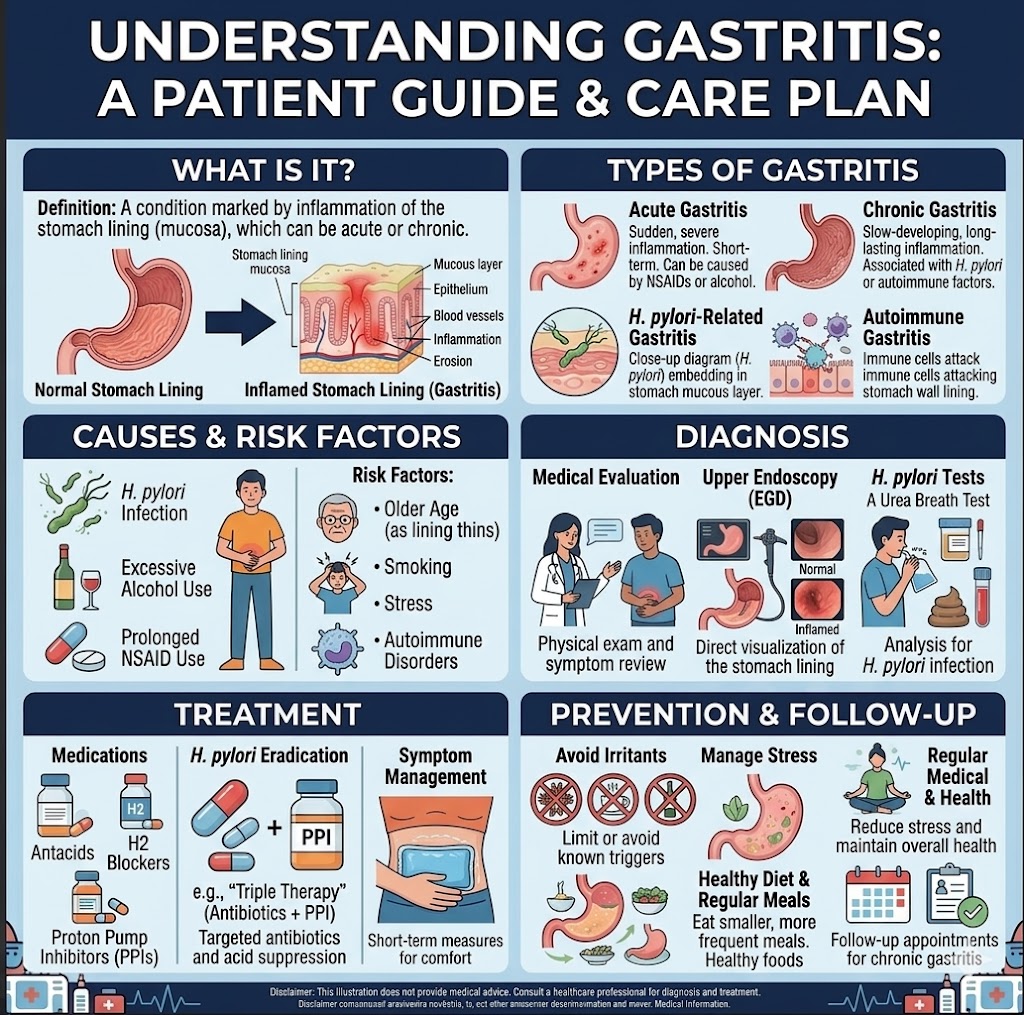
Gastritis is a common condition characterized by inflammation of the stomach's protective lining. This inflammation can be caused by various factors, most frequently an infection with a bacterium called H. pylori, regular use of certain pain relievers, or excessive alcohol consumption. Gastritis can appear suddenly (acute) or develop slowly over time (chronic). While often not serious and treatable, in some cases, it can lead to complications like stomach ulcers or, rarely, an increased risk of stomach cancer.
Understanding the Condition
Understanding Gastritis: Inflammation of the Stomach Lining
Understanding the Condition
Common Symptoms
Upper Belly Pain or Ache: A gnawing or burning discomfort, often referred to as indigestion, located in the upper part of your abdomen. This sensation may either worsen or improve after eating.
Feeling of Fullness: A sense of being uncomfortably full in your upper stomach area after consuming even small amounts of food.
No Symptoms: It's important to note that gastritis does not always cause noticeable symptoms, and some individuals may not realize they have it.
Consultation Guide
Which Specialist to Meet
You should initially consult your primary care physician or a general practitioner. If your symptoms are persistent, severe, or suggest complications, you may be referred to a gastroenterologist, a doctor specializing in digestive system disorders.
Preparations Before Your Visit
Before your appointment, be prepared to discuss your symptoms in detail, including when they started, how often they occur, and what makes them better or worse. Inform your doctor about all medications you take, especially pain relievers like ibuprofen or naproxen, and any alcohol consumption. Also, provide a complete medical history, including any other health conditions. You might be asked to fast before certain diagnostic tests.
Book a doctor visit near me
Acid Reducers (H2 Blockers): These reduce the amount of acid released into your digestive tract by blocking histamine, which stimulates acid production. (Duration: Usually for several weeks, or as symptoms subside)
Antacids: Over-the-counter medications that neutralize existing stomach acid, providing quick relief from pain and discomfort. (Duration: As needed for symptom relief)
Stress Management: Practicing relaxation techniques like meditation, yoga, or deep breathing to help manage stress, which can exacerbate gastritis symptoms. (Duration: Ongoing)
Avoiding Irritating Pain Relievers: If certain pain relievers like NSAIDs are contributing to gastritis, your doctor may recommend alternative pain management strategies. (Duration: Ongoing)
Endoscopic Interventions: In rare cases, if gastritis leads to severe bleeding ulcers, procedures performed during an endoscopy (like cauterization or injection therapy) may be necessary to stop the bleeding. (Duration: Single procedure)
Adhere to Treatment Plan: Complete full courses of medication, particularly antibiotics for H. pylori, even if symptoms improve quickly, to prevent recurrence.
Identify and Address Underlying Conditions: Work with your healthcare provider to manage any associated conditions like autoimmune disorders, Crohn's disease, or celiac disease, which can contribute to gastritis.
Monitor for Complications: Be aware of symptoms that could indicate complications, such as severe pain, blood in vomit or stool, or persistent black stools, and seek immediate medical attention if they occur.
Consultation Guide
Gastritis is a common condition characterized by inflammation of the stomach's protective lining. This inflammation can be caused by various factors, most frequently an infection with a bacterium called H. pylori, regular use of certain pain relievers, or excessive alcohol consumption. Gastritis can appear suddenly (acute) or develop slowly over time (chronic). While often not serious and treatable, in some cases, it can lead to complications like stomach ulcers or, rarely, an increased risk of stomach cancer.
These tests detect the presence of Helicobacter pylori bacteria, a common cause of gastritis and ulcers. Methods include breath tests, stool tests, and blood tests.
Diagnostic Procedures
This procedure allows your doctor to visually examine the lining of your upper digestive system, including the esophagus, stomach, and the beginning of the small intestine (duodenum). A thin, flexible tube with a camera (endoscope) is used.
What to Expect
What to Expect
For a breath test, you'll drink a special liquid and then breathe into a bag, which is checked for specific gases. For a stool test, you'll provide a stool sample for laboratory analysis. A blood test involves a simple blood draw to check for antibodies to H. pylori. Biopsies taken during an endoscopy can also be tested for H. pylori.
Imaging Studies (X-ray with contrast)
X-rays use radiation to create images of internal body structures. For digestive issues, a special liquid called barium (a 'contrast medium') is often swallowed to coat the digestive tract, making it visible on the X-ray.
What to Expect
You will be asked to remove any metal objects. You'll drink a barium solution, which may taste chalky. X-ray images are then taken as the barium moves through your esophagus, stomach, and small intestine. This helps identify any structural changes, ulcers, or other abnormalities. The procedure is usually quick and painless, though you might feel full from the barium.
Treatment Options
Medications
Antibiotics: Prescribed to kill the H. pylori bacteria if an infection is identified. Often a combination of different antibiotics is used. (Duration: Typically 10-14 days)
Acid Blockers (Proton Pump Inhibitors): These medications reduce stomach acid production by blocking the tiny 'pumps' within stomach cells that release acid. This helps the stomach lining heal. (Duration: Typically 4-8 weeks, or as directed by your doctor)
Stomach Lining Protectors: These medications form a protective barrier over the stomach lining, shielding it from acid and aiding in healing. (Duration: As prescribed, often for several weeks)
Follow-Up Appointments: Schedule regular check-ups with your doctor, especially if you have chronic gastritis, to monitor your condition and ensure treatment effectiveness.
Prevention & Long-Term Wellbeing
You will typically receive a sedative to help you relax. The endoscope is gently guided down your throat. You might feel some pressure but generally no pain. The doctor will look for signs of inflammation, ulcers, or other abnormalities. Small tissue samples (biopsies) may be taken for further analysis in a lab, which is painless. The procedure usually takes 15-30 minutes, followed by a recovery period until the sedative wears off.
Home Remedies and Lifestyle Adjustments
Dietary Modifications: Avoiding foods and drinks that irritate your stomach, such as spicy, acidic, fatty, or fried foods, as well as caffeine and carbonated beverages. Eating smaller, more frequent meals can also help. (Duration: Ongoing, especially during flare-ups)
Alcohol Reduction: Limiting or avoiding alcohol, as it can irritate and damage the stomach lining. (Duration: Ongoing)
Prevention
Limit NSAID Use: Use pain relievers like ibuprofen and naproxen sparingly and at the lowest effective dose. Discuss alternatives with your doctor if you need regular pain relief.
Moderate Alcohol Consumption: Avoid excessive alcohol intake, as it can damage and irritate your stomach lining.
Maintain Good Hygiene: Practicing good hand hygiene and consuming safely prepared food and water can help reduce the risk of H. pylori infection.
Manage Stress: Incorporate stress-reducing activities into your daily routine, as severe stress can trigger acute gastritis.
Long-Term Monitoring and Management
Tags & Topics
Notice an error or need an update?
Help us keep medical information accurate. Report incorrect info or suggest an edit.


