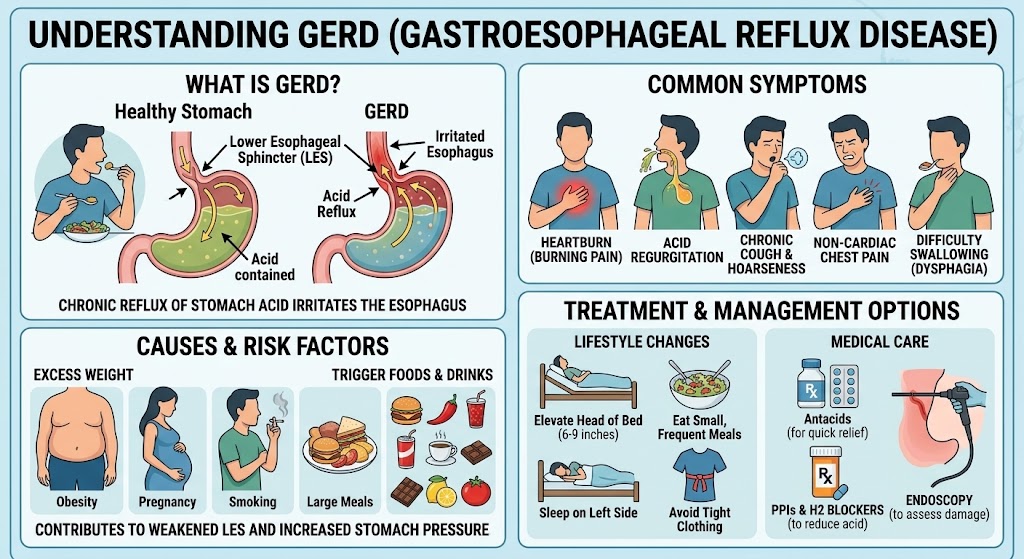
Gastroesophageal Reflux Disease, commonly known as GERD, is a condition where stomach acid frequently flows back up into the tube connecting your mouth to your stomach (the esophagus). This backward flow, called acid reflux, irritates the esophageal lining and often causes a burning sensation in the chest, known as heartburn. While occasional acid reflux is normal, when it happens regularly over time, it can lead to GERD. The esophagus has a ring of muscle at its bottom, called the lower esophageal sphincter, which acts like a valve to keep stomach contents down. In GERD, this valve may weaken or not close properly, allowing acid to escape. Most people can manage GERD with changes to their daily habits and medications, though some might require medical procedures or surgery.
Understanding the Condition
Gastroesophageal Reflux Disease (GERD): Understanding and Managing Heartburn
Understanding the Condition
Common Symptoms
Heartburn: A burning discomfort in the chest, often occurring after meals, and potentially worse at night or when lying down.
Regurgitation: The backflow of food or sour liquid into the throat or mouth.
Chest or Upper Belly Pain: Discomfort in the upper abdomen or chest area.
Difficulty Swallowing (Dysphagia): A sensation that food is getting stuck.
Sensation of a Lump in the Throat: Feeling as though something is caught in your throat.
Chronic Cough: An ongoing cough, especially if it occurs at night.
Hoarseness or Laryngitis: Inflammation of the vocal cords, leading to a raspy voice.
Worsening Asthma: Acid reflux can trigger or worsen asthma symptoms.
Consultation Guide
Which Specialist to Meet
You should initially consult with your primary care physician. If your symptoms are persistent or severe, or if complications are suspected, you may be referred to a specialist in digestive diseases, known as a gastroenterologist.
Preparations Before Your Visit
Before your appointment, it's helpful to keep a record of your symptoms, noting when they occur, what makes them better or worse, and any medications or dietary supplements you are currently taking. Be prepared to discuss your diet, lifestyle, and medical history. Write down any questions you have for your doctor.
Book a doctor visit near me
Weight Management: If you are overweight, losing even a small amount of weight can reduce pressure on your abdomen and ease reflux symptoms. (Duration: Ongoing)
Elevating the Head of Your Bed: Raise the head of your bed by 6-9 inches using blocks under the bedposts or a wedge pillow. This uses gravity to help keep stomach acid down. (Duration: Ongoing)
Quitting Smoking: Smoking can weaken the lower esophageal sphincter, making reflux worse. (Duration: Ongoing)
Acid-Reducing Medications (Over-the-counter): These include antacids for immediate, temporary relief and histamine (H2) blockers that reduce acid production for a longer period. (Duration: Short-term relief for occasional symptoms or as directed by a doctor.)
Nissen Fundoplication: This common surgical procedure involves wrapping the top part of the stomach around the lower esophagus. This reinforces the weakened lower esophageal sphincter, making it more difficult for stomach acid to flow back up. It is often performed using minimally invasive techniques (laparoscopy). (Duration: Potentially long-term relief from GERD symptoms.)
Review Medications: Discuss all your medications and supplements with your doctor, as some can worsen GERD symptoms or irritate the esophagus. Your doctor may suggest alternatives or adjustments.
Long-Term Monitoring and Complication Management
Regular Follow-ups: If you have GERD, especially severe or long-standing symptoms, regular check-ups with your doctor are important to monitor the condition and adjust treatment as needed.
Understanding Complications: Unmanaged GERD can lead to complications such as esophagitis (inflammation and possible ulcers in the esophagus), esophageal stricture (narrowing of the esophagus making swallowing difficult), and Barrett's esophagus (changes in the esophageal lining that increase the risk of cancer). Early detection and management are key.
Consultation Guide
Gastroesophageal Reflux Disease, commonly known as GERD, is a condition where stomach acid frequently flows back up into the tube connecting your mouth to your stomach (the esophagus). This backward flow, called acid reflux, irritates the esophageal lining and often causes a burning sensation in the chest, known as heartburn. While occasional acid reflux is normal, when it happens regularly over time, it can lead to GERD. The esophagus has a ring of muscle at its bottom, called the lower esophageal sphincter, which acts like a valve to keep stomach contents down. In GERD, this valve may weaken or not close properly, allowing acid to escape. Most people can manage GERD with changes to their daily habits and medications, though some might require medical procedures or surgery.
Diagnostic Procedures
This procedure involves inserting a long, flexible tube with a tiny camera (an endoscope) down your throat. It allows your doctor to visually examine the lining of your esophagus, stomach, and the beginning of your small intestine (duodenum) to look for irritation, inflammation, ulcers, or other abnormalities. It can also be used to take small tissue samples (biopsies) for further analysis.
What to Expect
This test measures the muscle contractions in your esophagus and how well the lower esophageal sphincter opens and closes. It helps assess the strength and coordination of the esophageal muscles as they push food towards the stomach. It's often used before anti-reflux surgery to ensure the esophagus is functioning properly.
What to Expect
A thin, flexible tube with pressure sensors is gently passed through your nose, down your esophagus, and into your stomach. You may be asked to swallow small sips of water during the test. The procedure typically takes 30-60 minutes. It can be uncomfortable but is generally not painful. No sedation is usually given for this test, so you can drive yourself home afterwards.
Vitamin B-12 Levels: If you are on long-term acid-reducing medications, discuss potential vitamin B-12 deficiency with your doctor and ask if testing or supplements are needed.
Treatment Options
You will typically receive medication to help you relax and numb your throat. The endoscope is gently guided down your throat. You might feel some pressure, but it should not be painful. The procedure usually takes about 15-30 minutes. Afterwards, you'll need time to recover from the sedative and will need someone to drive you home. You might experience a sore throat for a day or two.
Medications
Prescription Acid-Reducing Medications: Stronger H2 blockers or proton pump inhibitors (PPIs) are prescribed to reduce stomach acid production and allow the esophageal lining to heal. Long-term use of certain acid-reducing medications may be linked to a decrease in vitamin B-12 levels, so discuss this with your doctor. (Duration: As directed by a doctor, often 4-8 weeks initially, or longer for maintenance.)
Surgical Procedures
Prevention & Long-Term Wellbeing
Lifestyle and Home Remedies
Dietary Adjustments: Avoid foods that trigger reflux, such as fatty or fried foods, spicy foods, chocolate, peppermint, and acidic foods like citrus and tomatoes. Limit alcohol and coffee consumption. (Duration: Ongoing)
Eating Habits: Eat smaller, more frequent meals instead of large ones. Avoid eating late at night, ideally waiting at least 2-3 hours after your last meal before lying down. (Duration: Ongoing)
Prevention
Identify and Avoid Triggers: Pay attention to specific foods, beverages (like alcohol and coffee), or activities that worsen your acid reflux and try to avoid them.
Maintain a Healthy Weight: Excess weight, particularly around the abdomen, can put pressure on the stomach and push acid upwards.
Proper Eating Habits: Eating slowly, having smaller meals, and not lying down immediately after eating can help prevent reflux.
Tags & Topics
Notice an error or need an update?
Help us keep medical information accurate. Report incorrect info or suggest an edit.


