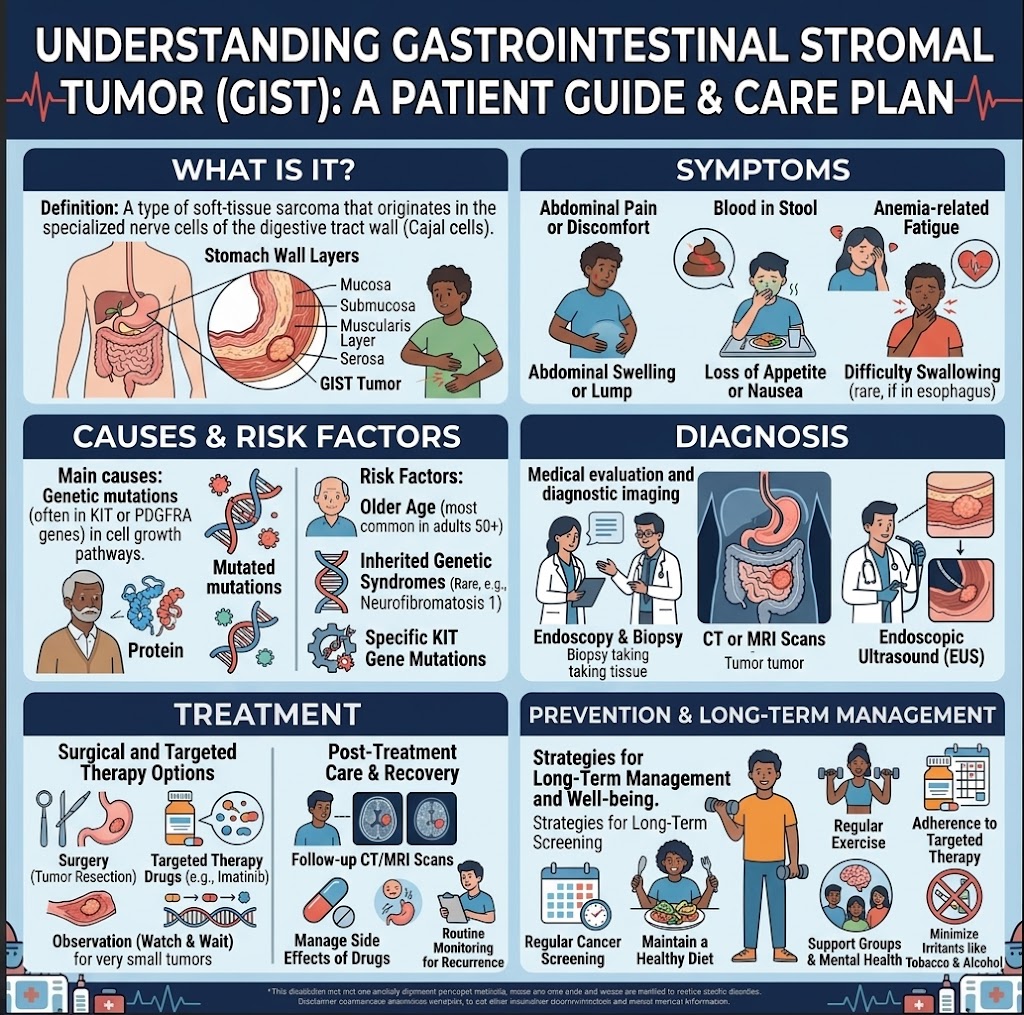
A Gastrointestinal Stromal Tumor (GIST) is a type of cancer that develops in the digestive system, most commonly in the stomach or small intestine. These tumors are thought to originate from specialized cells within the walls of these organs, which are crucial for moving food through the body. Small GISTs may not cause any noticeable symptoms and can grow very slowly without immediate problems. However, as they enlarge, they can lead to symptoms like abdominal pain and nausea. While GISTs can affect individuals of any age, they are more frequently found in adults and are rare in children. The exact reason why most GISTs form is often not known.
Understanding the Condition
A Gastrointestinal Stromal Tumor (GIST) is a type of cancer that develops in the digestive system, most commonly in the stomach or small intestine. These tumors are thought to originate from specialized cells within the walls of these organs, which are crucial for moving food through the body. Small GISTs may not cause any noticeable symptoms and can grow very slowly without immediate problems. However, as they enlarge, they can lead to symptoms like abdominal pain and nausea. While GISTs can affect individuals of any age, they are more frequently found in adults and are rare in children. The exact reason why most GISTs form is often not known.
Common Symptoms
Abdominal Mass: A noticeable lump or swelling in the belly area.
Belly Pain: Discomfort or pain in the abdomen.
Nausea and Vomiting: Feeling sick to your stomach and throwing up.
Loss of Appetite: Not feeling hungry when you normally would.
Early Fullness: Feeling full very quickly after eating only a small amount of food.
Dark Stools: Black or tarry stools, which can be a sign of bleeding within the digestive system.
Consultation Guide
Which Specialist to Meet
You should consult with a team of specialists, including a Gastroenterologist (a doctor specializing in digestive system disorders), an Oncologist (a cancer specialist), and potentially a Surgeon (if tumor removal is an option). A Palliative Care Specialist can also provide support for symptom management and quality of life.
Preparations Before Your Visit
Before your visit, it's helpful to write down all your symptoms, including when they started and how often they occur. List any other medical conditions you have and all medications you take. Prepare a list of questions for your doctor. If you have any previous medical records, such as imaging scans or test results, bring them along.
Book a doctor visit near me
Palliative Care: This specialized medical care focuses on providing relief from the symptoms and stress of a serious illness like GIST. It aims to improve quality of life for both the patient and their family, offered alongside any other ongoing treatments. A team of professionals helps manage pain, nausea, and other physical or emotional challenges. (Duration: Continuous, as needed, throughout the course of the illness, adapting to changing needs.)
Early Detection: Be aware of your body and seek medical attention for persistent, unexplained digestive symptoms. While GISTs are rare, early detection can lead to better outcomes.
Diagnostic Procedures
Gastrointestinal Stromal Tumor (GIST): Understanding a Digestive System Cancer
Understanding the Condition
Computed Tomography (CT) Scan
Uses X-rays to create detailed cross-sectional images of internal organs, helping locate the tumor and check for spread.
What to Expect
You'll lie on a table that slides into a large scanner. A special dye may be injected into a vein for clearer images. The scan is usually quick and painless, requiring you to stay still.
Magnetic Resonance Imaging (MRI)
Employs powerful magnets and radio waves to produce highly detailed images of soft tissues, offering specific insights into tumor characteristics.
What to Expect
You'll lie on a table inside a tube-like machine. It can be noisy, and you'll need to remain very still. Similar to a CT, a contrast dye might be used.
Positron Emission Tomography (PET) Scan
Detects areas of high metabolic activity using a radioactive sugar, which can highlight cancer cells and assess tumor activity or spread.
What to Expect
A small amount of radioactive sugar solution is injected into your vein, followed by a wait for it to circulate. Then, you'll lie on a scanner table. The scan is typically painless.
Endoscopic Ultrasound (EUS)
Combines a flexible viewing tube (endoscope) with ultrasound to get close-up images of the digestive tract wall and nearby areas, often used for guided biopsies.
What to Expect
Sedation will be given to help you relax. A thin, flexible scope is gently guided through your mouth into the digestive tract. You might feel some pressure, but sedation minimizes discomfort.
A small tissue sample is taken from the suspicious growth for microscopic examination. This confirms the diagnosis of GIST and identifies its specific type and genetic features.
What to Expect
Performed during an EUS or surgically, you will receive local anesthesia or sedation to ensure comfort. Mild discomfort at the site after the procedure is possible, which can be managed with pain relief.
Tumor Removal Surgery: If the GIST is localized and can be safely removed, surgery is often the primary treatment. The goal is to remove the tumor and a small margin of healthy tissue around it. For larger or more complex tumors, a portion of the affected organ (like the stomach or small intestine) might also be removed. This can sometimes be done using minimally invasive techniques. (Duration: Typically a single procedure, followed by a recovery period of several weeks to months. Long-term follow-up is necessary.)
Treatment Options
Surgical Procedures
Medications
Targeted Therapy: These medications are specifically designed to block certain signals within cancer cells that promote their growth. They are highly effective for GISTs by targeting specific genetic mutations often found in these tumors. They may be used after surgery to reduce the risk of recurrence, or for GISTs that cannot be removed surgically or have spread. (Duration: Often long-term, possibly for several years, depending on the response to treatment and side effects.)
Therapies
Regular Follow-up Appointments: After treatment, ongoing medical check-ups are crucial to monitor for any recurrence or new tumor growth. These typically involve physical exams and regular imaging scans (like CT or MRI).
Managing Side Effects: Work closely with your healthcare team to manage any side effects from treatments, such as those from targeted therapies, which can impact daily life.
Nutritional Support: A healthy diet can support overall well-being. A dietitian can help address any dietary challenges related to GIST or its treatment, especially if digestive function is affected.
Psychological and Emotional Support: Living with cancer can be emotionally challenging. Support groups, counseling, or speaking with a mental health professional can provide coping strategies and emotional relief.
Prevention & Long-Term Wellbeing
Prevention
Genetic Counseling: If you have a family history of GIST or certain hereditary conditions, genetic counseling can help assess your risk and guide screening decisions.
Active Lifestyle: Engage in light to moderate physical activity as advised by your doctor to maintain strength, energy, and improve mood.
Tags & Topics
Notice an error or need an update?
Help us keep medical information accurate. Report incorrect info or suggest an edit.


