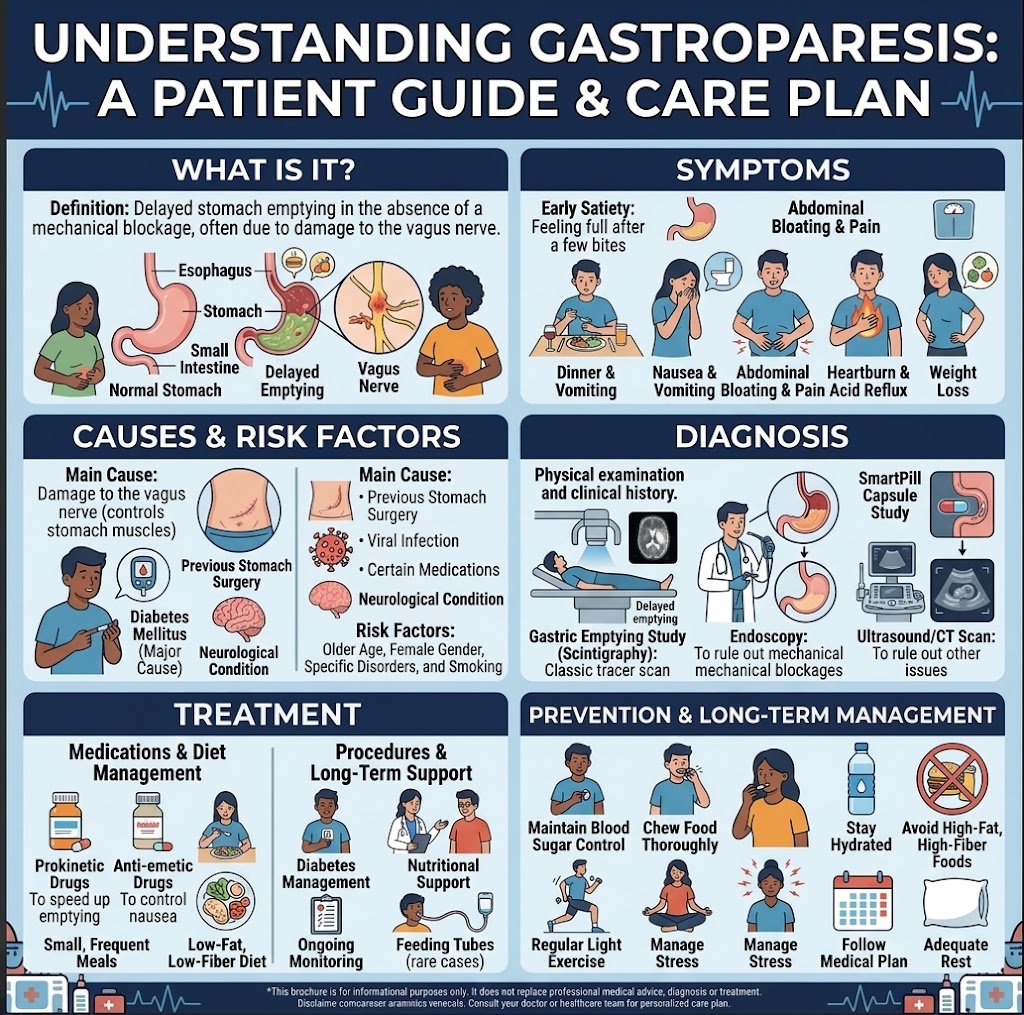
Gastroparesis is a condition where the muscles in your stomach don't work properly to move food into your small intestine. This causes food to stay in your stomach for too long, leading to a feeling of fullness and other digestive issues. While the exact cause is often unknown, it can be linked to conditions like diabetes, viral infections, or surgery. Certain medications can also contribute to or worsen symptoms. Although there's no cure, dietary changes and various treatments can help manage the condition.
Understanding the Condition
Gastroparesis: Understanding Delayed Stomach Emptying
Understanding the Condition
Gastroparesis is a condition where the muscles in your stomach don't work properly to move food into your small intestine. This causes food to stay in your stomach for too long, leading to a feeling of fullness and other digestive issues. While the exact cause is often unknown, it can be linked to conditions like diabetes, viral infections, or surgery. Certain medications can also contribute to or worsen symptoms. Although there's no cure, dietary changes and various treatments can help manage the condition.
Common Symptoms
Belly Bloating: A feeling of fullness or swelling in the abdomen.
Belly Pain: Discomfort or pain in the stomach area.
Feeling Full Quickly: Feeling full after eating only a small amount of food, or long after finishing a meal.
Vomiting Undigested Food: Throwing up food several hours after it was eaten.
Acid Reflux: Stomach acid flowing back into the esophagus, causing heartburn.
Changes in Blood Sugar Levels: Unpredictable fluctuations in blood glucose, especially for those with diabetes.
Loss of Appetite: A reduced desire to eat.
Unintended Weight Loss and Malnutrition: Losing weight without trying and not getting enough essential nutrients due to poor digestion or vomiting.
Consultation Guide
Which Specialist to Meet
Before your visit, keep a detailed diary of your symptoms, including when they occur, what you ate, and any medications you are taking. Be ready to discuss your full medical history, past surgeries, and current medications. You might need to fast before some diagnostic tests.
Book a doctor visit near me
Liquid or Pureed Foods: Incorporating blended soups, smoothies, and other liquid meals can be easier to digest and help ensure you get enough nutrients. (Duration: As needed for symptom management)
Hydration: Drink plenty of fluids, especially water, throughout the day and between meals to prevent dehydration and aid digestion. (Duration: Ongoing)
Light Activity After Meals: A short, gentle walk after eating can sometimes help stimulate stomach muscle activity. (Duration: Ongoing)
Anti-Nausea/Vomiting Medications (Anti-emetics): These drugs help control feelings of sickness and prevent vomiting, improving comfort and food tolerance. (Duration: As needed for relief or regular use based on symptom severity.)
Pain Relievers: Used to manage stomach pain if other strategies are insufficient. Specific types are chosen to avoid worsening stomach emptying. (Duration: Short-term, as needed, under medical guidance.)
Procedures and Therapies
Gastric Electrical Stimulation: A surgically implanted device delivers mild electrical pulses to the stomach muscles to help control severe nausea and vomiting. (Duration: Long-term; device remains implanted with periodic adjustments.)
Nutritional Support (Tube Feeding): If severe malnutrition or uncontrolled symptoms occur, a feeding tube can deliver liquid nutrition directly to the small intestine, bypassing the stomach. (Duration: Short-term or long-term, depending on severity.)
Intravenous (IV) Nutrition: For severe cases of malnutrition or dehydration, nutrients are delivered directly into a vein, usually in a hospital setting. (Duration: Short-term, until other feeding methods can be established.)
Botox Injections: Injections of botulinum toxin into the pyloric valve (stomach outlet) can temporarily relax it, potentially allowing food to pass more easily. (Duration: Temporary relief (a few months), may require repeat injections.)
Pyloric Balloon Dilation: An endoscope is used to guide a balloon into the pyloric valve and inflate it, widening the opening. (Duration: Temporary relief, may require repeat procedures.)
Diabetes Management: Strict control of blood sugar levels is crucial for individuals with diabetes, as erratic levels can worsen gastroparesis symptoms.
Stress Reduction: Practices like meditation, deep breathing, or yoga can help manage stress, which can sometimes worsen digestive symptoms.
Avoid Trigger Foods: Identify and avoid specific foods that consistently worsen your symptoms, such as very spicy, high-fat, or high-fiber items.
Quit Smoking and Limit Alcohol: Smoking and excessive alcohol consumption can irritate the digestive system and may exacerbate gastroparesis symptoms.
Stay Upright After Eating: Remaining upright for at least two hours after meals can help prevent acid reflux and aid in digestion.
Regular Follow-ups with Healthcare Providers: Ongoing medical oversight is essential to adjust treatments, manage symptoms effectively, and prevent complications like dehydration or malnutrition.
Nutritional Counseling: Working with a registered dietitian can provide personalized dietary strategies to ensure adequate nutrient intake and better symptom control.
Monitor Blood Sugar Diligently: For those with diabetes, consistent monitoring of blood glucose levels is critical to prevent fluctuations that can worsen gastroparesis.
Watch for Signs of Dehydration or Malnutrition: Be aware of symptoms like excessive thirst, dark urine, persistent fatigue, or unexplained weight loss, and report them promptly to your doctor.
Consultation Guide
Blood tests can help identify underlying conditions, such as diabetes or thyroid issues, that might cause gastroparesis, or assess your nutritional status.
Diagnostic Procedures
Gastric Emptying Scintigraphy
This is a key test to measure how quickly food leaves your stomach. You'll eat a light meal containing a small, safe amount of a radioactive substance.
What to Expect
You will eat a meal, usually scrambled eggs or oatmeal, with a tracer. You'll then lie under a special camera at specific intervals (e.g., 1, 2, and 4 hours) to track the food's movement. It's painless, and the radiation exposure is minimal, similar to a standard X-ray. You'll need to avoid eating or drinking between scans.
Upper Endoscopy (EGD)
A procedure where a thin, flexible tube with a camera (endoscope) is inserted down your throat to visually examine your esophagus, stomach, and the beginning of your small intestine.
What to Expect
What to Expect
You will swallow a pill-sized capsule with water. A receiver worn on your belt records data as the capsule passes naturally through your digestive tract over several days. You can typically continue your normal activities. The receiver is returned to your doctor for analysis.
This test measures the electrical and muscle activity in your stomach. A thin tube with sensors is passed into your stomach to record contractions.
What to Expect
A thin tube with pressure sensors will be gently guided through your nose into your stomach. You might feel some discomfort during insertion. The sensors record your stomach's muscle contractions over several hours. You may be asked to remain still or drink water during the test.
What to Expect
A healthcare professional will draw a small sample of blood, usually from a vein in your arm. This is a quick, routine procedure with minimal discomfort.
Stomach Emptying Stimulants (Prokinetics): These medications help the stomach muscles contract and push food into the small intestine more effectively. (Duration: Long-term, as prescribed, with careful monitoring.)
Treatment Options
You will receive medication to help you relax and possibly a throat anesthetic. You'll lie on your side while the doctor gently guides the endoscope. You may feel pressure but generally no pain. The procedure takes 15-30 minutes, and you'll be monitored afterward as the sedation wears off. You will need someone to drive you home.
Wireless Motility Capsule (SmartPill)
A small, swallowable capsule that wirelessly measures pH, temperature, and pressure changes as it travels through your digestive system, providing data on transit times.
Medications
Pyloromyotomy: Surgery to cut the muscle of the pyloric valve, keeping it permanently open to improve stomach emptying. (Duration: Permanent; recovery typically a few weeks.)
Gastric Bypass or Partial Gastrectomy: In very severe and rare cases where other treatments fail, surgery to bypass or remove part of the stomach may be considered. These are significant interventions with notable risks. (Duration: Permanent; extensive recovery period.)
Prevention & Long-Term Wellbeing
Start by consulting your primary care doctor, who can then refer you to a gastroenterologist (a specialist in digestive diseases). An endocrinologist (for diabetes) or a registered dietitian may also be part of your care team.
Preparations Before Your Visit
Dietary Changes and Home Remedies
Small, Frequent Meals: Eating 5-6 small meals throughout the day instead of 3 large ones can help your stomach empty more easily. (Duration: Ongoing)
Low-Fat, Low-Fiber Diet: Reducing high-fat and high-fiber foods can ease digestion, as these are harder for the stomach to process. Cooked vegetables are often better tolerated than raw. (Duration: Ongoing)
Managing Underlying Conditions
Lifestyle Adjustments
Regular Physical Activity: Engaging in light exercise, such as walking, can support overall digestive health and potentially stimulate stomach activity.
Tags & Topics
Notice an error or need an update?
Help us keep medical information accurate. Report incorrect info or suggest an edit.


