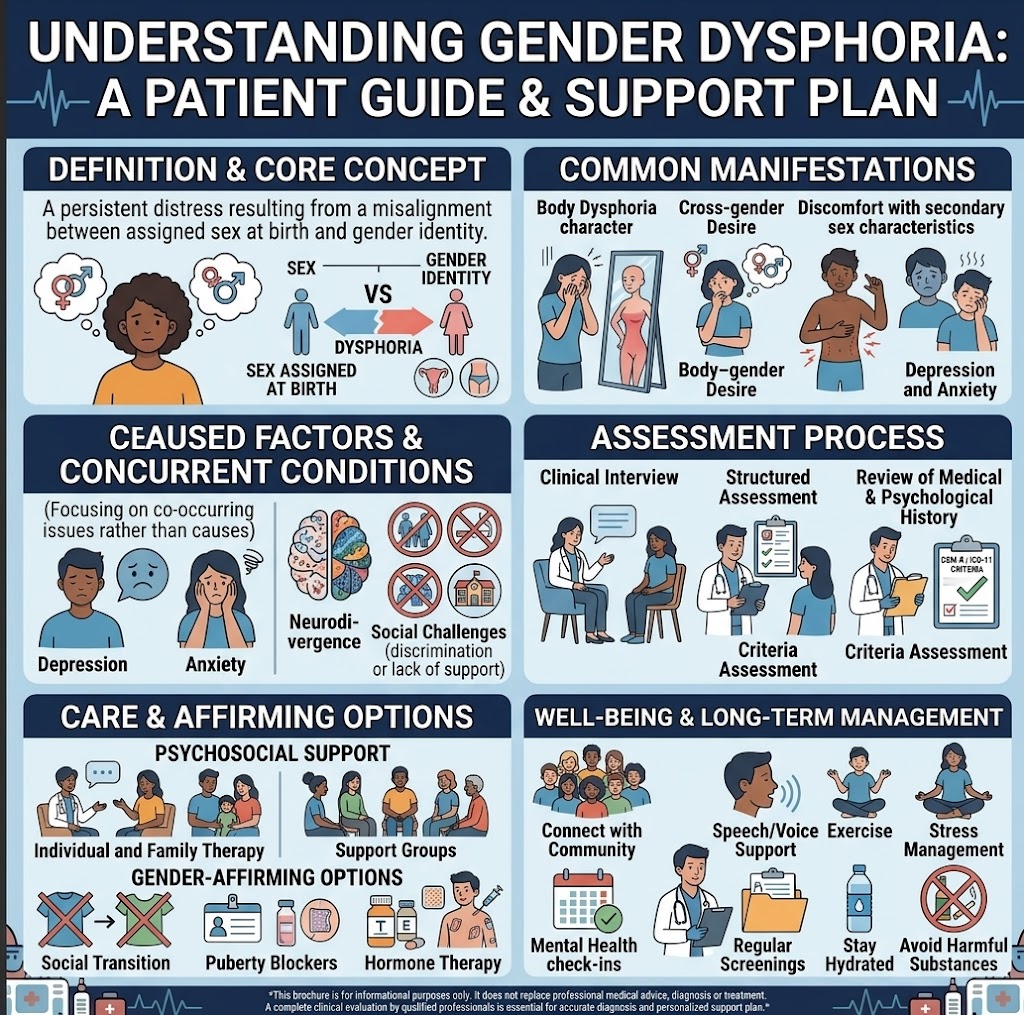
Gender dysphoria is the significant distress a person may experience when their inner sense of gender (gender identity) does not match the sex they were identified as at birth. Not all transgender and gender-diverse individuals experience gender dysphoria; many feel comfortable with their bodies and identities. The diagnosis of gender dysphoria is intended to help individuals access necessary healthcare and support, focusing on the distress itself rather than on gender identity as an issue.
Understanding the Condition
Understanding Gender Dysphoria and Gender-Affirming Care
Understanding the Condition
Common Symptoms
Discrepancy and Distress: Gender identity is an individual's internal sense of being male, female, both, neither, or somewhere else on the gender spectrum. People with gender dysphoria feel a profound and persistent difference between their gender identity and their sex assigned at birth. This feeling is not simply about not conforming to gender stereotypes; it involves intense, lasting distress and a strong desire to be another gender.
Variable Onset and Course: Gender dysphoria can emerge at different life stages, from childhood and adolescence into adulthood. For some, feelings may appear during puberty. The experience can also fluctuate, with periods where symptoms are less noticeable or seem to come and go.
Associated Emotional and Social Challenges: While some individuals openly express their feelings of gender dysphoria, others may experience symptoms like anxiety, depression, or other mood disorders. Social difficulties, problems in school, or challenges in daily activities can also be indicators, especially if they stem from pressure to conform to a birth-assigned gender or from experiences of harassment or bullying.
Consultation Guide
Which Specialist to Meet
To address gender dysphoria and explore gender-affirming care, you should consult a multidisciplinary team. This typically includes a primary care provider, a mental health professional (such as a psychiatrist, psychologist, or therapist experienced in gender identity), and an endocrinologist for hormone therapy. Depending on individual needs and goals, specialists like surgeons (plastic surgeons, urologists, gynecologists), or speech-language pathologists may also be involved.
Preparations Before Your Visit
Consultation Guide
A diagnosis of gender dysphoria is made by a qualified mental health professional (such as a psychiatrist, psychologist, or licensed therapist). This evaluation follows specific criteria outlined in medical diagnostic manuals, focusing on the presence of significant distress or impairment caused by the difference between an individual's gender identity and their sex assigned at birth.
Diagnostic Procedures
Gender dysphoria is the significant distress a person may experience when their inner sense of gender (gender identity) does not match the sex they were identified as at birth. Not all transgender and gender-diverse individuals experience gender dysphoria; many feel comfortable with their bodies and identities. The diagnosis of gender dysphoria is intended to help individuals access necessary healthcare and support, focusing on the distress itself rather than on gender identity as an issue.
Clinical Evaluation for Gender Dysphoria
What to Expect
During the evaluation, you will have one or more in-depth conversations with the mental health professional. They will ask about your internal sense of gender, how long you've experienced these feelings, and how they impact your daily life, emotional well-being, and social interactions. The professional aims to understand your experiences, distress, and goals for care, ensuring the assessment focuses on alleviating distress and supporting your well-being, rather than questioning your gender identity itself. This is a conversational, open-ended process.
Puberty Blockers: These medications (known as gonadotropin-releasing hormone analogues) temporarily pause the physical changes of puberty in youth who have started puberty. They prevent the body from producing sex hormones like testosterone and estrogen, thus delaying the development of secondary sex characteristics (e.g., facial hair, voice deepening, breast development, menstruation). This provides time for youth and their families to make decisions about future steps. (Duration: Used for a period during adolescence; effects are reversible if treatment is stopped.)
Feminizing Hormone Therapy: This involves taking estrogen and often a medication to block the effects of testosterone. Estrogen helps to suppress the body's natural testosterone production and triggers the development of feminine physical characteristics. (Duration: Typically ongoing and lifelong for sustained effects.)
Masculinizing Hormone Therapy: This involves taking the male hormone testosterone. Testosterone helps to stop menstrual cycles, reduces the ovaries' ability to produce estrogen, and encourages the development of masculine physical characteristics. (Duration: Typically ongoing and lifelong for sustained effects.)
Feminizing Surgery: These procedures aim to align physical features with a feminine gender identity. Options include 'top surgery' (breast augmentation to increase breast size), and 'bottom surgery' (which can involve removal of testicles, or removal of testicles and penis with creation of a vagina, labia, and clitoris). Other procedures like facial or body contouring may also be considered. (Duration: One-time procedure(s), with a recovery period and potential need for follow-up care.)
Treatment Options
Before your visit, it can be helpful to write down your questions and concerns, and to reflect on your feelings about your gender identity and any distress you are experiencing. Be prepared to discuss your personal health history and any medications you are taking. Researching your insurance coverage for gender-affirming care can also be beneficial.
Book a doctor visit near me
Masculinizing Surgery: These procedures aim to align physical features with a masculine gender identity. Options include 'top surgery' (chest reconstruction to create a more male-contoured chest) and 'bottom surgery' (which may involve reproductive organs or genitals, such as removal of the uterus, ovaries, and creation of a penis). (Duration: One-time procedure(s), with a recovery period and potential need for follow-up care.)
Therapies
Gender-Affirming Voice Therapy and Surgery: Voice therapy helps individuals modify characteristics like pitch, resonance, and speech patterns, as well as nonverbal communication (e.g., eye contact, gestures), to better match their gender identity. In some cases, voice surgery may be an option to physically alter vocal cords. (Duration: Therapy can last weeks to months; surgery is a one-time procedure with recovery.)
Mental Health Support and Counseling: Therapy helps individuals cope with the distress of gender dysphoria, manage co-occurring mental health conditions like anxiety or depression, navigate social challenges, and process experiences related to gender identity and transition. It provides a supportive space for self-exploration and developing coping strategies. (Duration: Varies significantly based on individual needs, from short-term to ongoing support.)
Financial Planning for Care: Investigate insurance coverage for gender-affirming treatments, as policies vary widely. Explore financial assistance programs or community resources to help manage the costs of medical care, hormones, and surgeries.
Social and Environmental Support
Cultivating Supportive Environments: Working towards creating understanding and acceptance within your family, friend circles, school, and workplace can significantly reduce stress and improve overall well-being. This may involve educating others about gender identity and gender dysphoria.
Addressing Discrimination and Prejudice: Being aware of resources and support systems for reporting and responding to experiences of bullying, harassment, or discrimination due to gender identity can help mitigate the negative impacts of gender minority stress.
Long-Term Physical Health Monitoring
Regular Medical Check-ups: Ongoing medical monitoring is vital, particularly for individuals undergoing hormone therapy. Regular check-ups help manage potential side effects, assess hormone levels, and ensure overall health and well-being.
Understanding Treatment Impacts: Being fully informed about how hormone therapies and surgeries may affect fertility, sexual function, and other long-term health aspects is important for making informed decisions and planning for the future.
Prevention & Long-Term Wellbeing
Mental and Emotional Support
Building Support Networks: Connecting with other transgender and gender-diverse individuals, support groups, or online communities can provide a sense of belonging, shared experience, and validation. Having understanding family and friends is also crucial.
Engaging in Professional Mental Healthcare: Regular sessions with a gender-affirming therapist or counselor can help manage distress, develop coping mechanisms, and address any co-occurring mental health concerns like anxiety, depression, or self-harm that may arise from gender dysphoria or gender minority stress.
Practicing Self-Care: Prioritizing activities that promote mental and emotional well-being, such as mindfulness, hobbies, exercise, or spending time in nature, can help in managing stress and fostering resilience.
Navigating Healthcare
Advocacy and Education: Understanding your rights, learning about available resources, and advocating for inclusive healthcare can empower you to receive appropriate and respectful care. This includes knowing how to address potential discrimination.
Choosing Inclusive Healthcare Providers: Seek out doctors and other healthcare professionals who have experience with and are knowledgeable about transgender care, and who are committed to providing affirming and compassionate services. This can significantly improve the quality of care and reduce fear of discrimination.
Tags & Topics
Notice an error or need an update?
Help us keep medical information accurate. Report incorrect info or suggest an edit.


