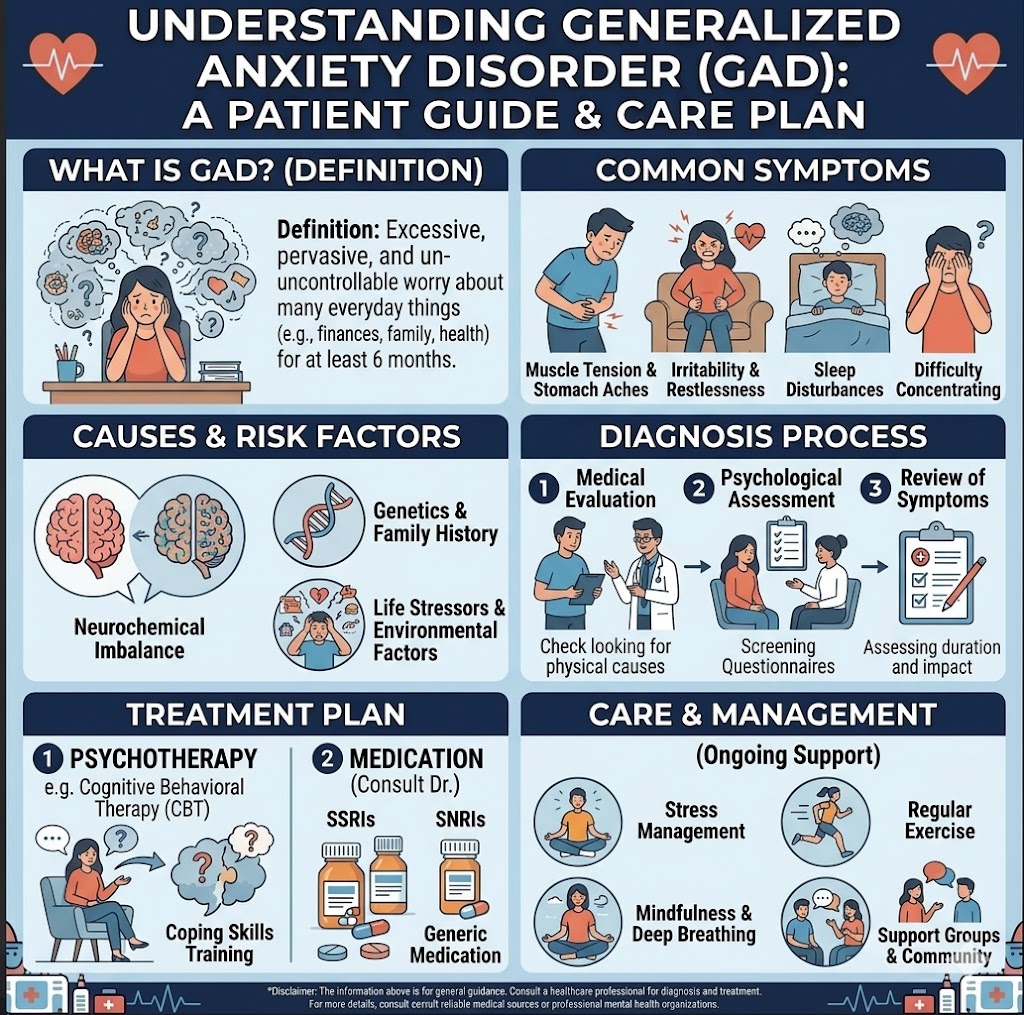
Generalized Anxiety Disorder (GAD) is a condition characterized by excessive, ongoing anxiety and worry that is difficult to control and interferes with daily life. While it's normal to feel anxious occasionally, GAD involves disproportionate worry about everyday matters, often without a clear cause. This condition can develop at any age and may occur alongside other anxiety or mood disorders. Although living with GAD can be challenging, it significantly improves with appropriate treatment, including therapy, medication, and lifestyle adjustments.
Understanding the Condition
Generalized Anxiety Disorder: Understanding and Managing Persistent Worry
Understanding the Condition
Common Symptoms
Persistent Worry: Constant or excessive worry about various aspects of life (like work, health, finances, or family), where the level of worry is much greater than the actual situation warrants.
Overthinking and Catastrophizing: Spending too much time planning for and thinking about all possible worst-case scenarios, even when unlikely.
Threat Perception: Viewing situations and events as threatening or dangerous, even when they are not, leading to a constant sense of unease.
Difficulty with Uncertainty: Struggling to cope with unknown outcomes, leading to increased anxiety and a need for excessive reassurance.
Indecisiveness: Having trouble making decisions due to an overwhelming fear of making the wrong choice or negative consequences.
Inability to Let Go: Finding it nearly impossible to stop worrying or put anxious thoughts aside, even when attempting to relax.
Restlessness and Tension: Feeling restless, on edge, 'keyed up,' or unable to relax, often accompanied by muscle tension.
Concentration Difficulties: Struggling to focus or experiencing moments where the mind feels 'blank' due to overwhelming worry.
Physical Symptoms: Generalized anxiety can also manifest physically, leading to symptoms such as fatigue, sleep problems (insomnia), headaches, digestive issues (like irritable bowel syndrome), and muscle aches.
Consultation Guide
Which Specialist to Meet
If you suspect you have generalized anxiety disorder, start by speaking with your primary care doctor. They can rule out any physical health conditions that might mimic anxiety symptoms and can refer you to a mental health professional. Specialists who diagnose and treat GAD include psychiatrists (medical doctors who can prescribe medication), psychologists, therapists, and licensed counselors (who provide various forms of talk therapy).
Preparations Before Your Visit
Before your appointment, consider writing down your symptoms, including when they started, how often they occur, and how they affect your daily life. Also, note any stressful life events or family history of mental health conditions. Prepare a list of questions you have for the doctor. Being open and honest about your feelings will help your doctor provide the most accurate assessment and appropriate care.
Book a doctor visit near me
Diagnosing Generalized Anxiety Disorder primarily involves a thorough discussion with a healthcare professional about your symptoms, medical history, and overall well-being. There isn't a single medical test, like a blood test or scan, that can diagnose GAD. Instead, diagnosis is based on established criteria outlined in mental health diagnostic manuals.
During a clinical assessment, your doctor or mental health professional will ask detailed questions about your worries, how long you've experienced them, how they impact your daily activities, and if you have any physical symptoms. They might also inquire about your family's medical history, any significant life changes or traumas, and your lifestyle habits. A physical exam may be conducted to rule out other medical conditions (such as thyroid issues or heart problems) that can cause anxiety-like symptoms. You will be encouraged to speak openly about your feelings and experiences to help the professional understand your condition fully.
Healthy Diet and Regular Exercise: Eating nutritious foods and engaging in consistent physical activity can improve mood and reduce anxiety symptoms. (Duration: Ongoing)
Adequate Sleep: Establishing a regular sleep schedule and creating a conducive sleep environment to ensure sufficient restorative sleep. (Duration: Ongoing)
Building Social Support: Connecting with friends, family, or support groups to share experiences and receive understanding. (Duration: Ongoing)
Anti-Anxiety Medications: These medications can provide quick relief for acute anxiety symptoms. They are generally prescribed for short-term use due to potential for dependency. (Duration: Short-term for acute relief or specific situations; not typically for long-term daily use.)
Seek Help Early: Addressing anxiety symptoms as soon as they emerge can prevent them from worsening and becoming harder to treat.
Keep a Journal: Regularly writing down your thoughts and feelings can help you identify triggers for stress and anxiety, and what strategies seem to help.
Prioritize and Manage Time: Effectively managing your time and energy can reduce feelings of being overwhelmed and lessen anxiety.
Avoid Unhealthy Substance Use: Limiting or avoiding alcohol, recreational drugs, excessive caffeine, and nicotine can significantly reduce anxiety symptoms, as these substances can trigger or worsen anxiety.
Adhere to Treatment Plans: Consistently following your prescribed therapy sessions and medication regimens is crucial for long-term symptom control.
Consultation Guide
Generalized Anxiety Disorder (GAD) is a condition characterized by excessive, ongoing anxiety and worry that is difficult to control and interferes with daily life. While it's normal to feel anxious occasionally, GAD involves disproportionate worry about everyday matters, often without a clear cause. This condition can develop at any age and may occur alongside other anxiety or mood disorders. Although living with GAD can be challenging, it significantly improves with appropriate treatment, including therapy, medication, and lifestyle adjustments.
Psychotherapy (Talk Therapy): Working with a therapist to explore the underlying causes of anxiety, develop healthier thought patterns, and learn effective coping mechanisms. This can include various approaches tailored to individual needs. (Duration: Typically several weeks to many months, or as needed for ongoing support.)
Cognitive Behavioral Therapy (CBT): A specific type of talk therapy that helps identify and change negative thought patterns and behaviors contributing to anxiety. It often involves structured sessions and 'homework' to practice new skills. (Duration: Usually 8-20 sessions, but can vary depending on individual needs.)
Diagnostic Procedures
Clinical Assessment and Diagnosis
What to Expect
Treatment Options
Medications
Antidepressants: Certain types of antidepressants are commonly prescribed for GAD, even if depression is not present, as they help regulate brain chemicals involved in mood and anxiety. (Duration: Often several weeks to see full effect; can be long-term for maintenance.)
Regular Check-ups: Maintaining regular follow-up appointments with your healthcare provider to monitor your condition and adjust treatment as needed.
Prevention & Long-Term Wellbeing
Self-Care and Lifestyle Adjustments
Learning Coping Skills: Developing strategies to manage stress and anxious thoughts, such as problem-solving techniques and mindfulness exercises. (Duration: Ongoing)
Relaxation Techniques: Practicing methods like deep breathing, meditation, yoga, or progressive muscle relaxation to calm the mind and body. (Duration: Ongoing)
Prevention
Maintain a Healthy Lifestyle: Continuing regular exercise, a balanced diet, and sufficient sleep are fundamental for mental and physical well-being.
Practice Stress Management: Regularly employing relaxation techniques like meditation, deep breathing, or mindfulness to keep stress levels in check.
Build and Utilize Support Systems: Staying connected with supportive friends, family, or joining anxiety support groups can provide emotional resilience and understanding.
Tags & Topics
Notice an error or need an update?
Help us keep medical information accurate. Report incorrect info or suggest an edit.


