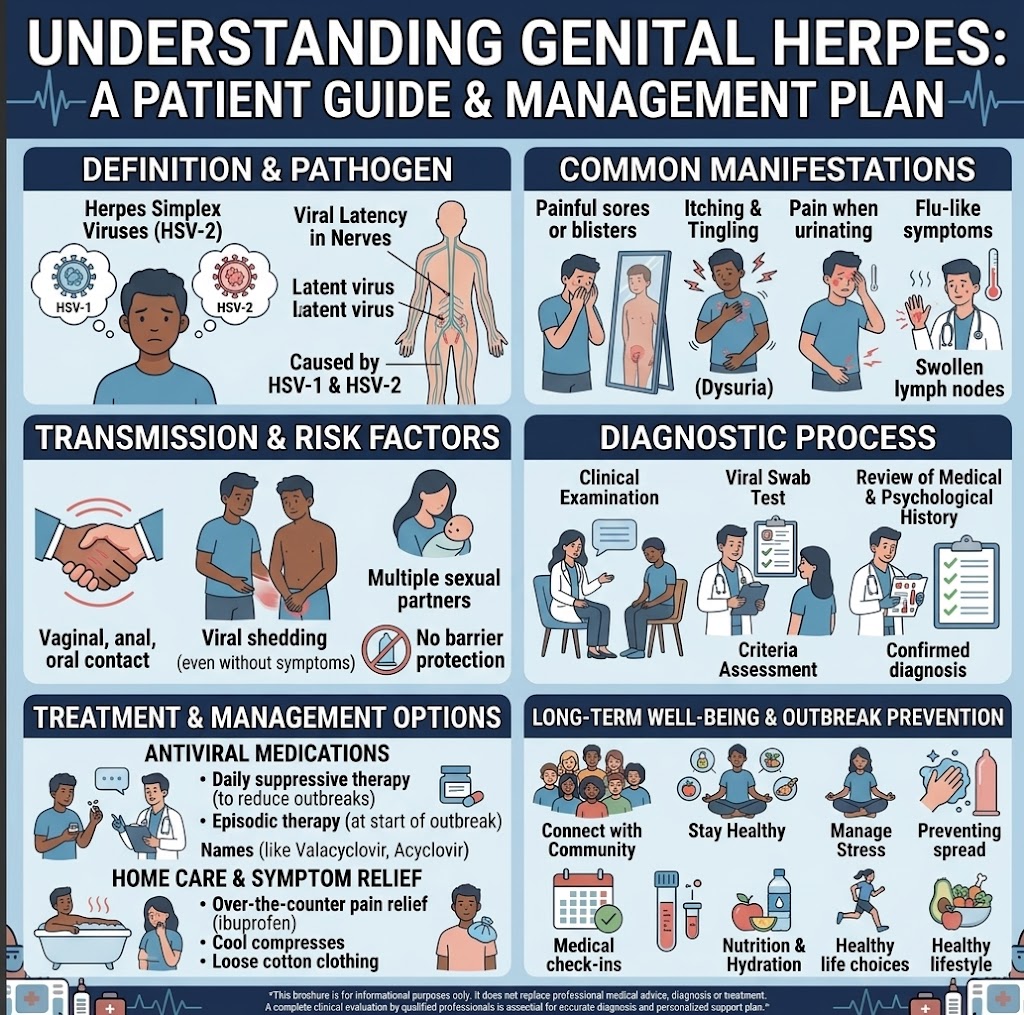
Genital herpes is a very common infection spread through sexual contact. It's caused by the herpes simplex virus (HSV). This virus can be passed from person to person through skin-to-skin contact during sexual activity. Many people with genital herpes have such mild symptoms or no symptoms at all that they don't realize they have it, yet they can still spread the virus. Others experience pain, itching, and sores around their genitals, anus, or mouth. There's currently no cure for genital herpes, but treatments are available to manage symptoms, reduce the frequency of outbreaks, and lower the risk of passing the virus to others.
Understanding the Condition
Genital Herpes: Understanding a Common Viral Infection
Understanding the Condition
Genital herpes is a very common infection spread through sexual contact. It's caused by the herpes simplex virus (HSV). This virus can be passed from person to person through skin-to-skin contact during sexual activity. Many people with genital herpes have such mild symptoms or no symptoms at all that they don't realize they have it, yet they can still spread the virus. Others experience pain, itching, and sores around their genitals, anus, or mouth. There's currently no cure for genital herpes, but treatments are available to manage symptoms, reduce the frequency of outbreaks, and lower the risk of passing the virus to others.
Common Symptoms
Pain or Itching: A tingling, itching, or painful sensation around the genital or anal area, or sometimes the mouth, can be the first sign.
Small Bumps or Blisters: These may appear as small, red bumps or tiny white blisters. They can show up around the genitals, anus, or mouth.
Painful Ulcers: The blisters often rupture, leaving open sores that can be painful, ooze fluid, or bleed.
Scabs: As the ulcers heal, scabs form over them.
Painful Urination: If the sores are near the urethra (the tube that carries urine out of the body), urination can be painful.
Genital Discharge: Women may notice unusual vaginal discharge, and men may experience discharge from the urethra.
Flu-like Symptoms: During the first outbreak, some people experience general body aches, fever, swollen lymph nodes in the groin, and headache.
Consultation Guide
Which Specialist to Meet
You should start by consulting your primary care doctor. Depending on your symptoms or needs, they might refer you to a gynecologist (for women), a urologist (for men), or an infectious disease specialist.
Preparations Before Your Visit
Before your visit, make a list of all your symptoms, including when they started. Be prepared to discuss your sexual history honestly. Write down any questions you have about genital herpes.
Book a doctor visit near me
Antiviral Therapy (Episodic): These prescription medications help outbreaks heal faster and reduce their severity. They are typically taken for a short period when symptoms first appear. (Duration: Usually 2 to 5 days, taken at the first sign of an outbreak.)
Avoiding Sexual Activity During Outbreaks: The virus is most easily spread when sores are present. Refraining from sexual contact when you have symptoms (bumps, blisters, or sores) is vital to prevent transmission.
Antiviral Medication for Transmission Reduction: If you have genital herpes, taking daily suppressive antiviral medication can lower the risk of passing the virus to your partner, even when you don't have symptoms.
Long-Term Monitoring and Management
Regular Health Check-ups: Continue regular visits with your healthcare provider to monitor your condition, discuss any new symptoms, and ensure your treatment plan remains effective.
Understanding and Managing Triggers: Many people find that stress, illness, fatigue, or hormonal changes can trigger outbreaks. Identifying and managing these triggers can help reduce outbreak frequency.
Pregnancy and Herpes: If you are pregnant and have genital herpes, it's essential to inform your healthcare provider. They may recommend antiviral medicine late in pregnancy to prevent an outbreak around delivery. If an outbreak occurs during labor, a cesarean section (C-section) might be recommended to protect the baby from infection.
Support and Counseling: Living with herpes can sometimes be emotionally challenging. Support groups or counseling can provide valuable resources, coping strategies, and a sense of community.
Consultation Guide
Your doctor will use a sterile swab to gently rub the base of an open sore. This might cause a brief, mild discomfort or stinging sensation. It's a quick procedure.
Diagnostic Procedures
This test involves taking a small sample of fluid from a fresh sore or blister. The sample is then sent to a lab to see if the herpes virus grows.
What to Expect
PCR Test (Polymerase Chain Reaction)
This is a highly sensitive test that detects the genetic material (DNA) of the herpes simplex virus. It can identify the virus even when there are very few viral particles present.
What to Expect
Similar to a viral culture, a swab will be taken from a fresh sore or lesion. The process is quick and involves minimal discomfort.
Blood Test (Antibody Test)
This test doesn't look for the virus itself, but for antibodies your immune system produces in response to the herpes virus. Antibodies indicate past or present infection, even if you don't have active sores.
What to Expect
A healthcare professional will draw a small sample of blood, usually from a vein in your arm. You might feel a brief pinch or sting as the needle is inserted. The process typically takes only a few minutes.
Often, a doctor can diagnose genital herpes by simply looking at the characteristic sores or blisters. This is usually done in conjunction with other tests.
What to Expect
Your doctor will visually inspect the affected areas of your skin and genitals. This is a non-invasive part of the physical exam.
Monogamous Relationship with Tested Partner: Having a long-term sexual relationship with a partner who has been tested for STIs and is not infected is the most effective way to prevent all sexually transmitted infections, including herpes.
Treatment Options
Medications
Antiviral Therapy (Suppressive): For individuals who experience frequent or severe outbreaks, a doctor might recommend taking antiviral medication daily. This can significantly reduce the number of outbreaks and lower the risk of transmitting the virus to a sexual partner. (Duration: Long-term, taken daily for months or years.)
Home Remedies and Self-Care
Pain Relief and Comfort Measures: Over-the-counter pain relievers can help manage discomfort. Wearing loose-fitting cotton underwear can reduce irritation. Soaking in a warm bath (without harsh soaps) can also provide soothing relief. (Duration: As needed during an outbreak.)
Keeping Sores Clean and Dry: Gently washing the affected area with mild soap and water and patting it dry can help prevent secondary infections and promote healing. (Duration: Daily during an outbreak.)
Prevention & Long-Term Wellbeing
Prevention
Consistent Condom Use: Using condoms or dental dams consistently and correctly during all sexual activity (vaginal, anal, and oral sex) significantly reduces the risk of transmission. However, they don't cover all skin, so some risk remains.
Open Communication with Partners: Discussing your herpes status with your sexual partners is crucial. This allows both parties to make informed decisions about safe sexual practices and manage risks.
Tags & Topics
Notice an error or need an update?
Help us keep medical information accurate. Report incorrect info or suggest an edit.


