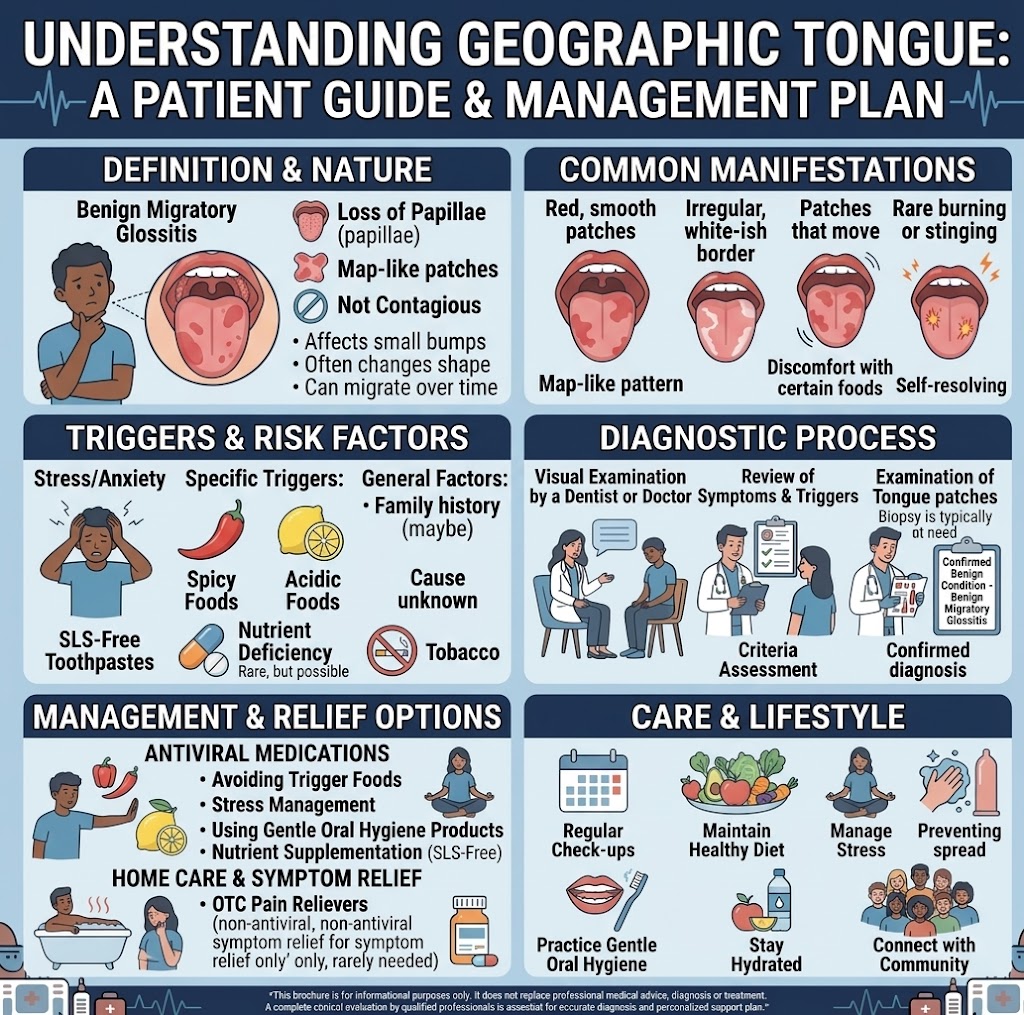
Geographic tongue is a common, harmless condition that affects the surface of your tongue. Normally, your tongue is covered with tiny, finger-like bumps called papillae. With geographic tongue, certain areas of your tongue lose these papillae, creating smooth, red patches. These patches often have slightly raised, whitish borders and resemble a map, hence the name 'geographic tongue.' These map-like areas can change shape and move around your tongue over time. While its appearance can be concerning, geographic tongue is not a sign of infection, cancer, or any serious health problem. However, it can sometimes cause discomfort, pain, or increased sensitivity to certain foods.
Understanding the Condition
Geographic Tongue: Understanding This Common Tongue Condition
Understanding the Condition
Common Symptoms
Variable Duration: Geographic tongue can persist for days, months, or even years. The condition often resolves on its own without intervention, but it can reappear later, sometimes after long symptom-free periods.
Often Asymptomatic: It's important to note that many individuals with geographic tongue have no noticeable symptoms and may only discover the condition during a routine dental or medical examination.
Consultation Guide
Which Specialist to Meet
A general practitioner (family doctor) or a dentist can typically diagnose and manage geographic tongue. If symptoms are persistent, severe, or unusual, they may refer you to an oral medicine specialist (a dentist specializing in mouth conditions) or a dermatologist.
Preparations Before Your Visit
Before your visit, make a list of all your symptoms, including when they started, how often they occur, and what seems to make them better or worse. Note any foods or drinks that trigger discomfort. List all medications, supplements, and vitamins you currently take. Mention any other medical conditions you have, such as psoriasis, as there might be a link. Prepare a list of questions you want to ask your doctor or dentist.
Book a doctor visit near me
Geographic tongue is primarily diagnosed by a visual examination of your tongue and mouth by a healthcare professional. They will look closely at the characteristic shape, color, and pattern of the patches on your tongue. They will also ask about your symptoms and review your medical history.
Avoiding Irritating Foods and Drinks: Identify and avoid foods and drinks that worsen your discomfort, such as very spicy, acidic (like citrus fruits and tomatoes), excessively salty, or very sweet items. Tobacco and alcohol can also irritate the tongue and should be avoided or limited if they cause symptoms. (Duration: Ongoing, as needed to manage symptoms during flare-ups.)
Maintain Good Oral Hygiene: Regular brushing and flossing help keep your mouth healthy and free from other irritants. Gentle brushing of the tongue can be helpful, but avoid aggressive scrubbing of sensitive areas. (Duration: Ongoing.)
Medications for Symptom Relief
Over-the-Counter Pain Relievers: Simple pain relief medications available without a prescription, such as those containing acetaminophen or ibuprofen, can help manage mild discomfort. (Duration: As needed during symptomatic flare-ups.)
Medicated Mouth Rinses: Your doctor or dentist might recommend special mouth rinses. These can include rinses that contain a mild numbing agent to reduce pain, or anti-inflammatory rinses to soothe irritation and reduce sensitivity. (Duration: Typically used for a few days to weeks during symptomatic periods, as directed by a healthcare professional.)
Topical Gels or Pastes: Prescribed gels or pastes containing mild anti-inflammatory ingredients (like corticosteroids) can be applied directly to the affected areas of the tongue to reduce pain and inflammation. (Duration: Used as directed, usually for short periods during flare-ups.)
Symptom-Focused Treatment: There is no cure for geographic tongue, and treatment focuses solely on managing discomfort and sensitivity when symptoms occur. Many people with geographic tongue do not require any treatment at all because they experience no symptoms. (Duration: As needed for symptoms.)
Symptom Management and Oral Health
Monitor Your Tongue: Pay attention to your tongue's appearance and any changes in symptoms. This helps you identify personal triggers (foods, stress) and understand the natural pattern of the condition. Regular self-checks can also provide peace of mind that the condition is consistent with geographic tongue and not something new.
Regular Dental Check-ups: Continue with routine dental visits. Your dentist can monitor your oral health, offer advice, and confirm that any changes on your tongue are still consistent with geographic tongue, ensuring no other oral health issues are overlooked.
Consultation Guide
Geographic tongue is a common, harmless condition that affects the surface of your tongue. Normally, your tongue is covered with tiny, finger-like bumps called papillae. With geographic tongue, certain areas of your tongue lose these papillae, creating smooth, red patches. These patches often have slightly raised, whitish borders and resemble a map, hence the name 'geographic tongue.' These map-like areas can change shape and move around your tongue over time. While its appearance can be concerning, geographic tongue is not a sign of infection, cancer, or any serious health problem. However, it can sometimes cause discomfort, pain, or increased sensitivity to certain foods.
Smooth, Red Patches: Irregularly shaped, map-like spots appear on the top or sides of the tongue. These areas are smooth because they are missing the tiny bumps (papillae) that normally cover the tongue. The patches often have slightly raised, whitish borders and might look like small sores.
Changing Patterns: A defining characteristic of geographic tongue is that the size, shape, and location of these patches frequently shift. They might disappear from one area and reappear in another within days or weeks.
Discomfort or Pain: In some cases, individuals may experience a burning or painful sensation on the tongue. This discomfort is often triggered or worsened by eating certain foods, such as spicy, acidic (like citrus fruits or tomatoes), salty, or even very sweet items. Many individuals, however, experience no pain or discomfort at all.
Address Anxiety and Concerns: The unusual appearance of geographic tongue can sometimes cause anxiety or embarrassment. Understanding that it is a harmless condition, not contagious, and not related to serious disease can significantly help alleviate these concerns. If anxiety persists or significantly impacts your quality of life, discussing it with your doctor or a counselor can be beneficial.
Diagnostic Procedures
Clinical Oral Examination
What to Expect
During the examination, your doctor or dentist will ask you to open your mouth wide so they can thoroughly inspect your tongue, gums, and other parts of your mouth. They might use a small light and a tongue depressor to get a clear view. This process is quick, painless, and usually takes only a few minutes. No special preparation is needed, though you might be asked to rinse your mouth beforehand. In rare cases, if the diagnosis is uncertain or if an infection is suspected (though not typically for geographic tongue itself), a swab might be taken, or a small tissue sample (biopsy) could be considered, but this is highly uncommon for geographic tongue alone.
Treatment Options
Important Note on Treatment
Prevention & Long-Term Wellbeing
Home Remedies and Lifestyle Adjustments
Tags & Topics
Notice an error or need an update?
Help us keep medical information accurate. Report incorrect info or suggest an edit.


