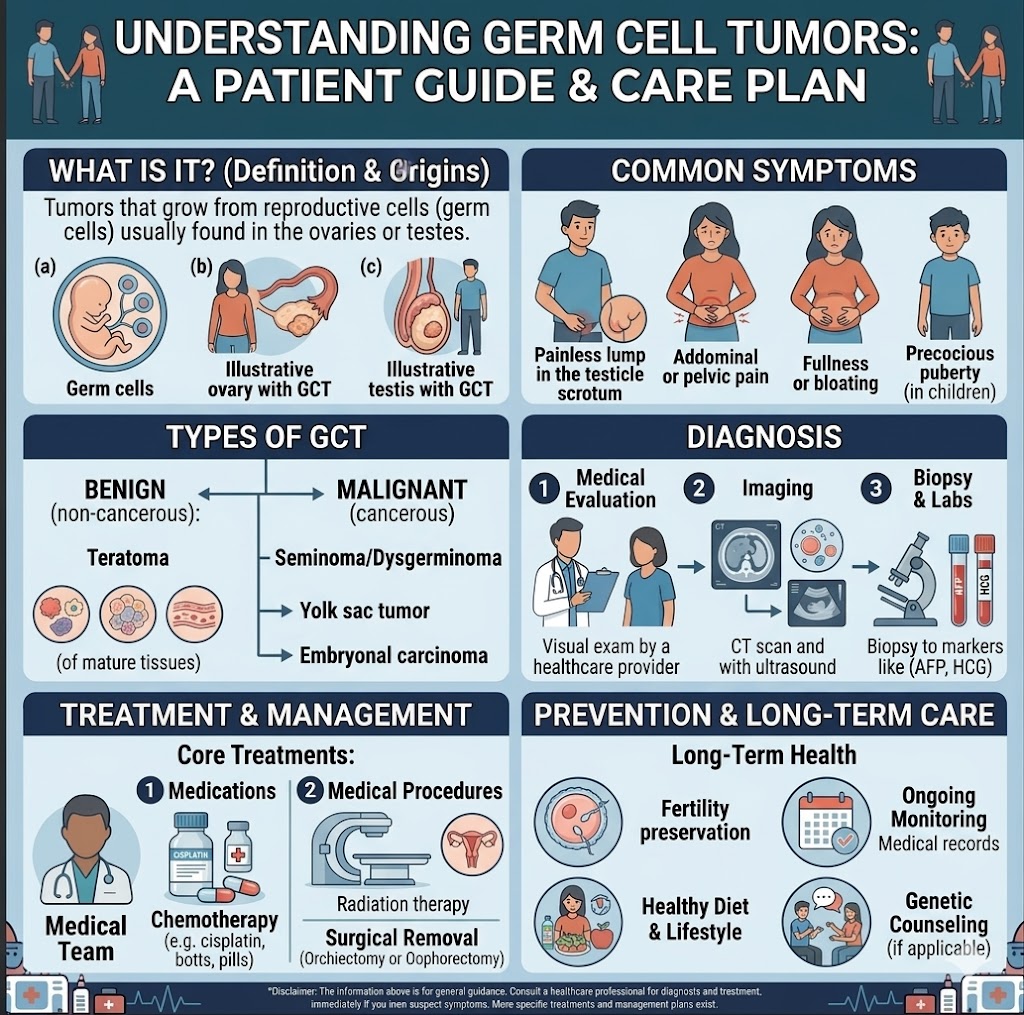
Germ cell tumors are growths that originate from germ cells, the body's reproductive cells which develop into eggs in females and sperm in males. Most commonly found in the testicles or ovaries, these tumors can rarely form in other body areas like the abdomen, brain, or chest, termed extragonadal. They arise when germ cells undergo DNA changes, leading to uncontrolled cell growth. Some are benign (non-cancerous), while others are malignant (cancerous) and can spread. Treatment often involves surgery, chemotherapy, or radiation therapy.
Understanding the Condition
Understanding the Condition
Common Symptoms
Extragonadal (Other Locations): Symptoms vary greatly depending on the tumor's site. For example, a tumor in the chest might lead to breathing difficulties, while a brain tumor could cause headaches, vision changes, or seizures. General signs might include fatigue or unexplained weight loss.
Consultation Guide
Which Specialist to Meet
Before your visit, make a list of all your symptoms, including when they started and how they've changed. Prepare a full medical history, including any past illnesses, treatments, and family history of cancer. Write down any questions you have for the doctor. Be ready to discuss your concerns openly.
Book a doctor visit near me
Routine Medical Check-ups: Regular health check-ups help identify unusual symptoms early, especially for ovarian or extragonadal tumors that may lack obvious initial signs.
Long-Term Monitoring and Support
Consultation Guide
Testicular Tumors: A noticeable lump or swelling in one testicle. This may be painless or cause discomfort, a heavy sensation, or aching in the scrotum or lower abdomen.
Ovarian Tumors: May cause pelvic pain, back pain, a feeling of fullness, abdominal bloating, or swelling in the belly area.
The doctor will gently palpate the area. For testicular exams, this involves careful examination of the scrotum. It's quick and usually causes minimal discomfort.
Awareness of Risk Factors: While direct prevention is not known, understanding risk factors like undescended testicles (cryptorchidism) allows for closer monitoring and earlier intervention.
Diagnostic Procedures
Germ cell tumors are growths that originate from germ cells, the body's reproductive cells which develop into eggs in females and sperm in males. Most commonly found in the testicles or ovaries, these tumors can rarely form in other body areas like the abdomen, brain, or chest, termed extragonadal. They arise when germ cells undergo DNA changes, leading to uncontrolled cell growth. Some are benign (non-cancerous), while others are malignant (cancerous) and can spread. Treatment often involves surgery, chemotherapy, or radiation therapy.
You should initially consult your primary care doctor, who may refer you to specialists such as an oncologist (a cancer specialist), a urologist (for testicular tumors), or a gynecologic oncologist (for ovarian tumors). If the tumor is in another location like the brain, a neuro-oncologist might be involved. For children, a pediatric oncologist would be the appropriate specialist.
Preparations Before Your Visit
Your doctor will manually examine affected areas, such as testicles or abdomen, for lumps, swelling, or tenderness, assessing general health.
What to Expect
Blood Tests (Tumor Markers)
Blood tests measure specific substances like alpha-fetoprotein (AFP), human chorionic gonadotropin (HCG), and lactate dehydrogenase (LDH). Elevated levels can indicate germ cell tumors and help monitor treatment.
What to Expect
A small blood sample is drawn, typically from an arm vein. You might feel a brief pinch. The sample is sent to a lab for analysis.
This imaging uses sound waves to create detailed pictures of internal organs, often the first test for suspected testicular or ovarian tumors.
What to Expect
Gel is applied to the skin, and a handheld device (transducer) is moved over the area. It's painless, takes 15-30 minutes, and may involve slight pressure.
Computed Tomography (CT) Scan
CT uses X-rays to produce detailed cross-sectional images, helping determine tumor size, location, and potential spread.
What to Expect
You lie on a table that slides into a doughnut-shaped machine. Contrast dye might be injected, causing a warm sensation. You must stay still and may briefly hold your breath. Takes 10-30 minutes.
Magnetic Resonance Imaging (MRI)
MRI uses magnets and radio waves for highly detailed soft tissue images, excellent for brain or spinal cord tumors, or clearer views than CT.
What to Expect
You lie on a table inside a tube-like machine. It makes loud noises, so earplugs are often provided. Contrast dye might be used. Remaining still is crucial. Lasts 30-60 minutes or more.
A tissue sample from the growth is surgically removed and examined under a microscope to confirm diagnosis, determine if it's cancerous, and identify the tumor type.
What to Expect
Depending on location, it can be a needle biopsy guided by imaging or an open surgical procedure. Local or general anesthesia will be used. Expect some post-procedure soreness.
Tumor Removal Surgery: Surgically removing the tumor and any affected surrounding tissue. For testicular tumors, this often means removing the entire testicle (orchiectomy); for ovarian, the affected ovary (oophorectomy). (Duration: A single procedure; recovery time varies, typically weeks to months.)
Regular Self-Exams: Males should perform regular testicular self-exams to detect lumps or changes early, crucial for prompt diagnosis of testicular germ cell tumors.
Follow-Up Care: Post-treatment, ongoing follow-up appointments, including exams, blood tests (tumor markers), and imaging scans, are vital to monitor for recurrence.
Psychosocial Support: Coping with diagnosis and treatment is challenging. Support from family, friends, support groups, or mental health professionals can aid emotional well-being.
Treatment Options
Surgical Procedures
Medication-Based Therapies
Chemotherapy: Uses powerful intravenous anti-cancer medications to kill fast-growing cancer cells throughout the body. Administered after surgery to eliminate remaining cells or before surgery to shrink tumors. (Duration: Given in cycles over several weeks to months, depending on the regimen.)
External Beam Radiation: High-energy X-ray beams are precisely directed at the tumor area to destroy cancer cells, minimizing harm to healthy tissue. (Duration: Typically daily sessions, five days a week, for 2-8 weeks.)
Prevention & Long-Term Wellbeing
Lymph Node Dissection: Nearby lymph nodes may be removed to check for cancer spread and reduce recurrence risk. (Duration: A single procedure, with recovery similar to tumor removal.)
Prevention and Early Detection
Healthy Lifestyle: A balanced diet, regular physical activity, and avoiding tobacco/excessive alcohol support overall health and recovery.
Tags & Topics
Notice an error or need an update?
Help us keep medical information accurate. Report incorrect info or suggest an edit.


