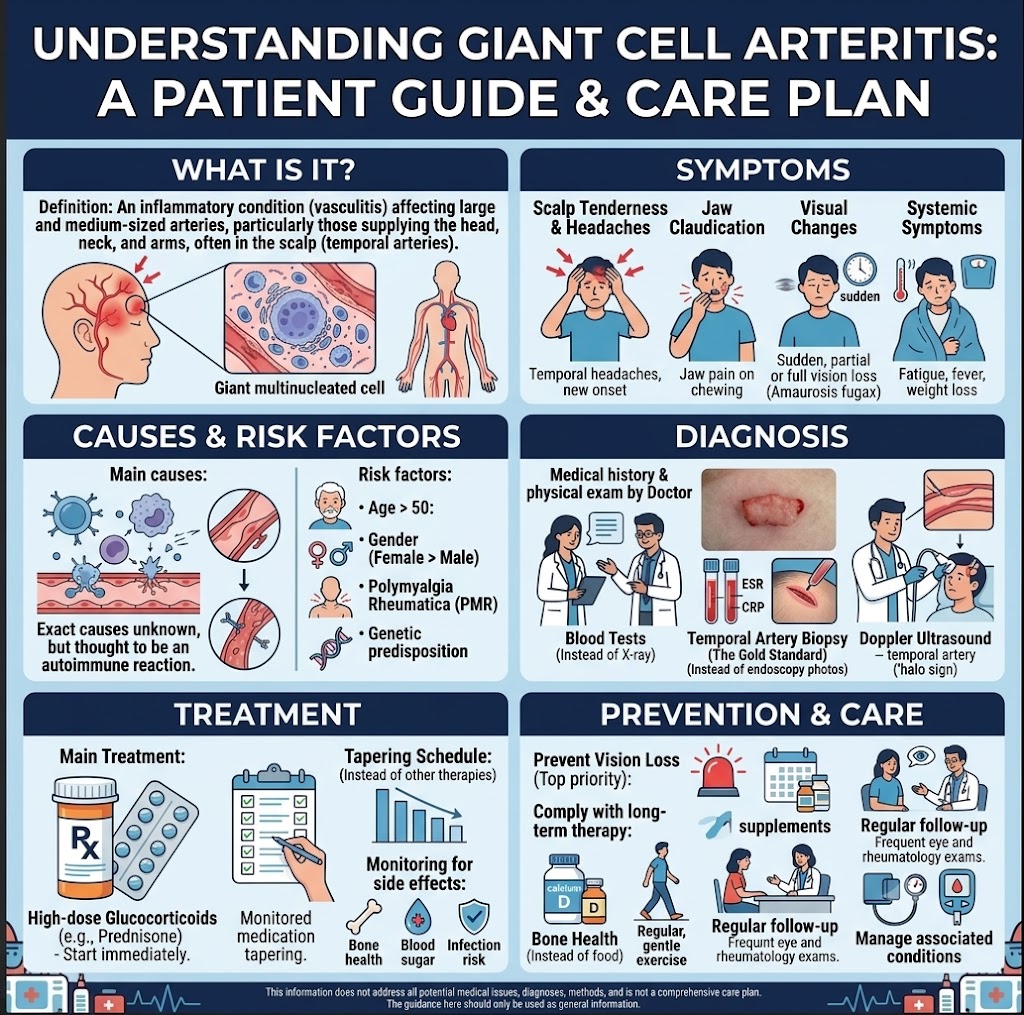
Giant Cell Arteritis (GCA) is a condition where the lining of your arteries becomes inflamed, most commonly affecting the blood vessels in your head, particularly around the temples. This inflammation can narrow the arteries, reducing blood flow to tissues. Often called temporal arteritis, GCA can cause severe headaches, scalp tenderness, jaw pain, and vision issues. Without immediate treatment, it can lead to permanent vision loss. Prompt treatment, typically with specific medications, usually alleviates symptoms quickly and can prevent serious complications. However, ongoing medical care is essential, as symptoms can recur, and medication side effects need management.
Understanding the Condition
Giant Cell Arteritis (GCA)
Understanding the Condition
Giant Cell Arteritis (GCA) is a condition where the lining of your arteries becomes inflamed, most commonly affecting the blood vessels in your head, particularly around the temples. This inflammation can narrow the arteries, reducing blood flow to tissues. Often called temporal arteritis, GCA can cause severe headaches, scalp tenderness, jaw pain, and vision issues. Without immediate treatment, it can lead to permanent vision loss. Prompt treatment, typically with specific medications, usually alleviates symptoms quickly and can prevent serious complications. However, ongoing medical care is essential, as symptoms can recur, and medication side effects need management.
Common Symptoms
Headache: Persistent and often severe head pain, typically felt in the temple area, which can worsen over time, fluctuate, or temporarily ease.
Scalp Tenderness: Sensitivity or pain when touching the scalp, especially around the temples.
Jaw Pain: Discomfort or pain in the jaw muscles, particularly when chewing or opening your mouth wide.
Vision Problems: Symptoms may include temporary vision loss, double vision, or blurred vision. In severe cases, sudden and permanent loss of vision in one eye can occur. This is a critical symptom requiring immediate medical attention.
Fatigue and Weight Loss: General tiredness, malaise, and unexplained weight loss.
Polymyalgia Rheumatica (PMR): About half of individuals with Giant Cell Arteritis also experience symptoms of Polymyalgia Rheumatica, which include pain and stiffness in the neck, shoulders, or hips, often worse in the morning.
Consultation Guide
Which Specialist to Meet
If you experience new, persistent headaches or any of the symptoms listed, promptly consult your primary care doctor. They may refer you to a rheumatologist (a specialist in inflammatory conditions) for diagnosis and treatment. An ophthalmologist (eye specialist) may also be involved due to potential vision complications, and sometimes a neurologist.
Preparations Before Your Visit
Before your appointment, prepare a detailed list of your symptoms, including when they started and how they've progressed. Note down your full medical history, any existing conditions, and all medications, vitamins, and supplements you are currently taking. Be ready to discuss your family's medical history. Prepare a list of questions to ask your doctor to ensure all your concerns are addressed.
Book a doctor visit near me
Corticosteroids: These are the primary and most crucial treatment for Giant Cell Arteritis. They work by rapidly reducing inflammation in the arteries. Treatment usually begins with a high dose, which is gradually tapered down over time. (Duration: Initial symptom relief can occur within days of starting treatment. However, treatment typically continues for at least 1 to 2 years, or sometimes longer, to prevent relapses and manage the condition effectively. Regular monitoring is essential due to potential side effects.)
Pain Management and Supportive Care: While corticosteroids address the inflammation, pain relievers and other supportive measures may be used to manage discomfort during the initial phase or for residual symptoms. Lifestyle adjustments to reduce stress can also be beneficial. (Duration: As needed, often more prominent during initial phases or for symptom flare-ups.)
Regular Medical Monitoring: Attend all scheduled follow-up appointments. Your doctor will monitor your symptoms, blood inflammation markers (CRP, ESR), and assess for medication side effects. Early detection of relapses or complications is vital.
Aortic Aneurysm Screening: Given the long-term risk of aortic aneurysm, your doctor may recommend periodic imaging (e.g., X-rays, ultrasound, CT scans) to monitor your aorta.
Awareness of Symptoms: Stay vigilant for returning GCA symptoms or new signs like headaches, jaw pain, or vision changes. Report these to your doctor immediately.
Consultation Guide
A healthcare professional will draw a small sample of blood, usually from a vein in your arm. This is a common and quick procedure that may cause a brief pinch or slight discomfort.
Temporal Artery Biopsy
Diagnostic Procedures
Your doctor will carefully examine your head, especially the temples, and your jaw. They will check for tenderness, swelling, and may feel the arteries in your temples.
What to Expect
During the examination, your doctor will gently touch your scalp and temples, feel your pulse, and may ask you to move your jaw. They will observe for any visible signs of inflammation or tenderness in the affected areas.
Blood Tests (CRP and ESR)
These tests measure inflammatory markers in your blood. C-reactive protein (CRP) is produced by the liver and increases when there's inflammation. The Erythrocyte Sedimentation Rate (ESR), or sed rate, measures how quickly red blood cells settle in a test tube, which speeds up with inflammation. High levels of these markers suggest active inflammation in the body.
What to Expect
This is a key diagnostic test for GCA. A small segment of the temporal artery, located in front of your ear and extending up to your scalp, is surgically removed and examined under a microscope for inflammation and changes typical of GCA.
What to Expect
Ultrasound, MRI (Magnetic Resonance Imaging), or PET (Positron Emission Tomography) scans can sometimes be used to detect inflammation in arteries throughout the body. These tests can also help monitor for complications, such as an aortic aneurysm.
What to Expect
Depending on the specific test, you may lie on a specialized table. For an ultrasound, a gel is applied to your skin, and a handheld device is moved over the target area. MRI uses strong magnets and radio waves, which can be noisy; you might receive ear protection. For a PET scan, a small amount of a radioactive tracer is injected into a vein before the imaging begins. These tests are generally painless but require you to remain still.
Treatment Options
The procedure is typically performed as an outpatient surgery using local anesthesia to numb the area. A small incision is made, and a piece of the artery is removed. Stitches will close the incision. You might experience some bruising, tenderness, or temporary numbness in the area. The sample is analyzed in a lab, with results taking several days.
Medications
Side Effect Management: Long-term use of corticosteroids can have side effects. Your doctor will monitor you closely and may recommend strategies to minimize these effects, such as calcium and vitamin D supplements for bone health, and medications to protect your stomach. (Duration: Ongoing throughout the duration of corticosteroid treatment.)
Adhere to Treatment Plan: Strictly follow your prescribed medication regimen, especially for corticosteroids. Never adjust doses or stop treatment without medical guidance to avoid relapses or severe complications like blindness.
Manage Medication Side Effects: Collaborate with your doctor to manage corticosteroid side effects. This includes diet, bone-strengthening supplements (calcium, vitamin D), and exercise for muscle and bone health.
Prevention & Long-Term Wellbeing
Prevention of Complications
Long-Term Health and Lifestyle
Healthy Lifestyle Choices: Embrace a balanced diet, regular exercise (as advised), and avoid smoking for overall cardiovascular health and managing other conditions.
Tags & Topics
Notice an error or need an update?
Help us keep medical information accurate. Report incorrect info or suggest an edit.


