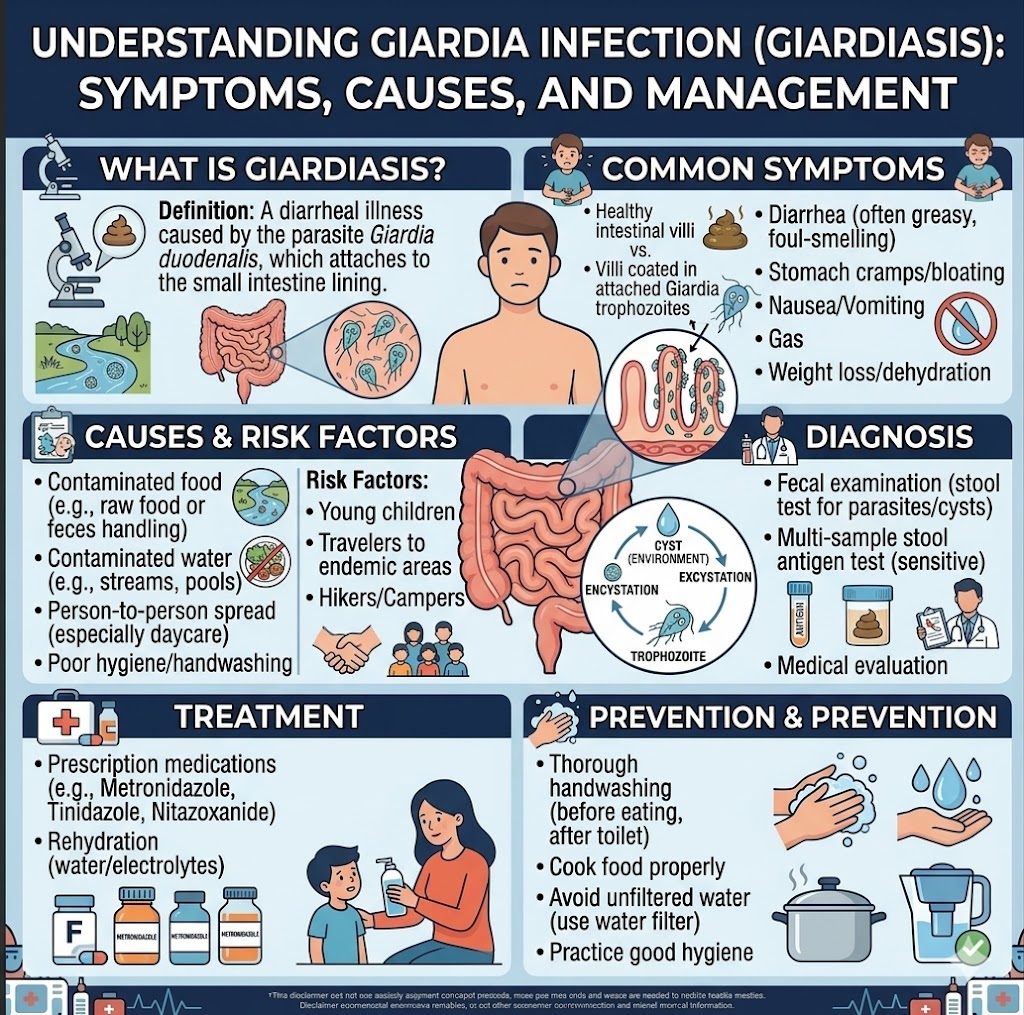
Giardia infection, also called giardiasis, is caused by a tiny parasite that primarily affects the small intestine, a part of your digestive system. This common infection can lead to uncomfortable stomach issues like cramps, bloating, upset stomach, and loose stools. The Giardia parasite is found globally, thriving particularly in areas with poor sanitation and unsafe water sources. It's a leading cause of waterborne illness in many regions, commonly found in natural water bodies like streams and lakes, as well as public water systems, pools, spas, and wells.The infection spreads when a person accidentally swallows microscopic Giardia cysts, which are the parasite's hardy, protective shells. These cysts can survive for months outside the body and are commonly transmitted through contaminated water, food, or direct contact with an infected person or animal. Once swallowed, the cysts break open in the intestine, releasing the active parasites. While most infections clear up within a few weeks, some individuals may experience lingering stomach problems even after the parasite is gone. Effective treatments are available, but prevention remains the best approach.
Understanding the Condition
Giardiasis: Understanding and Preventing a Common Parasitic Infection
Understanding the Condition
Common Symptoms
Abdominal Cramps: Painful spasms or aches in the stomach area.
Bloating: A feeling of fullness or swelling in the abdomen, often accompanied by gas.
Nausea and Vomiting: Feeling sick to your stomach and potentially throwing up.
Diarrhea (Loose Stools): Frequent, watery, or unusually soft bowel movements. This can sometimes be fatty or foul-smelling.
Fatigue: Unusual tiredness or lack of energy.
Weight Loss: Unintentional decrease in body weight due to poor nutrient absorption or lack of appetite.
Loss of Appetite: Reduced desire to eat.
Asymptomatic Infection: Some individuals may carry the parasite and spread it without showing any symptoms themselves.
Consultation Guide
Which Specialist to Meet
Initially, consult your primary care physician (general practitioner). Depending on the severity or persistence of symptoms, they may refer you to a gastroenterologist (a doctor specializing in digestive health) or an infectious disease specialist.
Preparations Before Your Visit
Before your visit, make a detailed list of your symptoms, including when they started and how long they've lasted. Note any recent travel, especially to areas where sanitation is poor, or if you've consumed untreated water from lakes, streams, or wells. Also, inform your doctor if you have a child in daycare or have been in close contact with someone diagnosed with giardiasis. Be prepared to discuss your complete medical history and any medications you are currently taking.
Book a doctor visit near me
Hydration: Drinking plenty of fluids, such as water, broth, and oral rehydration solutions, is crucial to prevent dehydration caused by diarrhea. (Duration: Throughout the illness and until symptoms resolve.)
Bland Diet: Eating easily digestible foods like bananas, rice, applesauce, and toast (BRAT diet) can help settle your stomach and reduce digestive distress. (Duration: While symptoms are present and gradually reintroducing other foods.)
Rest: Allowing your body sufficient rest supports your immune system in fighting off the infection. (Duration: As needed, until energy levels return to normal.)
Monitor for Persistent Symptoms: Even after treatment, some individuals may experience ongoing digestive issues such as irritable bowel syndrome (IBS) or lactose intolerance. Consult your doctor if symptoms persist or recur.
Follow-Up Testing: In some cases, your doctor may recommend follow-up stool tests to ensure the parasite has been completely eliminated, especially if symptoms continue.
Consultation Guide
Giardia infection, also called giardiasis, is caused by a tiny parasite that primarily affects the small intestine, a part of your digestive system. This common infection can lead to uncomfortable stomach issues like cramps, bloating, upset stomach, and loose stools. The Giardia parasite is found globally, thriving particularly in areas with poor sanitation and unsafe water sources. It's a leading cause of waterborne illness in many regions, commonly found in natural water bodies like streams and lakes, as well as public water systems, pools, spas, and wells.The infection spreads when a person accidentally swallows microscopic Giardia cysts, which are the parasite's hardy, protective shells. These cysts can survive for months outside the body and are commonly transmitted through contaminated water, food, or direct contact with an infected person or animal. Once swallowed, the cysts break open in the intestine, releasing the active parasites. While most infections clear up within a few weeks, some individuals may experience lingering stomach problems even after the parasite is gone. Effective treatments are available, but prevention remains the best approach.
Diagnostic Procedures
Stool Sample Analysis (Ova and Parasites Test)
This is the most common and definitive test for diagnosing giardiasis. It involves examining a sample of your stool under a microscope to identify Giardia cysts or active parasites (trophozoites). Sometimes, multiple samples collected over several days are needed to increase the chances of detection.
What to Expect
Your doctor will provide you with a special collection kit and instructions. You will collect small samples of your stool into a sterile container at home, usually over one to three separate days, and then return them to the clinic or laboratory. It's important to follow the instructions carefully to ensure the sample is suitable for testing. The process is non-invasive and generally painless, though it requires careful hygiene.
This test detects specific proteins (antigens) produced by the Giardia parasite in your stool. It is often quicker and can be more sensitive than traditional microscopic examination in some cases.
What to Expect
Similar to the ova and parasite test, you will collect a stool sample at home using a provided kit. The sample is then sent to a laboratory for analysis. This method does not require microscopic examination of the parasite itself but rather its molecular markers, offering an alternative or supplementary diagnostic approach.
Antiparasitic Drugs: Prescription medications designed to kill the Giardia parasite in your intestines. These medications are typically taken orally. (Duration: Usually 3 to 10 days, depending on the specific drug and severity of infection. For persistent cases, a longer course or different medication may be prescribed.)
Home Remedies and Supportive Care
Treatment Options
Medications
Prevention & Long-Term Wellbeing
Prevention
Practice Excellent Hand Hygiene: Wash hands thoroughly with soap and water for at least 20 seconds, especially after using the bathroom, changing diapers, and before preparing or eating food. Alcohol-based hand sanitizers are less effective against Giardia cysts.
Ensure Safe Drinking Water: Avoid drinking untreated water from natural sources like lakes, streams, rivers, and even some wells. If traveling to areas with questionable water quality, drink bottled water, boil tap water for at least one minute, or use a certified water filter effective against cysts.
Food Safety: Wash all raw fruits and vegetables with safe water before eating. Avoid consuming raw or undercooked foods in areas where food handling practices might be inadequate.
Avoid Contaminated Recreational Water: Do not swim in or swallow water from swimming pools, hot tubs, or natural bodies of water that might be contaminated, especially if you or others have diarrhea. Children wearing swim diapers can still spread germs.
Be Cautious During Travel: When traveling internationally, especially to regions with known sanitation challenges, exercise extra caution regarding water and food sources. 'Boil it, cook it, peel it, or forget it' is a good rule of thumb.
Manage Diaper Changes Safely: Dispose of soiled diapers properly and thoroughly wash hands after changing them, especially in childcare settings, to prevent spread to others.
Long-Term Wellbeing
Tags & Topics
Notice an error or need an update?
Help us keep medical information accurate. Report incorrect info or suggest an edit.


