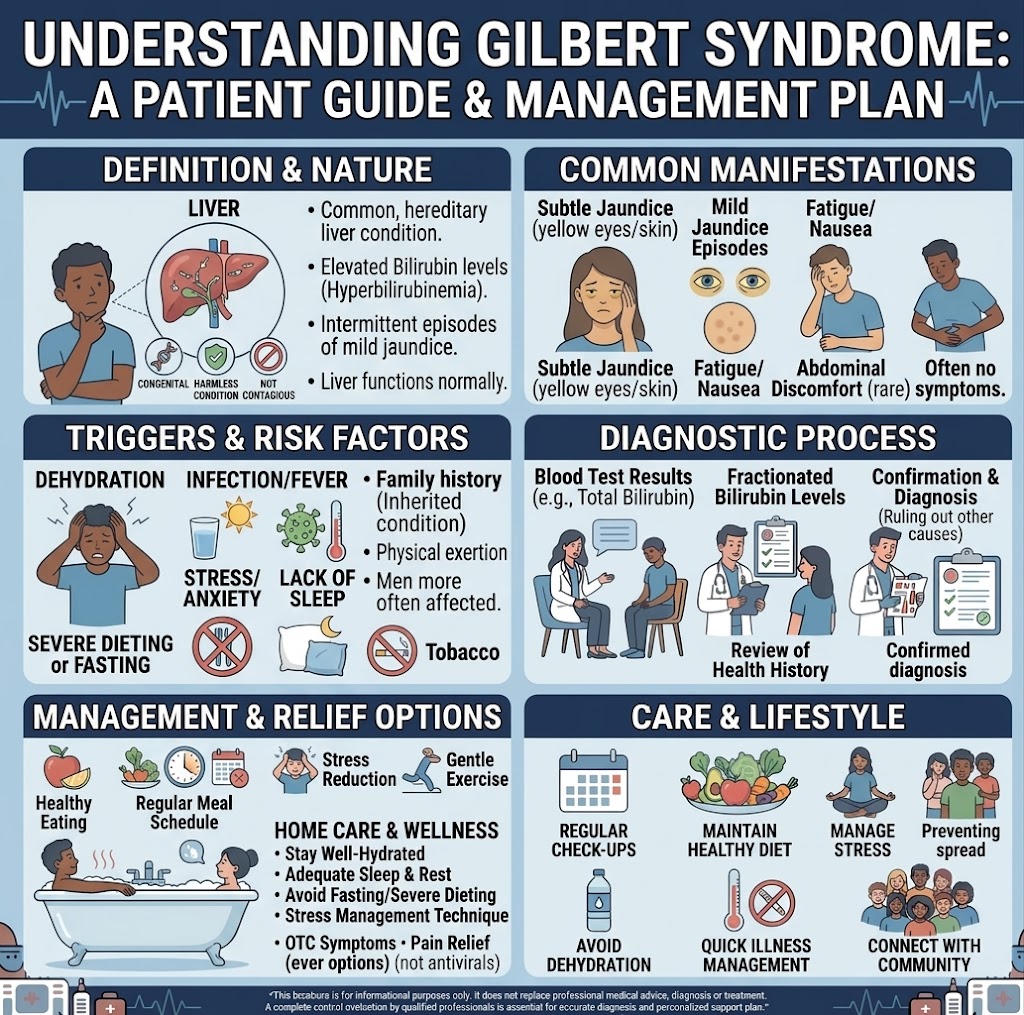
Gilbert syndrome is a common and usually harmless liver condition that affects how your liver processes bilirubin, a yellowish waste product from the normal breakdown of old red blood cells. It's a genetic condition, meaning it's inherited from your parents. Many people don't know they have Gilbert syndrome until it's discovered by chance through a routine blood test showing slightly elevated bilirubin levels. This condition typically requires no specific medical treatment.
Understanding the Condition
Gilbert Syndrome: A Common and Harmless Liver Condition
Understanding the Condition
Common Symptoms
Before your appointment, it's helpful to make a list of any symptoms you've experienced, including when they started and how often they occur. Note any recent illnesses, changes in diet or lifestyle, medications you're taking (including supplements), and your family's medical history. Also, prepare a list of questions you have for your doctor to ensure all your concerns are addressed.
Book a doctor visit near me
A CBC is a common blood test that provides information about the different types of cells in your blood: red blood cells, white blood cells, and platelets. It's used to assess overall health and can help identify conditions like anemia, infection, or other blood disorders that might present with similar symptoms or contribute to higher bilirubin levels.
Consultation Guide
Jaundice: The most common sign of Gilbert syndrome is an occasional, mild yellowish tinge to the skin and the whites of the eyes, known as jaundice. This happens because bilirubin levels in the blood rise slightly. This mild jaundice is usually temporary and often unnoticeable. Factors that can temporarily increase bilirubin levels and make jaundice more apparent include: dehydration, prolonged fasting or skipping meals, illnesses (like the flu), stress, strenuous physical exercise, lack of adequate sleep, and menstruation.
Consultation Guide
Which Specialist to Meet
If you notice a yellowish tinge to your skin or eyes (jaundice), it is advisable to first consult your primary care doctor. While it could be Gilbert syndrome, jaundice can have many other causes, some of which require medical attention. Your doctor can help determine the cause and, if necessary, refer you to a liver specialist (hepatologist) for further evaluation.
Preparations Before Your Visit
A blood sample will be drawn from a vein, typically in your arm, in a process identical to the other blood tests. This procedure is generally quick and causes only minor, temporary discomfort.
No Specific Medical Treatment Required: Gilbert syndrome is a benign condition that does not cause liver damage or significant health problems, so it generally does not require any specific medication or surgical intervention. The focus is on understanding the condition and managing factors that might make jaundice more noticeable. (Duration: Not applicable; no specific medical treatment is needed.)
Identify and Avoid Personal Triggers: Pay attention to what might cause your jaundice to become more noticeable. By identifying your personal triggers (e.g., specific types of strenuous exercise, lack of sleep), you can proactively adjust your lifestyle to minimize these episodes.
Diagnostic Procedures
Gilbert syndrome is a common and usually harmless liver condition that affects how your liver processes bilirubin, a yellowish waste product from the normal breakdown of old red blood cells. It's a genetic condition, meaning it's inherited from your parents. Many people don't know they have Gilbert syndrome until it's discovered by chance through a routine blood test showing slightly elevated bilirubin levels. This condition typically requires no specific medical treatment.
This test measures the amount of bilirubin in your blood. Elevated levels can indicate Gilbert syndrome or other liver/bile duct issues, or sometimes an increased rate of red blood cell breakdown. It's often part of a larger panel of tests to assess liver health.
What to Expect
A healthcare professional will draw a small sample of blood, usually from a vein in your arm. You might feel a brief sting or pressure when the needle is inserted. The process is quick, typically lasting only a few minutes. Fasting might be required before the test, depending on your doctor's instructions.
Liver Function Tests (LFTs)
These blood tests measure the levels of certain enzymes and proteins in your blood, which can indicate how well your liver is working and whether it's damaged. They assess the liver's ability to produce proteins and clear waste products like bilirubin. In Gilbert syndrome, other liver function tests typically appear normal, except for the slightly elevated bilirubin.
What to Expect
Similar to the bilirubin test, a blood sample will be taken from a vein in your arm. You may experience minor discomfort or a small bruise at the puncture site. You might be asked to fast for a certain period before this test.
Complete Blood Count (CBC)
What to Expect
Treatment Options
Educate Yourself About the Condition: Understanding that Gilbert syndrome is a common, harmless, and lifelong condition can provide significant peace of mind. Knowing that it doesn't lead to liver disease or require active treatment is key to managing any anxiety associated with elevated bilirubin levels.
Prevention & Long-Term Wellbeing
Management and Lifestyle Adjustments
Avoiding Jaundice Triggers: While the condition itself is harmless, you can minimize noticeable jaundice by avoiding or managing factors known to temporarily increase bilirubin levels. These include ensuring you stay well-hydrated, eating regular meals to avoid prolonged fasting, getting sufficient rest, managing stress effectively, and avoiding excessively strenuous exercise when you are feeling unwell. (Duration: Ongoing; these are lifelong lifestyle adjustments.)
Managing Intercurrent Illnesses: If you develop an illness, such as a cold or flu, your bilirubin levels may temporarily rise. Managing these illnesses through rest and appropriate care can help normalize bilirubin levels sooner. (Duration: As needed during illness.)
Prevention and Long-Term Well-being
Maintain a Healthy Lifestyle: Adopting a balanced diet, staying adequately hydrated, ensuring you get enough sleep, and engaging in moderate physical activity can support overall liver health and help manage bilirubin levels. Avoid prolonged fasting, which can temporarily elevate bilirubin.
Manage Stress Effectively: Stress can sometimes act as a trigger for increased bilirubin levels and more noticeable jaundice. Incorporate stress-reduction techniques into your daily routine, such as meditation, yoga, mindfulness, or hobbies that you enjoy.
Regular Check-ups: While Gilbert syndrome itself doesn't require specific medical monitoring, maintaining regular check-ups with your primary care doctor is important for overall health. Inform your healthcare providers about your condition, as it's relevant for any other medical care you might receive.
Tags & Topics
Notice an error or need an update?
Help us keep medical information accurate. Report incorrect info or suggest an edit.


