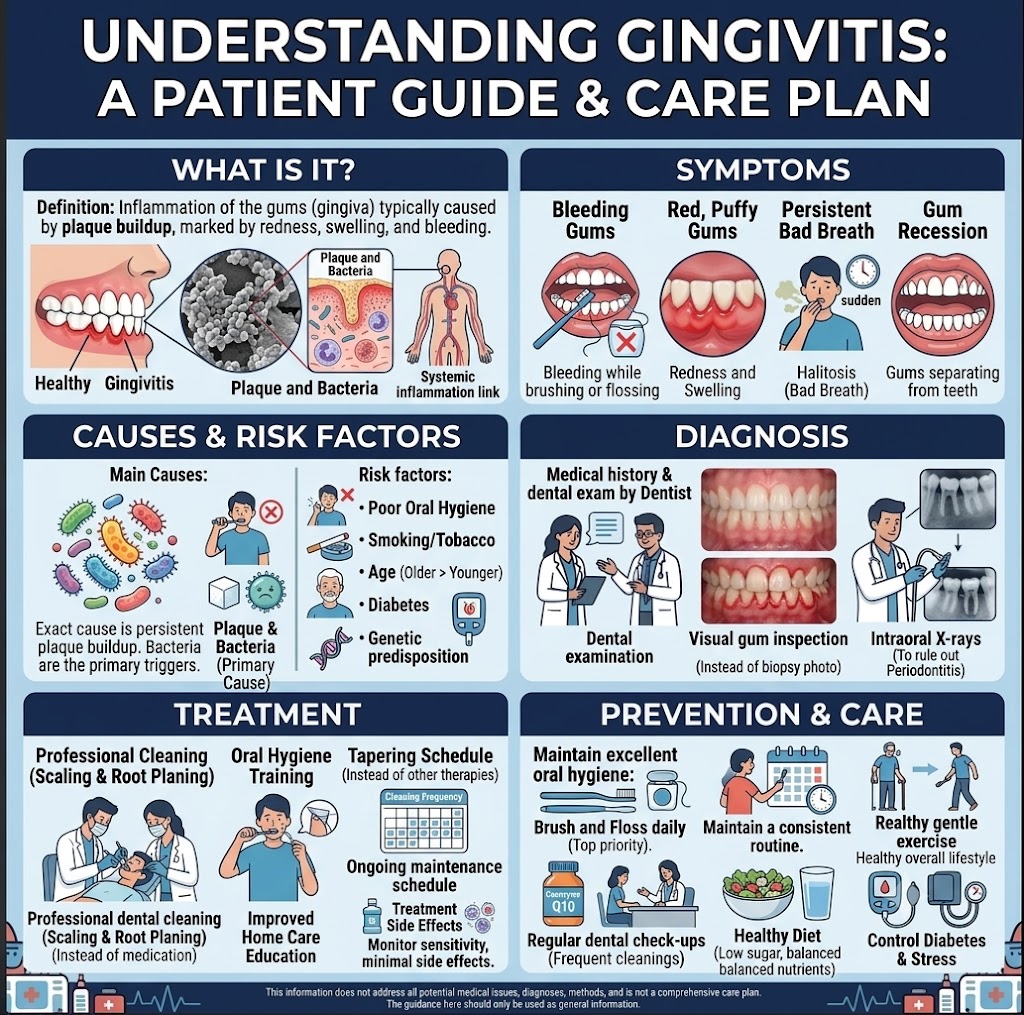
Gingivitis is a common and mild form of gum disease, an inflammation of the soft tissue surrounding your teeth. It typically causes irritation, redness, swelling, and bleeding of the gums, particularly around the base of your teeth. While gingivitis itself does not cause bone loss, it's crucial to address it promptly. Left untreated, it can progress to a more serious gum disease called periodontitis, which can lead to irreversible bone damage and ultimately, tooth loss. The main cause of gingivitis is inadequate oral hygiene, allowing bacteria-filled plaque to build up on teeth. Fortunately, good daily oral care and regular dental check-ups can prevent and often reverse gingivitis.
Understanding the Condition
Gingivitis: Understanding and Preventing Gum Inflammation
Understanding the Condition
Common Symptoms
Swollen or Puffy Gums: Your gums may appear noticeably larger or feel inflamed, rather than firm and snug around your teeth.
Changes in Gum Color: Healthy gums are typically pale pink. With gingivitis, your gums may turn a brighter red, dark red, or appear darker than their usual color.
Bleeding Gums: One of the most common signs is gums that bleed easily when you brush your teeth, floss, or even when you eat.
Tender Gums: Your gums may feel sore or sensitive to the touch, or when chewing.
Bad Breath: Persistent bad breath, also known as halitosis, can be a symptom of bacterial buildup and gum inflammation.
Consultation Guide
Which Specialist to Meet
Before your appointment, be prepared to discuss any symptoms you've noticed, how long they've been present, and your daily oral hygiene routine. It's also helpful to have a list of all current medications, including supplements, and to mention any underlying health conditions or recent health changes. Be ready to answer questions about your diet and lifestyle habits, such as smoking.
Book a doctor visit near me
Monitor for Symptoms: Regularly inspect your gums for any changes in color, swelling, or bleeding. Report any persistent symptoms to your dentist promptly to prevent progression.
Consultation Guide
Gingivitis is a common and mild form of gum disease, an inflammation of the soft tissue surrounding your teeth. It typically causes irritation, redness, swelling, and bleeding of the gums, particularly around the base of your teeth. While gingivitis itself does not cause bone loss, it's crucial to address it promptly. Left untreated, it can progress to a more serious gum disease called periodontitis, which can lead to irreversible bone damage and ultimately, tooth loss. The main cause of gingivitis is inadequate oral hygiene, allowing bacteria-filled plaque to build up on teeth. Fortunately, good daily oral care and regular dental check-ups can prevent and often reverse gingivitis.
Although gingivitis does not cause bone loss, X-rays may be taken to rule out more advanced gum disease (periodontitis) or other dental issues that could be contributing to your gum health. They help assess the overall health of your teeth and the bone supporting them.
Professional Dental Cleaning (Scaling and Polishing): A dental hygienist or dentist will remove all traces of plaque and hardened tartar (calculus) from above and below your gumline using specialized instruments. This deep cleaning is essential as tartar cannot be removed by brushing or flossing alone. (Duration: Typically a single visit lasting 30-60 minutes, with follow-up cleanings usually recommended every 6-12 months, or more frequently if risk factors are present.)
Adopt a Healthy Lifestyle: Eat a balanced diet rich in vitamins, especially vitamin C, and limit sugary foods and drinks that promote plaque formation. If you have diabetes, managing your blood sugar levels is crucial as uncontrolled diabetes can worsen gum health. Avoid or quit smoking and tobacco use, as these are major risk factors for gum disease.
Long-Term Monitoring & Management
Address Risk Factors: Work with your dentist and other healthcare providers to manage any underlying health conditions (e.g., hormonal changes, compromised immunity) or medications that might increase your susceptibility to gum disease. Ensure any dental work fits properly and is in good condition.
Diagnostic Procedures
Initially, you should see a general dentist. If your gingivitis is severe, persistent, or progresses despite initial treatment, your dentist may refer you to a periodontist. A periodontist is a dentist who has received advanced training and specializes specifically in the diagnosis and treatment of gum diseases.
Preparations Before Your Visit
Comprehensive Oral Examination
A visual and tactile inspection of your mouth, teeth, and gums to look for signs of inflammation, plaque, and tartar buildup. The dentist will assess the color, texture, and firmness of your gums, as well as check for any bleeding.
What to Expect
During this exam, you will sit in a dental chair. The dentist will use a small mirror and a dental explorer (a thin, hooked instrument) to visually examine your gums for redness, swelling, and any signs of bleeding. They will also look for plaque (a sticky bacterial film) and tartar (hardened plaque) on your teeth, especially along the gumline.
A gentle measurement of the depth of the gum pockets around each tooth. While gingivitis typically involves gum inflammation without significant deepening of pockets, this procedure helps establish a baseline and identify areas of bleeding, which are key indicators of gingivitis.
What to Expect
The dentist or hygienist will use a tiny, blunt instrument called a periodontal probe. This probe is gently inserted into the space between your gum and tooth, and the depth is measured in millimeters. You might feel a slight pressure or tickle, but it should not be painful. Bleeding during probing is a strong indicator of gum inflammation (gingivitis).
What to Expect
You will be asked to bite down on a small piece of plastic or cardboard while the X-ray machine is positioned. You will wear a lead apron for protection. The process is quick and involves a series of images being taken from different angles. It is typically painless, though some find holding the position for the X-ray film slightly uncomfortable.
Treatment Options
Addressing Contributing Factors: If ill-fitting dental restorations (like fillings, crowns, or bridges) or crooked teeth contribute to plaque buildup and make cleaning difficult, your dentist may recommend correcting these issues. (Duration: Varies significantly depending on the specific correction needed (e.g., replacement of a filling, orthodontic treatment).)
Prevention & Long-Term Wellbeing
Home Remedies & Lifestyle Changes
Improved Oral Hygiene Routine: Thoroughly brush your teeth for at least two minutes, twice a day (morning and before bed), using a soft-bristled toothbrush. Floss at least once daily to remove food particles and plaque from between teeth and under the gumline. (Duration: Ongoing, daily practice for long-term gum health.)
Antiseptic Mouthwash: Your dentist may recommend using an antiseptic mouthwash to help reduce plaque and kill bacteria, complementing your brushing and flossing efforts. (Duration: Typically used once or twice daily, as advised by your dentist.)
Professional Procedures
Prevention
Maintain Excellent Oral Hygiene: Brush your teeth for at least two minutes, twice a day, and floss thoroughly once a day. Consider brushing after every meal or snack for optimal plaque removal. Using an interdental brush or water flosser can further enhance cleaning.
Regular Dental Check-ups and Cleanings: Visit your dentist or dental hygienist for professional cleanings and examinations typically every six to twelve months. This allows for early detection and removal of plaque and tartar that home care might miss.
Tags & Topics
Notice an error or need an update?
Help us keep medical information accurate. Report incorrect info or suggest an edit.


