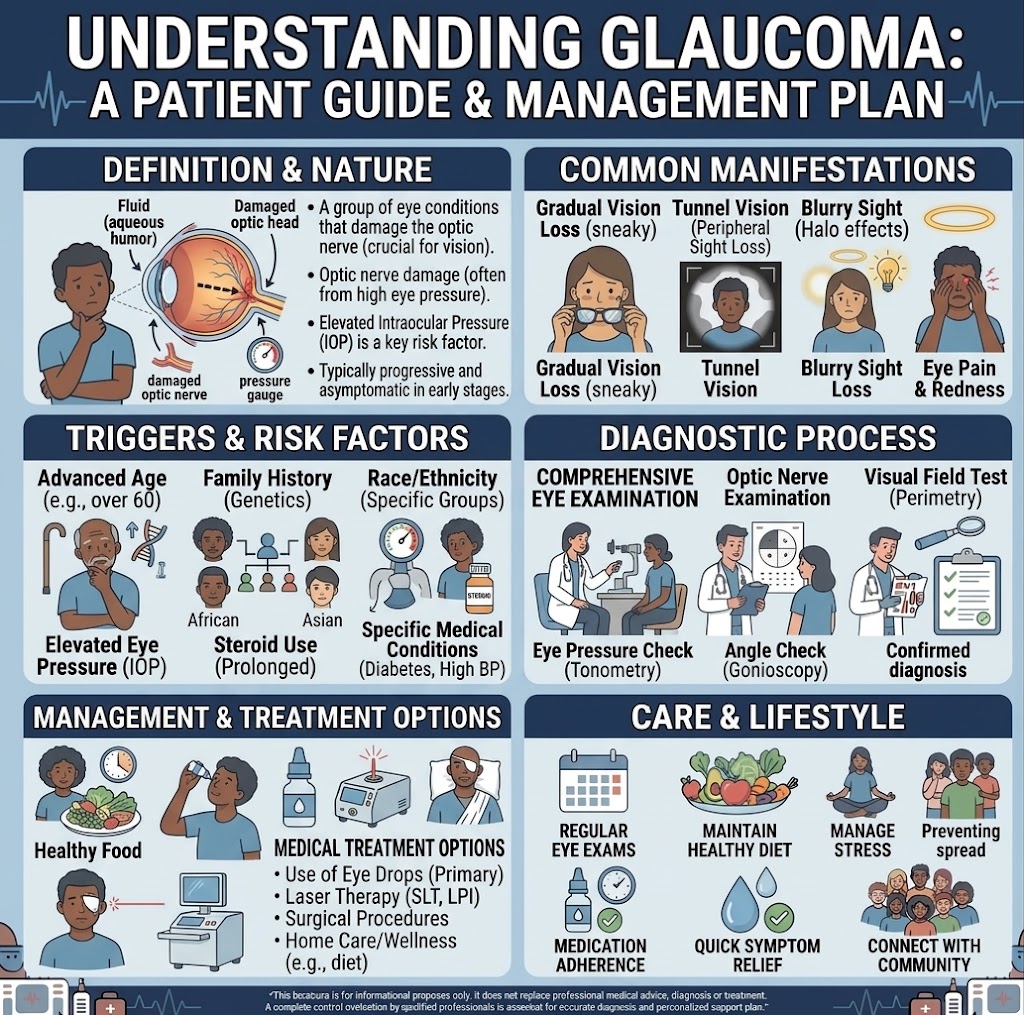
Glaucoma is a common eye condition that damages the optic nerve, which is crucial for sending visual information from your eye to your brain. This damage can lead to permanent vision loss or blindness. While often linked to increased pressure inside the eye, glaucoma can also occur with normal eye pressure. It can affect anyone but is more common in older adults, being a leading cause of blindness for those over 60. Many types of glaucoma develop slowly without obvious warning signs, meaning vision changes may not be noticed until the condition is advanced. Regular eye check-ups, including eye pressure measurements, are essential for early detection, which can help slow or prevent vision loss.
Understanding the Condition
Understanding Glaucoma: Protecting Your Vision
Understanding the Condition
Common Symptoms
No Early Symptoms: Most common forms of glaucoma develop without any noticeable symptoms in the early stages, making regular eye exams critical.
Patchy Blind Spots in Side Vision: Gradually, you might notice areas where your side (peripheral) vision is missing or blurred, affecting your ability to see things outside your direct gaze.
Difficulty with Central Vision: In more advanced stages, glaucoma can start to affect your central vision, making it hard to see details directly in front of you.
Severe Headache: A sudden, intense headache can be a sign of acute angle-closure glaucoma, a less common but urgent type.
Severe Eye Pain: Sharp, intense pain in one or both eyes, often accompanied by other acute symptoms, may indicate a rapid rise in eye pressure.
Nausea or Vomiting: Feeling sick to your stomach or vomiting can sometimes accompany the severe eye pain and headache of acute glaucoma.
Blurred Vision: A sudden or significant blurring of vision, particularly if combined with other acute symptoms, warrants immediate medical attention.
Halos Around Lights: Seeing colored rings or halos around light sources, especially at night, can be a symptom of increased eye pressure.
Eye Redness: Unusual or severe redness in the eye can also be a sign of acute glaucoma requiring urgent assessment.
Consultation Guide
Which Specialist to Meet
Before your visit, gather your family's medical history, especially any history of glaucoma or other eye conditions. Make a list of all medications you are currently taking, including eye drops, vitamins, and supplements. Write down any symptoms you've experienced and any questions you have for the doctor. If you wear glasses or contact lenses, bring them. You may need someone to drive you home after the appointment, as some diagnostic tests involve dilating your pupils.
Book a doctor visit near me
Adhere to Prescribed Eye Drops: Consistently use all prescribed eye drops exactly as directed by your doctor, even if you don't notice symptoms, to maintain eye pressure control.
Consultation Guide
Glaucoma is a common eye condition that damages the optic nerve, which is crucial for sending visual information from your eye to your brain. This damage can lead to permanent vision loss or blindness. While often linked to increased pressure inside the eye, glaucoma can also occur with normal eye pressure. It can affect anyone but is more common in older adults, being a leading cause of blindness for those over 60. Many types of glaucoma develop slowly without obvious warning signs, meaning vision changes may not be noticed until the condition is advanced. Regular eye check-ups, including eye pressure measurements, are essential for early detection, which can help slow or prevent vision loss.
This test checks your peripheral and central vision for any blind spots or areas of vision loss caused by optic nerve damage.
Regular Comprehensive Eye Exams: Undergo routine eye check-ups, as recommended by your eye doctor, to detect glaucoma early before significant vision loss occurs. Frequency depends on age and risk factors.
Know Your Family History: Be aware if glaucoma runs in your family, as this significantly increases your risk, and inform your doctor to ensure appropriate screening frequency.
Wear Eye Protection: Protect your eyes from serious injuries by wearing appropriate safety glasses or goggles during sports, DIY projects, or when working with power tools.
Manage Underlying Health Conditions: Effectively control conditions like diabetes, high blood pressure, and migraine, as they can contribute to glaucoma risk or progression.
Diagnostic Procedures
To address concerns about glaucoma, you should consult an eye care specialist. This primarily includes an ophthalmologist, who is a medical doctor specializing in eye and vision care, trained to perform eye exams, diagnose and treat eye diseases, prescribe medications, and perform surgery. An optometrist can also conduct comprehensive eye exams and diagnose glaucoma, often referring to an ophthalmologist for advanced treatment plans.
Preparations Before Your Visit
Tonometry (Eye Pressure Measurement)
This test measures the pressure inside your eye (intraocular pressure), which is a key factor in glaucoma.
What to Expect
Your eye doctor will use eye drops to numb your eye. Then, a small, gentle device will lightly touch the front surface of your eye or deliver a puff of air to measure the pressure. It's quick and usually painless.
Ophthalmoscopy (Optic Nerve Examination)
The doctor will examine your optic nerve for signs of damage or changes, such as cupping, which can indicate glaucoma.
What to Expect
Eye drops will be used to dilate your pupils, making it easier for the doctor to see the back of your eye. The doctor will use a special magnifying lens and light to look at your optic nerve. Your vision might be blurry and sensitive to light for several hours after dilation.
Perimetry (Visual Field Test)
What to Expect
You will sit in front of a bowl-shaped instrument and stare at a central target. Lights of varying intensity will flash in different locations, and you press a button whenever you see a light. Each eye is tested separately. This test can take some time.
Pachymetry (Corneal Thickness Measurement)
This test measures the thickness of your cornea, as corneal thickness can influence eye pressure readings and glaucoma risk.
What to Expect
Similar to tonometry, your eye will be numbed with drops. A small probe will gently touch the surface of your eye to measure corneal thickness. It's quick and painless.
Gonioscopy (Drainage Angle Examination)
This examination allows the doctor to inspect the drainage angle of your eye, where fluid exits, to determine if it is open or closed.
What to Expect
After numbing drops, a special contact lens with mirrors is placed on your eye. The doctor uses a slit lamp to view the drainage angle directly. It's not painful, though you might feel slight pressure.
Treatment Options
Medications
Prescription Eye Drops: These are the most common initial treatment, working to lower eye pressure by reducing fluid production or improving fluid drainage from the eye. (Duration: Lifelong, requiring consistent daily use to manage eye pressure and prevent further optic nerve damage.)
Oral Medications: If eye drops alone aren't sufficient, oral medications may be prescribed to further reduce eye pressure, often for a short period or in specific situations. (Duration: Usually short-term, or intermittently, as directed by your doctor due to potential side effects.)
Laser Trabeculoplasty: A laser is used to help improve the drainage of fluid from the eye, typically for open-angle glaucoma, to lower eye pressure. (Duration: Effectiveness can last several years, but the procedure may need to be repeated or supplemented with other treatments over time.)
Laser Iridotomy: A small hole is made in the iris using a laser to improve fluid flow, primarily for angle-closure glaucoma. (Duration: Typically a one-time procedure that creates a permanent opening to prevent future acute angle-closure attacks.)
Surgical Procedures
Filtering Surgery (Trabeculectomy): A small drainage flap is created in the white part of the eye (sclera) to allow fluid to drain more effectively, forming a fluid blister (bleb) under the eyelid. (Duration: Provides long-term pressure control for many years, though its effectiveness may decrease over time, potentially requiring further intervention.)
Drainage Device Implants: A tiny tube is inserted into the eye to drain fluid into a reservoir placed beneath the conjunctiva, helping to lower eye pressure. (Duration: Designed for long-term pressure management, often used when other surgeries have failed or for complex glaucoma types.)
Minimally Invasive Glaucoma Surgery (MIGS): These procedures use microscopic instruments and tiny incisions to reduce eye pressure with fewer risks than traditional surgery. (Duration: Offers sustained pressure reduction, often combined with cataract surgery, with varying durations of effect depending on the specific device or technique.)
Be Aware of Medication Side Effects: Understand potential side effects of your glaucoma medications and report any concerning reactions to your doctor promptly.
Prevention & Long-Term Wellbeing
Prevention and Early Detection
Maintain a Healthy Lifestyle: Eat a balanced diet rich in fruits and vegetables, exercise regularly, and maintain a healthy weight to support overall eye health and circulation.
Regular Monitoring and Follow-Up: Attend all follow-up appointments with your eye specialist to monitor your eye pressure, optic nerve health, and visual fields for any changes.
Tags & Topics
Notice an error or need an update?
Help us keep medical information accurate. Report incorrect info or suggest an edit.


