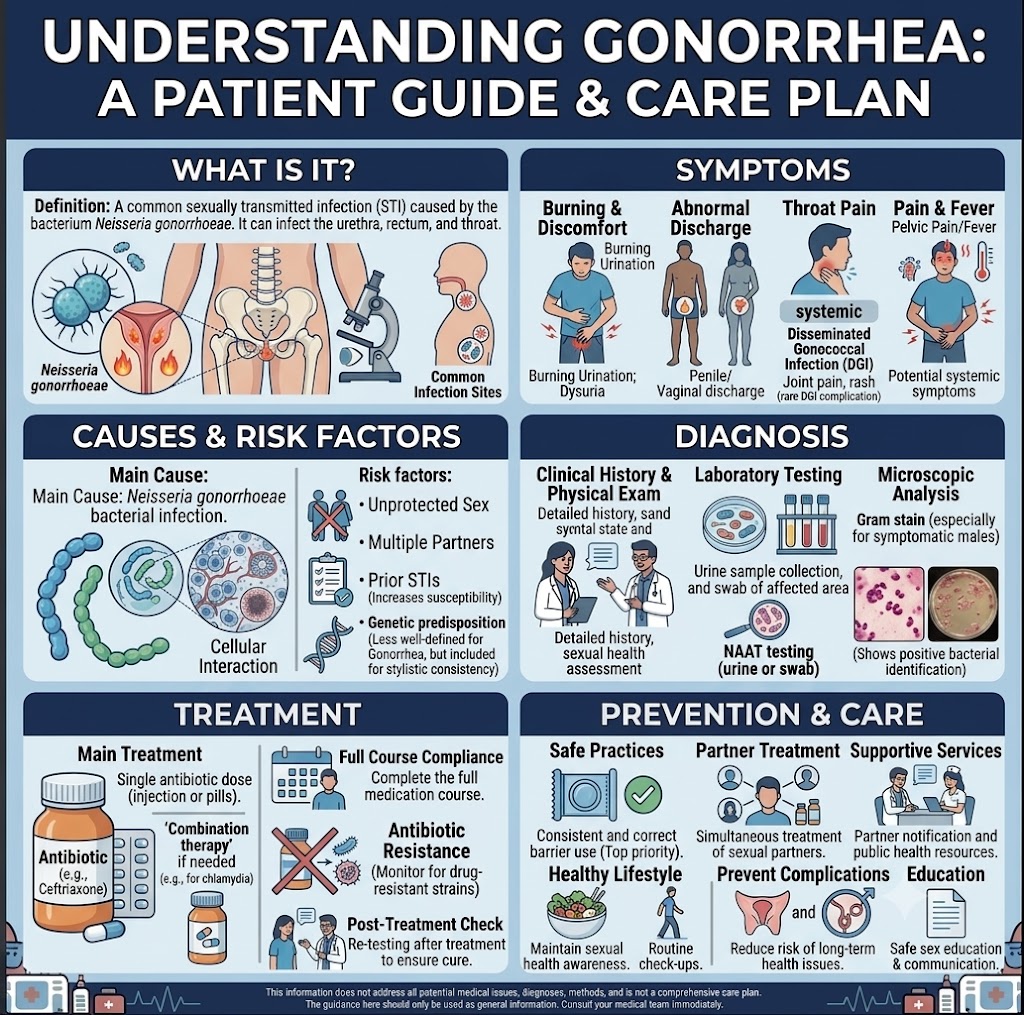
Gonorrhea is a highly contagious, common sexually transmitted infection (STI) caused by the bacterium Neisseria gonorrhoeae. This infection primarily targets moist, warm areas of the body, including the urethra (the urine passage), rectum, throat, eyes, and the female reproductive tract (cervix, uterus, and fallopian tubes). It is primarily transmitted through vaginal, oral, or anal sexual contact. Additionally, pregnant individuals can pass the bacteria to their newborns during vaginal delivery, which most commonly affects the infant's eyes. Recognizing symptoms early and seeking treatment is vital to prevent serious, long-term health complications.
Understanding the Condition
Understanding Gonorrhea: Causes, Symptoms, and Actionable Steps
Understanding the Condition
Gonorrhea is a highly contagious, common sexually transmitted infection (STI) caused by the bacterium Neisseria gonorrhoeae. This infection primarily targets moist, warm areas of the body, including the urethra (the urine passage), rectum, throat, eyes, and the female reproductive tract (cervix, uterus, and fallopian tubes). It is primarily transmitted through vaginal, oral, or anal sexual contact. Additionally, pregnant individuals can pass the bacteria to their newborns during vaginal delivery, which most commonly affects the infant's eyes. Recognizing symptoms early and seeking treatment is vital to prevent serious, long-term health complications.
Common Symptoms
Painful Urination: A sharp, burning, or painful sensation experienced while passing urine. This is a common symptom in both men and women.
Abnormal Genital Discharge: Men may notice a thick, pus-like discharge from the tip of the penis, which can be yellow, green, or white. Women may experience a significant increase in vaginal discharge that may appear watery, creamy, or slightly green.
Testicular Discomfort: Men may experience aching, pain, or visible swelling in one of their testicles, though this symptom is less common.
Vaginal Bleeding Between Periods: Women may experience unexpected vaginal spotting or bleeding between regular menstrual cycles, or immediately after vaginal intercourse.
Abdominal or Pelvic Pain: Women may experience persistent, dull, or sharp pain in the lower stomach, abdomen, or pelvic area, which can indicate the infection is spreading.
To prepare for your appointment, do not urinate for at least one to two hours before your visit, as this ensures accurate sampling. Make a detailed list of all current symptoms, note any recent sexual encounters (even if barrier methods were used), and bring a complete list of any medications or supplements you take. Be ready to discuss notifying your sexual partners so they can seek testing concurrently.
Book a doctor visit near me
Targeted Injectable Antibiotics: The primary clinical treatment involves a single-dose prescription antibiotic injection administered directly into a large muscle (usually the buttock or thigh) to rapidly eliminate the bacteria. (Duration: Single-dose injection; clinical follow-up is recommended if symptoms persist past 7 days.)
Oral Antibiotics: If a co-existing infection (such as chlamydia) is suspected or confirmed alongside gonorrhea, a course of prescription oral antibiotic tablets is prescribed. (Duration: Typically administered as a single oral dose or a continuous 7-day course of daily tablets.)
Strict Sexual Abstinence: You must completely avoid all forms of sexual activity—including vaginal, anal, and oral sex—to prevent transmitting the infection back and forth or to others. (Duration: For at least 7 days after both you and your sexual partner(s) have completely finished all prescribed antibiotic treatments and have zero remaining symptoms.)
Regular Annual Screening: Sexually active individuals under the age of 25, or those with new, multiple, or symptomatic partners, should undergo routine yearly screenings to detect and treat silent, asymptomatic infections.
Consultation Guide
Rectal and Throat Discomfort: Infections in the rectum can cause itching, bleeding, soreness, or painful bowel movements. Throat infections may present as a persistent, mild sore throat or swollen lymph nodes.
Consultation Guide
Which Specialist to Meet
You should consult a Primary Care Physician (PCP), a Gynecologist (for female reproductive health), a Urologist (for male urinary and reproductive health), or an Infectious Disease Specialist.
Preparations Before Your Visit
A healthcare professional will gently rotate a small, sterile, cotton-tipped swab over the surface of the affected area (e.g., inside the throat, rectum, vaginal canal, or the tip of the penis). This process is very quick, taking only a few seconds, and might cause a brief sensation of mild pressure or tickling.
Diagnostic Procedures
A rapid, non-invasive molecular test designed to identify the genetic material of the gonorrhea bacteria present in the urinary tract.
What to Expect
You will be handed a sterile specimen collection cup and asked to provide a 'first-catch' urine sample. This means you must collect the very first portion of your urine stream. For maximum accuracy, ensure you have not urinated for at least one to two hours prior to the test.
A targeted collection of cells and fluids from potentially infected sites—such as the cervix, urethra, throat, or rectum—to test directly for bacterial colonization.
What to Expect
A test used in advanced or systemic cases to determine if the gonorrhea bacteria have entered the bloodstream and spread to other areas of the body, such as the joints.
What to Expect
A phlebotomist will clean a small patch of skin on your arm, wrap an elastic band around your upper arm to locate a vein, and insert a small needle to draw a vial of blood. You may feel a minor, brief pinch at the puncture site.
Mutually Monogamous Relationships: Limit your sexual activity to one partner who has been tested and confirmed to be uninfected, and who agrees to remain sexually active only with you.
Pre-Exposure Prophylaxis (Doxy-PEP): For individuals at high risk of contracting STIs, consult a doctor about taking a specific preventive dose of prescription antibiotics within 72 hours after unprotected sexual contact.
Long-Term Monitoring and Care
Three-Month Post-Treatment Retesting: Schedule a follow-up screening approximately three months after completing your treatment to verify that reinfection has not occurred from an untreated or new sexual partner.
Treatment Options
Prescription Medications
Expedited Partner Therapy (EPT): To prevent immediate reinfection, healthcare providers can provide prescription medication or a prescription directly to you to pass along to your sexual partner(s), even if they have not yet been examined. (Duration: A single-dose regimen mirroring the primary patient's standard oral therapy.)
Home and Supportive Care
Prevention & Long-Term Wellbeing
Primary Prevention Strategies
Consistent Condom Use: Correctly use a new latex or polyurethane condom for every vaginal, anal, or oral sexual encounter to create an effective physical barrier against bodily fluids containing the bacteria.
Tags & Topics
Notice an error or need an update?
Help us keep medical information accurate. Report incorrect info or suggest an edit.


