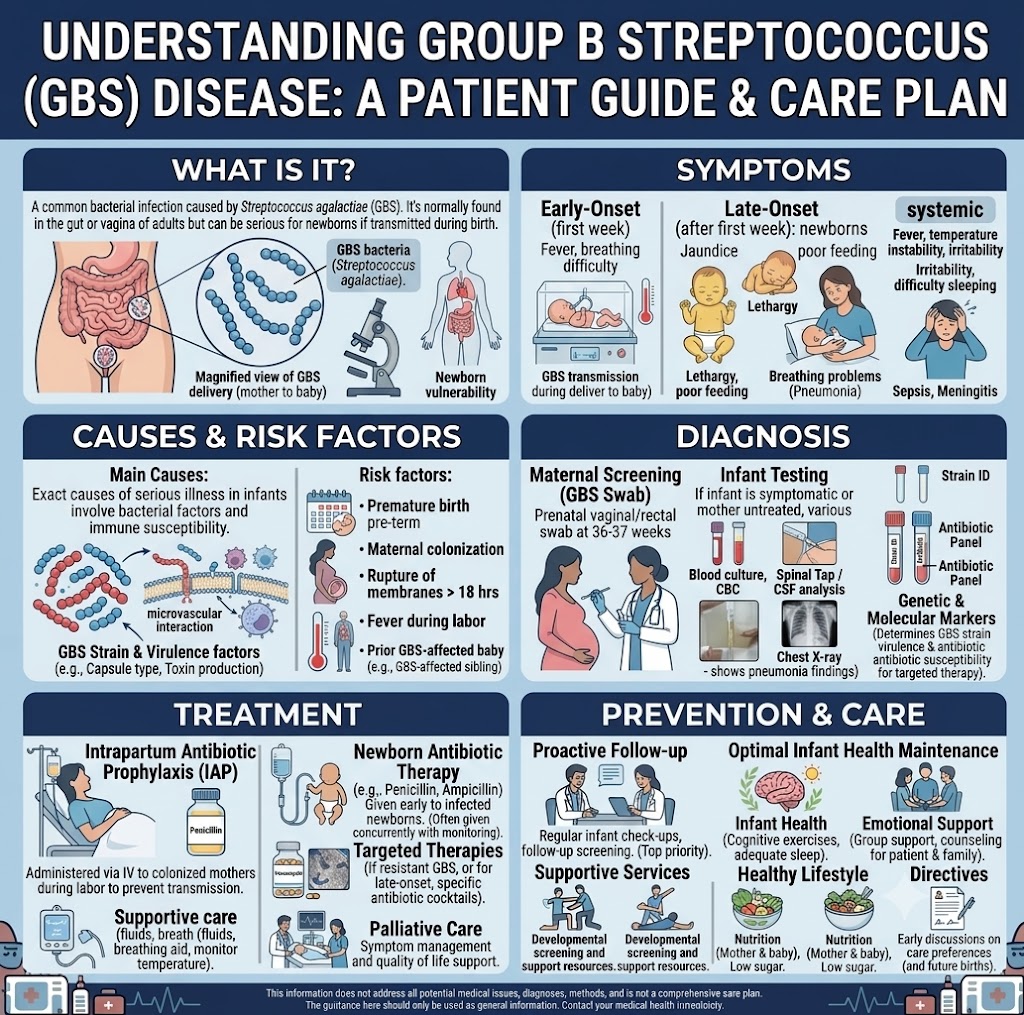
Group B Strep (GBS), also known as Streptococcus agalactiae, is a common type of bacteria often found in the intestines or lower genital tract. While usually harmless in healthy adults, it can cause serious illness in certain groups. Newborns are particularly vulnerable to a severe condition called Group B Strep disease. Adults with long-term health issues like diabetes or liver disease, and older adults, also face a higher risk of dangerous infections from GBS. Healthy adults typically don't require any action. However, for pregnant individuals, a routine screening test during the third trimester is essential. If GBS is detected, antibiotics administered during labor can significantly protect the baby from infection.
Understanding the Condition
Understanding Group B Strep Infection
Understanding the Condition
Common Symptoms
Newborns with Group B Strep Disease (Early or Late Onset): Symptoms in newborns can appear within hours of birth (early onset) or weeks to months later (late onset). These can include:* Fever: Unexplained high body temperature.* Difficulty Breathing: Grunting sounds, rapid breathing, or blueish skin color.* Poor Feeding: Refusing to feed or feeding less than usual.* Lethargy: Being unusually sleepy, floppy, or difficult to wake.* Irritability: Excessive crying or fussiness.* Seizures: Uncontrolled body movements.* Skin Rash: Red spots or blisters.
Adults with Group B Strep Infections: While many adults carry GBS without symptoms, it can sometimes cause infections, especially in those with weakened immune systems or chronic conditions. Symptoms can include:* Urinary Tract Infection (UTI): Pain or burning during urination, frequent urge to urinate, cloudy or strong-smelling urine, pelvic pain.* Blood Infection (Bacteremia/Sepsis): High fever, chills, rapid heart rate, confusion, low blood pressure. This is a severe, life-threatening condition requiring immediate medical attention.* Skin or Soft Tissue Infection: Redness, swelling, pain, warmth, or pus, often associated with a wound.* Pneumonia: Cough, fever, shortness of breath, chest pain.
Consultation Guide
Which Specialist to Meet
Pregnant individuals should consult their Obstetrician or Gynecologist. For concerns about newborns, a Pediatrician is the appropriate specialist. Adults with suspected GBS infections may see their Primary Care Provider, an Infectious Disease specialist, or an Internal Medicine physician, depending on the severity and type of infection.
Preparations Before Your Visit
Before your visit, it's helpful to write down your symptoms, including when they started and how they've changed. Prepare a list of all current medications, including over-the-counter drugs and supplements. Note any allergies, significant medical history, and questions you have for the doctor. For pregnant individuals, be ready to discuss your pregnancy history and any previous GBS status.
Book a doctor visit near me
Antibiotic Therapy (for active infections): For confirmed GBS infections in newborns or adults, a course of antibiotics is prescribed. The type and strength of the antibiotic depend on the severity of the infection and the specific strain of bacteria. It's crucial to complete the entire course as directed, even if symptoms improve. (Duration: Typically 7 to 10 days for less severe infections, but can extend to several weeks for more serious conditions like meningitis or bone infections.)
Prompt Medical Attention for Symptoms: For adults, particularly those with underlying health conditions or who are older, seek medical advice promptly if you experience symptoms suggestive of an infection, such as high fever, chills, or persistent pain. Early diagnosis and treatment can prevent serious complications.
Managing Underlying Health Conditions: Adults with chronic conditions like diabetes or liver disease should work closely with their doctors to manage these conditions effectively, as good overall health can reduce the risk of severe GBS infections.
Awareness and Education: Understanding who is at risk and recognizing the symptoms of GBS infection can lead to earlier intervention and better outcomes, particularly for vulnerable populations like newborns, older adults, and those with weakened immune systems.
Consultation Guide
Group B Strep (GBS), also known as Streptococcus agalactiae, is a common type of bacteria often found in the intestines or lower genital tract. While usually harmless in healthy adults, it can cause serious illness in certain groups. Newborns are particularly vulnerable to a severe condition called Group B Strep disease. Adults with long-term health issues like diabetes or liver disease, and older adults, also face a higher risk of dangerous infections from GBS. Healthy adults typically don't require any action. However, for pregnant individuals, a routine screening test during the third trimester is essential. If GBS is detected, antibiotics administered during labor can significantly protect the baby from infection.
Diagnostic Procedures
Group B Strep Screening for Pregnant Individuals
This is a routine test for pregnant individuals, usually performed between 36 and 37 weeks of pregnancy. It involves taking two swab samples: one from the lower vagina and one from the rectum. These samples are then sent to a laboratory to check for the presence of Group B Strep bacteria.
What to Expect
The procedure is quick and generally painless. You will lie on an examination table, similar to a routine pelvic exam. Your healthcare provider will use a soft cotton swab to gently collect a sample from your vagina and another from your rectum. There is no discomfort or special preparation required, and it only takes a few seconds.
Bacterial Culture (Blood, Urine, Spinal Fluid)
If a Group B Strep infection is suspected in a newborn or an adult, various bodily fluids may be collected and sent to a lab to grow and identify the bacteria. This helps confirm the diagnosis and guides treatment.
What to Expect
If an infection is suspected:* Blood Culture: A small amount of blood will be drawn, typically from a vein in your arm (or heel in infants), using a needle. The blood is then placed into special bottles to encourage bacterial growth. You might feel a brief pinch or sting.* Urine Culture: For adults, you will be asked to provide a 'clean catch' urine sample, where you clean the genital area before collecting urine midstream into a sterile cup. For infants, a catheter may be used to collect a sterile urine sample. This can be slightly uncomfortable for a brief moment.* Spinal Fluid Culture (Lumbar Puncture): If meningitis (infection of the brain and spinal cord lining) is suspected, a lumbar puncture may be performed. A doctor will carefully insert a thin needle into your lower back to collect a small sample of spinal fluid. Local anesthetic is used to numb the area first. You will typically lie on your side or sit hunched over. This procedure can take 20-30 minutes and you may need to lie flat for a few hours afterward. It carries a small risk of headache.
Treatment Options
Medications
Antibiotics during Labor (for pregnant carriers): If Group B Strep is detected during pregnancy, antibiotics are given intravenously (through a vein) during labor. This is highly effective in preventing the bacteria from spreading to the baby during birth. (Duration: Administered during the active phase of labor until delivery.)
Hospitalization and Intensive Care: For severe GBS infections, especially in newborns or critically ill adults, hospitalization may be necessary. This involves close monitoring of vital signs, providing intravenous fluids, oxygen support, and sometimes mechanical ventilation for breathing difficulties. (Duration: Varies significantly based on the severity of the illness and the patient's response to treatment, ranging from a few days to several weeks.)
Routine Group B Strep Screening During Pregnancy: This is the most crucial preventive measure for newborns. All pregnant individuals should undergo a GBS screening between 36 and 37 weeks of gestation. If positive, discuss antibiotic treatment during labor with your healthcare provider.
Prevention & Long-Term Wellbeing
Prevention
Tags & Topics
Notice an error or need an update?
Help us keep medical information accurate. Report incorrect info or suggest an edit.


