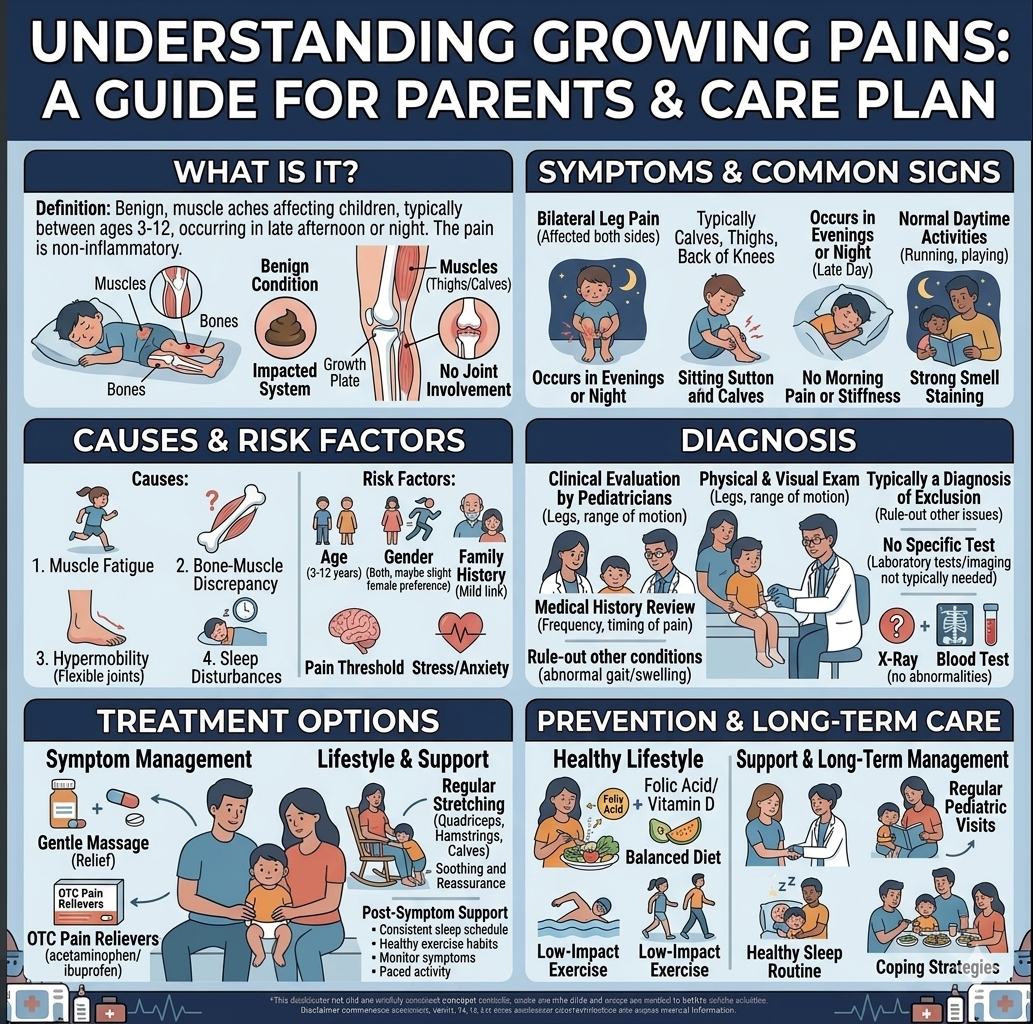
Growing pains are common, harmless aches or throbs primarily in a child's legs, often affecting the front of the thighs, calves, or behind the knees. They typically occur in both legs, frequently at night, and can sometimes wake a child from sleep. Despite their name, there's no scientific evidence that these pains are directly caused by a child's physical growth. The exact cause is unknown, but many experts believe these pains are most likely due to the muscle strain and overuse from active daytime play like running, climbing, and jumping. Growing pains usually come and go, not occurring every day, and are more common in preschool and school-age children.
Understanding the Condition
Understanding Growing Pains
Understanding the Condition
Common Symptoms
Leg Pain: An aching or throbbing sensation, commonly felt in the front of the thighs, calves, or behind the knees. It typically affects both legs. The pain usually starts in the late afternoon or early evening and often disappears by morning. It can be severe enough to wake a child from sleep. The pain doesn't happen every day; it comes and goes, with pain-free periods in between.
Abdominal Pain: Some children might experience discomfort in their belly during episodes of growing pains.
Headaches: Headaches can also occur alongside leg pain in some children.
Consultation Guide
Which Specialist to Meet
Begin by consulting your child's primary care provider, such as a pediatrician or family doctor. They can evaluate your child's symptoms and determine if further assessment by a specialist, such as a pediatric rheumatologist (a doctor specializing in joint and muscle conditions in children) or a pediatric orthopedist (a surgeon specializing in children's bones and joints), is necessary.
Preparations Before Your Visit
Before your visit, make a list of your child's symptoms, noting when they occur, how long they last, what makes them better or worse, and any other associated symptoms (like fever, limping, or swelling). Be ready to discuss your child's typical activity levels and any recent changes. It can be helpful to bring a list of questions you have for the doctor.
Book a doctor visit near me
Symptom Diary: Keep a simple record of when pains occur, how long they last, their intensity, and any factors that seem to make them better or worse. This information can be valuable for ongoing discussions with your doctor.
Regular Check-ups: Maintain regular well-child check-ups with your pediatrician to monitor overall health and discuss any recurring symptoms or concerns.
Re-evaluation for Worsening Symptoms: If your child's leg pain changes in character, becomes constant, localized to one joint, or is accompanied by other concerning symptoms (like fever, limping, swelling, rash, or persistent weakness), promptly consult your doctor for a re-evaluation to rule out other conditions.
Consultation Guide
Growing pains are common, harmless aches or throbs primarily in a child's legs, often affecting the front of the thighs, calves, or behind the knees. They typically occur in both legs, frequently at night, and can sometimes wake a child from sleep. Despite their name, there's no scientific evidence that these pains are directly caused by a child's physical growth. The exact cause is unknown, but many experts believe these pains are most likely due to the muscle strain and overuse from active daytime play like running, climbing, and jumping. Growing pains usually come and go, not occurring every day, and are more common in preschool and school-age children.
Diagnostic Procedures
An X-ray is a quick and painless imaging test that uses a small amount of radiation to create pictures of the inside of the body, particularly dense structures like bones. It helps doctors see if there are any bone abnormalities or injuries that could be causing the leg pain, ruling out more serious conditions.
What to Expect
Your child will be asked to lie still on a table or stand in front of a special plate. A technologist will position the body part to be examined. During the X-ray, the machine will send quick bursts of radiation through the body, capturing images on a digital sensor or film. This process is very fast, usually only taking a few seconds per image. Your child might need to hold their breath briefly for chest X-rays. Depending on the area being examined, several images may be taken from different angles. You may be allowed to stay with your child, but you will likely wear a lead apron for protection. The procedure is generally quick, typically lasting only a few minutes.
Treatment Options
Warmth and Massage: Gently massaging the sore muscles can provide comfort. Applying a warm heating pad or a warm cloth to the affected area can also help relax muscles and ease pain. (Duration: Applied as needed during pain episodes.)
Gentle Stretching: Simple stretching exercises, especially before bedtime, may help reduce muscle tension. (Duration: Applied as needed during pain episodes.)
Over-the-Counter Pain Relief Medication: For episodes of more intense pain, appropriate doses of over-the-counter pain relievers, such as those containing acetaminophen or ibuprofen, can be administered under medical guidance. Always follow dosing instructions carefully based on your child's age and weight. (Duration: Used intermittently for pain relief, as needed.)
Prevention & Long-Term Wellbeing
Prevention
Adequate Rest: Ensure your child gets enough sleep each night to help their body recover from daily activities and strenuous play.
Balanced Activity: Encourage regular physical activity but avoid excessive or sudden increases in strenuous play. Ensure proper warm-up before activity and cool-down afterward.
Proper Footwear: Ensure children wear supportive shoes that fit well, especially during physical activities, to provide adequate cushioning and support for their feet and legs.
Daily Stretching Routine: Incorporate gentle stretching into your child's daily routine, especially before bedtime, to help relax muscles that might have been overworked during the day.
Long-Term Monitoring
Tags & Topics
Notice an error or need an update?
Help us keep medical information accurate. Report incorrect info or suggest an edit.


