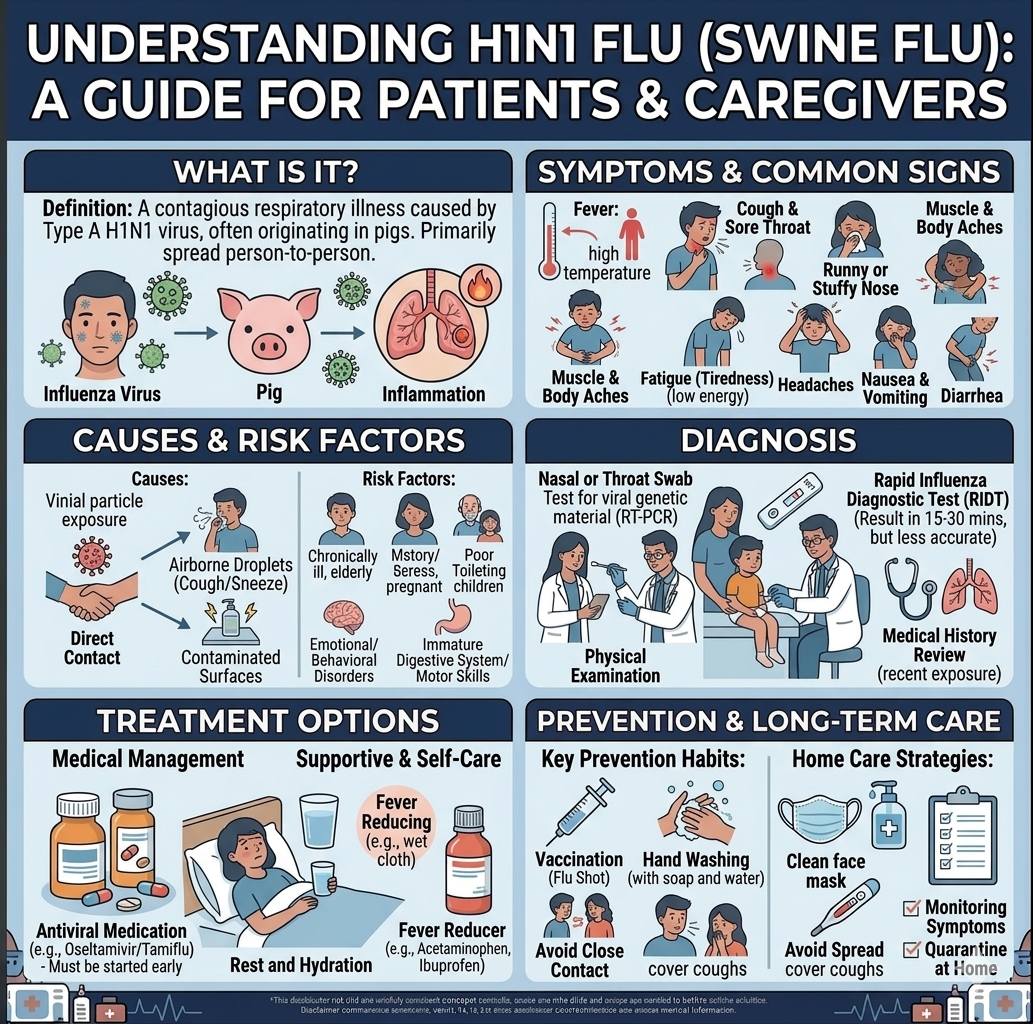
H1N1 flu, commonly known as swine flu, is a type of influenza A virus. It first emerged as a new illness in humans during the 2009-10 flu season, causing a global pandemic. This virus was a unique mix of influenza strains from pigs, birds, and humans. Although the pandemic ended in 2010, the H1N1 strain became a regular cause of seasonal flu. While most people recover on their own, the flu can lead to serious complications, particularly for high-risk individuals. Annual flu vaccines now protect against H1N1 and other common seasonal flu viruses.
Understanding the Condition
H1N1 Flu (Swine Flu): A Guide for Non-Medical Persons
Understanding the Condition
Common Symptoms
Fever: An elevated body temperature, though not always present.
Aching Muscles and Body Aches: Generalized soreness and discomfort throughout the body.
Chills and Sweats: Sudden feelings of coldness often followed by sweating.
Sore Throat: Pain or irritation in the throat, especially when swallowing.
Runny or Stuffy Nose: Nasal discharge or congestion.
Watery, Red Eyes: Eyes may appear bloodshot and produce excess tears.
Tiredness and Weakness: Feeling unusually fatigued and lacking energy.
Nausea, Vomiting, or Stomach Upset: Feeling sick to the stomach, which is more common in children than adults.
Consultation Guide
Which Specialist to Meet
For flu symptoms, your primary care physician or a general practitioner is the best first point of contact. If symptoms are severe or complications arise, they may refer you to an infectious disease specialist or a pulmonologist (lung specialist).
Preparations Before Your Visit
Before your visit, make a list of all your symptoms, including when they started and how severe they are. Note any recent travel, exposures to sick individuals, and your full medical history, including any chronic conditions or current medications. Be prepared to discuss your vaccination history. If possible, avoid public transport to limit potential spread.
Book a doctor visit near me
Rest: Allow your body to recover by getting plenty of sleep and avoiding strenuous activities. (Duration: Until symptoms significantly improve, typically 5-7 days.)
Fluid Intake: Drink plenty of water, clear broths, and electrolyte-rich drinks to prevent dehydration. (Duration: Throughout the illness.)
Humidifier Use: A cool-mist humidifier can help soothe a sore throat and ease nasal congestion. (Duration: As needed for symptom relief.)
Over-the-Counter Pain Relievers and Fever Reducers: Medications that help lower fever and relieve muscle aches and headaches. Avoid giving aspirin to children or teenagers due to the risk of Reye's syndrome. (Duration: As symptoms persist, typically 3-5 days.)
Antiviral Medications: These prescription drugs can lessen the severity and shorten the duration of the flu, especially if started within the first 48 hours of symptom onset. They work by stopping the virus from multiplying. (Duration: Typically a 5-day course.)
Stay Home When Sick: If you have flu symptoms, stay home from work, school, and public places for at least 24 hours after your fever is gone (without the use of fever-reducing medicine) to prevent spreading the virus.
Cover Coughs and Sneezes: Use a tissue to cover your mouth and nose when you cough or sneeze, then dispose of the tissue immediately. If a tissue isn't available, cough or sneeze into your elbow.
Avoid Touching Your Face: Try not to touch your eyes, nose, and mouth, as this is a common way for viruses to enter your body.
Manage Chronic Conditions: If you have existing chronic health issues like asthma, diabetes, or heart disease, ensure they are well-managed, as these conditions can increase your risk of severe flu complications.
Consult Healthcare Professionals Regularly: Maintain regular check-ups with your doctor, especially if you are in a high-risk group, to discuss preventive strategies and early intervention.
Consultation Guide
H1N1 flu, commonly known as swine flu, is a type of influenza A virus. It first emerged as a new illness in humans during the 2009-10 flu season, causing a global pandemic. This virus was a unique mix of influenza strains from pigs, birds, and humans. Although the pandemic ended in 2010, the H1N1 strain became a regular cause of seasonal flu. While most people recover on their own, the flu can lead to serious complications, particularly for high-risk individuals. Annual flu vaccines now protect against H1N1 and other common seasonal flu viruses.
Diagnostic Procedures
Rapid Influenza Diagnostic Tests (RIDTs)
These tests quickly detect parts of the influenza virus (antigens) in a respiratory sample. They provide results within 10-15 minutes but may not be as sensitive as molecular tests, meaning they could miss some infections.
What to Expect
A healthcare professional will collect a sample, usually by gently swabbing the inside of your nose or the back of your throat. This might feel slightly uncomfortable or ticklish for a few seconds.
Molecular Assays (e.g., RT-PCR)
These tests detect the genetic material of the influenza virus. They are more accurate and sensitive than RIDTs but typically take longer to process, often several hours to a day, for definitive results.
What to Expect
Similar to RIDTs, a sample will be collected via a nasal or throat swab. The process is quick, involving a brief swab of the nasal passages or throat to gather secretions containing the virus.
Treatment Options
Home Remedies and Supportive Care
Medications
Prevention & Long-Term Wellbeing
Prevention
Annual Flu Vaccination: Get vaccinated every year for everyone aged 6 months and older. The seasonal flu vaccine includes protection against H1N1 and other common strains, reducing your risk of getting sick, severe illness, and hospitalization.
Practice Good Hand Hygiene: Wash your hands frequently with soap and water for at least 20 seconds, especially after coughing, sneezing, or being in public. Use an alcohol-based hand sanitizer if soap and water are not available.
Avoid Close Contact with Sick Individuals: Minimize contact with people who are unwell. Maintain physical distance in crowded settings, especially during flu season.
Tags & Topics
Notice an error or need an update?
Help us keep medical information accurate. Report incorrect info or suggest an edit.


