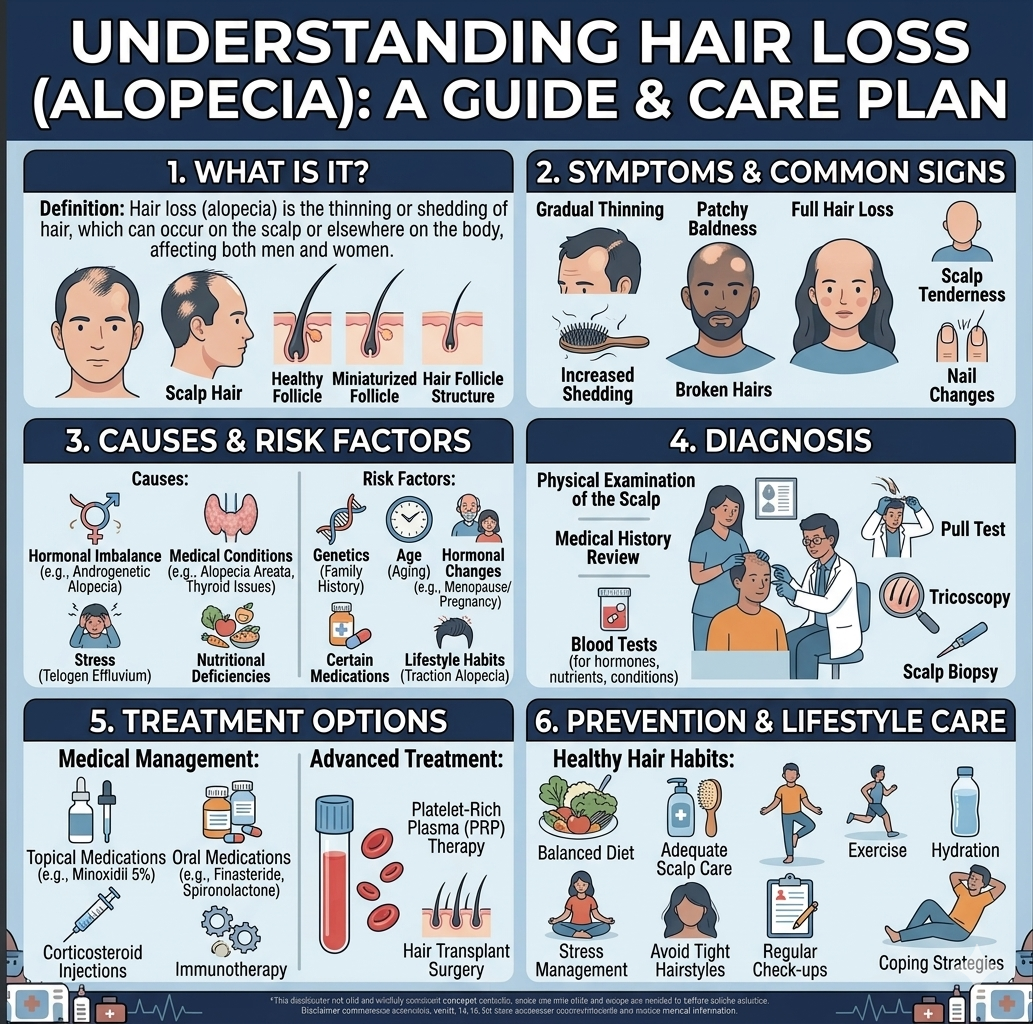
Hair loss, medically known as alopecia, involves losing hair from your scalp or anywhere on your body. It can be temporary or permanent, and its causes vary, ranging from genetics and hormonal changes to medical conditions or simply a normal part of aging. While it can affect anyone, hair loss is more prevalent in men. "Baldness" typically refers to significant scalp hair loss, with inherited patterns being the most common cause. Some individuals prefer to manage their hair loss naturally, while others opt for specific hairstyles, cosmetic solutions, or treatments to prevent further loss or encourage regrowth. It is always advisable to consult a healthcare professional to understand the cause of your hair loss and explore available treatment options.
Understanding the Condition
Understanding Hair Loss: Causes, Symptoms, and Care
Understanding the Condition
Common Symptoms
Gradual Thinning on Top of Head: This is the most common type of hair loss, often occurring with age. Men typically experience a receding hairline and bald spots, while women usually notice a widening part or overall thinning on the crown of the head. An increasingly common form in older women is a receding hairline that progresses (frontal fibrosing alopecia), which can sometimes begin with thinning eyebrows.
Circular or Patchy Bald Spots: Hair may fall out in distinct, round, or uneven patches on the scalp, beard, or eyebrows. The affected skin might feel itchy or painful before the hair loss occurs. This pattern is commonly associated with an immune system condition called alopecia areata.
Scaling Patches on Scalp: The presence of spreading, scaly patches on the scalp can indicate a fungal infection like ringworm. This symptom may be accompanied by broken hair, redness, swelling, and occasionally, oozing from the affected areas.
Consultation Guide
Which Specialist to Meet
Start by consulting your general practitioner. They can assess your condition and, if needed, refer you to a dermatologist, a doctor specializing in skin and hair conditions.
Preparations Before Your Visit
Before your appointment, make a detailed list of your symptoms, including when they began and how they've progressed. Note any recent illnesses, major life changes, medications (prescription, over-the-counter, supplements), and any family history of hair loss. Prepare a list of questions you want to ask your doctor.
Book a doctor visit near me
You will sit comfortably while the doctor visually inspects your scalp and hair. They might gently pull on small sections of hair or examine individual hair shafts. You will be asked questions about your symptoms, diet, stress levels, recent illnesses, and any medications or supplements you are currently taking.
Consultation Guide
Hair loss, medically known as alopecia, involves losing hair from your scalp or anywhere on your body. It can be temporary or permanent, and its causes vary, ranging from genetics and hormonal changes to medical conditions or simply a normal part of aging. While it can affect anyone, hair loss is more prevalent in men. "Baldness" typically refers to significant scalp hair loss, with inherited patterns being the most common cause. Some individuals prefer to manage their hair loss naturally, while others opt for specific hairstyles, cosmetic solutions, or treatments to prevent further loss or encourage regrowth. It is always advisable to consult a healthcare professional to understand the cause of your hair loss and explore available treatment options.
Sudden Hair Loosening: A significant physical or emotional shock can cause hair to loosen and fall out in handfuls. This might be noticed when combing, washing, or even gently tugging your hair. This type of hair loss usually results in temporary, overall hair thinning across the scalp.
A small sample of skin from your scalp is removed and sent to a lab for microscopic examination. This procedure helps determine the exact cause of hair loss, especially when an infection or inflammatory skin condition is suspected.
Oral Medications: Pills taken by mouth can help block hormones linked to hair loss or promote new hair growth, depending on the specific cause. (Duration: Daily use, with effects potentially taking several months to appear and requiring ongoing treatment.)
Procedures & Therapies
Injections: Small injections administered into the scalp can help reduce inflammation and stimulate hair growth for certain types of hair loss, such as patchy baldness. (Duration: Often given in a series of sessions over several weeks or months, as determined by your doctor.)
Light Therapy: This therapy uses specific wavelengths of light to stimulate hair follicles, promoting growth and reducing inflammation. (Duration: Typically involves multiple sessions per week over several months, with possible maintenance sessions.)
Diagnostic Procedures
Physical Examination and Medical History
What to Expect
What to Expect
The doctor will numb a small area of your scalp using a local anesthetic injection. You might feel a brief pinch from the injection. A tiny piece of skin, typically no larger than a pencil eraser, will then be removed using a specialized tool. The site will be covered with a bandage, and you may receive a few stitches that either dissolve on their own or require removal later.
Blood samples are collected and analyzed to check for underlying medical conditions that can contribute to hair loss, such as thyroid disorders, iron deficiency, or hormonal imbalances.
What to Expect
A healthcare professional will draw blood, usually from a vein in your arm, using a sterile needle. You may experience a slight prick or sting. The blood is collected into vials and then sent to a laboratory for thorough analysis.
Light Microscopy (Hair Pull Test, Tug Test, Card Test)
Your doctor may perform tests like the hair pull test, tug test, or card test to evaluate the strength and condition of your hair. Hairs removed during these tests may be examined under a microscope to assess the hair shafts and roots, aiding in the diagnosis of the type of hair loss.
What to Expect
During a hair pull test, the doctor will gently grasp about 50-60 hairs and pull to see how many come out easily. In a tug test, a section of hair is held at both ends and gently tugged to check for hair breakage. A card test involves pressing a small card against a section of hair to observe new hair growth. These tests are quick and generally painless.
Treatment Options
Full-Body Hair Loss: Certain medical conditions and their treatments, such as chemotherapy for cancer, can lead to hair loss across the entire body. In most cases, the hair eventually grows back once the underlying condition is resolved or treatment stops.
Gentle Hair Care: Avoid aggressive brushing, tight hairstyles like ponytails or braids, and harsh chemical treatments (e.g., hot oils, permanents, excessive heat styling) that can physically damage hair and follicles. (Duration: Ongoing)
Sun Protection: Protect your scalp from prolonged sun exposure, which can weaken hair and damage the scalp. (Duration: Ongoing)
Medications
Topical Solutions: These solutions are applied directly to the scalp to stimulate hair growth and slow down further hair loss. (Duration: Daily use, with noticeable results typically appearing after several months of consistent application.)
Cooling Caps: Worn during specific medical treatments like chemotherapy, these caps help reduce blood flow to the scalp, which can minimize hair loss. (Duration: Worn during chemotherapy treatment sessions.)
Surgical Procedures
Hair Transplant Surgery: This procedure involves taking small plugs of skin containing healthy hair follicles from a dense area of your scalp and surgically implanting them into balding or thinning areas. (Duration: A single procedure with several months for new hair to grow. Multiple sessions might be needed over time for desired density.)
Gentle Hair Care Habits: Avoid hairstyles that pull tightly on hair roots, such as severe braids or ponytails. Use wide-toothed combs for detangling, especially when hair is wet, to prevent breakage. Limit harsh chemical treatments and excessive heat styling.
Discuss Medications: Talk to your doctor about any medications or supplements you are taking, as some can have hair loss as a side effect. Your doctor may be able to suggest alternative options.
Protect from UV Light: Shield your hair and scalp from direct, prolonged sunlight and other sources of ultraviolet light by wearing hats or using protective sprays.
Manage Stress: While temporary, significant physical or emotional stress can trigger hair loss. Practicing stress-reduction techniques and maintaining good mental health may help.
Long-Term Monitoring & Support
Regular Doctor Visits: If you have persistent or ongoing hair loss, regular follow-ups with your doctor or dermatologist can help monitor your condition, assess treatment effectiveness, and make necessary adjustments.
Prevention & Long-Term Wellbeing
Your doctor will closely examine your scalp and hair, and potentially other areas of your body, to identify patterns of hair loss or signs of any underlying medical conditions. They will also gather detailed information about your health, lifestyle, and family history.
Home Remedies & Lifestyle Adjustments
Balanced Nutrition: Ensure your diet provides essential vitamins and minerals crucial for healthy hair growth and overall well-being. (Duration: Ongoing)
Smoking Cessation: Some studies suggest a link between smoking and increased hair loss in men. Quitting smoking may help reduce this risk. (Duration: Ongoing)
Prevention
Nutritional Support: Maintain a balanced diet rich in essential nutrients vital for hair health. If you suspect any nutritional deficiencies, consult your doctor about appropriate supplements.
Emotional Wellbeing: Hair loss can significantly impact self-esteem and mental health. Seek support from family, friends, or a professional if you find the experience distressing or overwhelming.
Tags & Topics
Notice an error or need an update?
Help us keep medical information accurate. Report incorrect info or suggest an edit.


