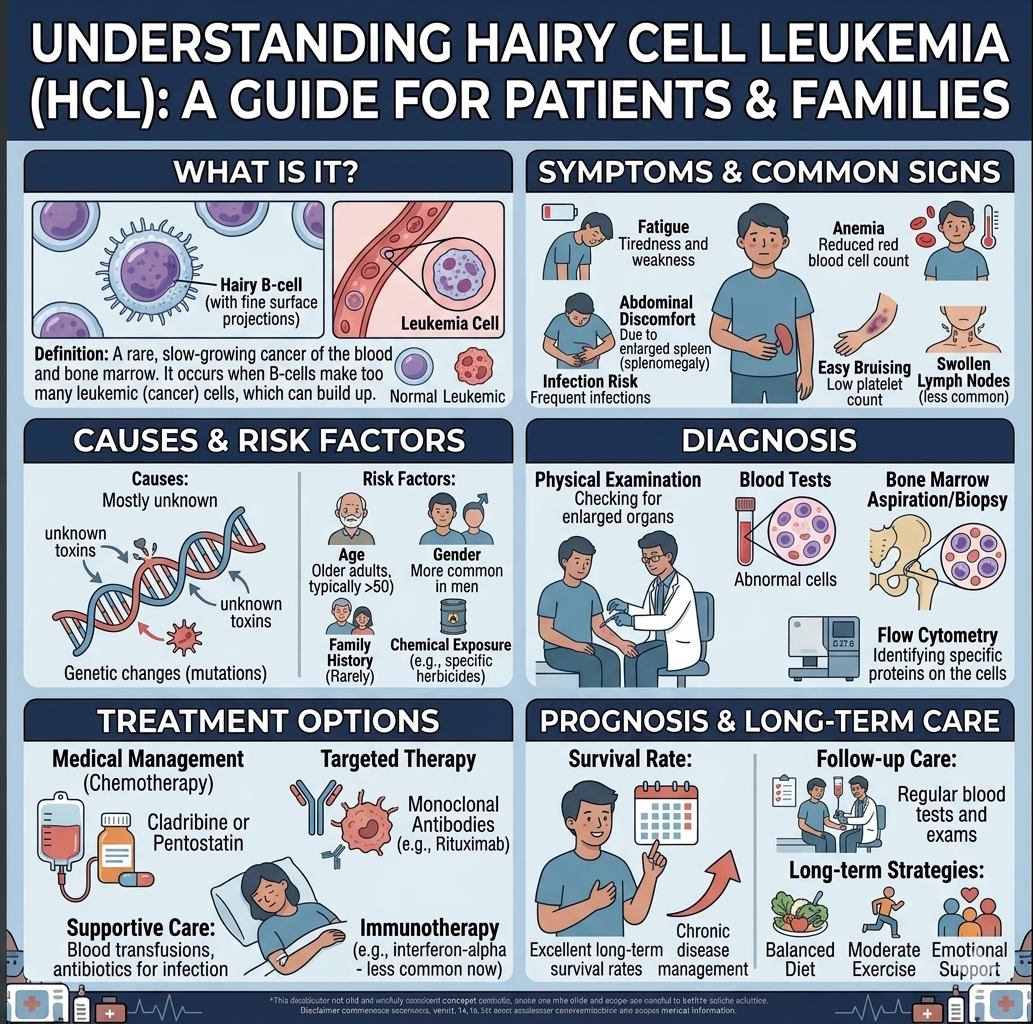
Hairy cell leukemia (HCL) is a slow-growing and rare type of cancer that affects specific white blood cells called B cells. These B cells are crucial for fighting infections in the body. In HCL, the body produces too many abnormal B cells that look 'hairy' under a microscope. Unlike healthy cells, these 'hairy' leukemia cells don't die naturally, leading to their buildup in the body. This accumulation crowds out healthy blood cells, causing various symptoms. HCL typically progresses slowly, and treatment may not be needed immediately, often involving medications when required. There is also a faster-progressing variant, which is considered a separate condition despite a similar name.
Understanding the Condition
Hairy Cell Leukemia: Understanding a Rare Blood Cancer
Understanding the Condition
Hairy cell leukemia (HCL) is a slow-growing and rare type of cancer that affects specific white blood cells called B cells. These B cells are crucial for fighting infections in the body. In HCL, the body produces too many abnormal B cells that look 'hairy' under a microscope. Unlike healthy cells, these 'hairy' leukemia cells don't die naturally, leading to their buildup in the body. This accumulation crowds out healthy blood cells, causing various symptoms. HCL typically progresses slowly, and treatment may not be needed immediately, often involving medications when required. There is also a faster-progressing variant, which is considered a separate condition despite a similar name.
Common Symptoms
No Symptoms (Asymptomatic): Hairy cell leukemia might not cause any noticeable symptoms, and it can sometimes be discovered accidentally during routine blood tests for other reasons.
Abdominal Discomfort: A feeling of fullness or discomfort in the belly, often due to an enlarged spleen, which may make it difficult to eat more than small amounts at a time.
Easy Bruising or Bleeding: You might notice bruising easily, nosebleeds, or bleeding gums due to a low count of healthy platelets, which are essential for blood clotting.
Fatigue: Feeling unusually tired or weak, often a symptom of anemia (too few red blood cells).
Consultation Guide
Which Specialist to Meet
If you experience persistent symptoms, your primary care doctor is a good first point of contact. They may refer you to a hematologist, a doctor specializing in blood disorders, or an oncologist, a doctor who treats cancer. These specialists will have expertise in diagnosing and managing hairy cell leukemia.
Preparations Before Your Visit
Before your appointment, gather your medical history, including any current symptoms you're experiencing, when they started, and how they affect you. Make a list of all medications, vitamins, and supplements you are taking. Write down any questions you have for your doctor to ensure all your concerns are addressed. It can also be helpful to bring a family member or friend to take notes and offer support.
Book a doctor visit near me
Watchful Waiting: Since hairy cell leukemia often progresses very slowly, some individuals may not require immediate treatment. Instead, doctors monitor the condition closely with regular check-ups and blood tests. (Duration: Can range from months to many years, depending on symptom development and disease progression.)
Splenectomy (Spleen Removal): Surgery to remove the spleen, an organ that helps filter blood and fight infection. If the spleen becomes very enlarged and causes significant discomfort, pain, or complications, its removal can alleviate symptoms and improve blood counts. (Duration: Typically a hospital stay of a few days, with a full recovery taking approximately two to four weeks. Often performed minimally invasively (laparoscopically).)
Consultation Guide
Recurring Infections: Frequent or severe infections can occur because the body's ability to fight germs is weakened by a lack of healthy white blood cells.
Unexplained Weight Loss: Losing weight without actively trying to do so.
You will lie on a movable table that slides into a large, donut-shaped machine. You'll need to stay still during the scan, which may take 10-30 minutes. You might hear buzzing or clicking noises. Sometimes, a contrast dye is given through an IV to make certain structures show up more clearly, which can cause a warm sensation or metallic taste.
Diagnostic Procedures
Complete Blood Count (CBC)
A common blood test that measures the different components of your blood, including red blood cells, white blood cells, and platelets. It can reveal unusual increases or decreases in cell counts, which may indicate a medical condition like leukemia.
What to Expect
A healthcare professional will draw a small sample of blood, usually from a vein in your arm. The process is quick and generally involves minimal discomfort, similar to a routine blood test.
Bone Marrow Aspiration and Biopsy
These procedures collect and examine bone marrow, the spongy tissue inside some of your larger bones where blood cells are made. Aspiration removes a liquid sample, while a biopsy removes a small piece of solid bone tissue and marrow. These tests help determine if your bone marrow is healthy and producing normal blood cells, and can diagnose blood and marrow diseases.
What to Expect
You will lie on your stomach or side. After numbing the skin and bone surface, a doctor will insert a thin needle, usually into the back of your hip bone. You may feel pressure and a brief, sharp pain as the liquid marrow is drawn (aspiration) and then a twisting sensation as the tissue sample is taken (biopsy). The procedure typically lasts 15-30 minutes, and you'll receive instructions for post-procedure care.
CT Scan (Computerized Tomography Scan)
A type of imaging that uses X-ray techniques and a computer to create detailed cross-sectional images ('slices') of your bones, blood vessels, and soft tissues inside the body. It helps doctors visualize internal organs like the spleen, liver, and lymph nodes to check for enlargement or other abnormalities.
What to Expect
Regular Monitoring and Follow-up: Even in remission, ongoing monitoring with regular blood tests and doctor visits is crucial to detect any signs of recurrence or new complications early. Adhere to your prescribed follow-up schedule.
Emotional Support: Living with a chronic condition like hairy cell leukemia can be challenging. Seek support from family, friends, support groups, or mental health professionals to cope with the emotional aspects of your diagnosis and treatment.
Treatment Options
Monitoring and Observation
Medications
Chemotherapy: Drug treatments that use powerful chemicals to kill fast-growing cancer cells throughout the body. These drugs specifically target and destroy the abnormal B cells associated with hairy cell leukemia. (Duration: Typically administered in cycles over several weeks to months, with breaks in between doses to allow the body to recover.)
Biological Therapy: A type of treatment that uses substances made from living organisms or in a lab to stimulate or restore the body's immune system to fight cancer cells. It helps the immune system recognize and attack the leukemia cells. (Duration: Administered in cycles, similar to chemotherapy, over several weeks or months, depending on the specific therapy and individual response.)
Surgical Procedures
Managing Complications: Work closely with your healthcare team to address any complications like anemia, bleeding issues, or persistent fatigue. This may involve specific treatments or adjustments to your care plan to improve your quality of life.
Prevention & Long-Term Wellbeing
Prevention and Long-Term Management
Infection Prevention: Hairy cell leukemia can weaken your immune system, making you more susceptible to infections. Practice good hand hygiene, avoid close contact with sick individuals, and discuss recommended vaccinations (e.g., flu, pneumonia) with your doctor.
Healthy Lifestyle Choices: Maintain a balanced diet rich in fruits, vegetables, and whole grains. Engage in moderate, regular exercise as tolerated, and ensure you get adequate rest. These practices support overall health and energy levels, helping to manage fatigue.
Tags & Topics
Notice an error or need an update?
Help us keep medical information accurate. Report incorrect info or suggest an edit.


