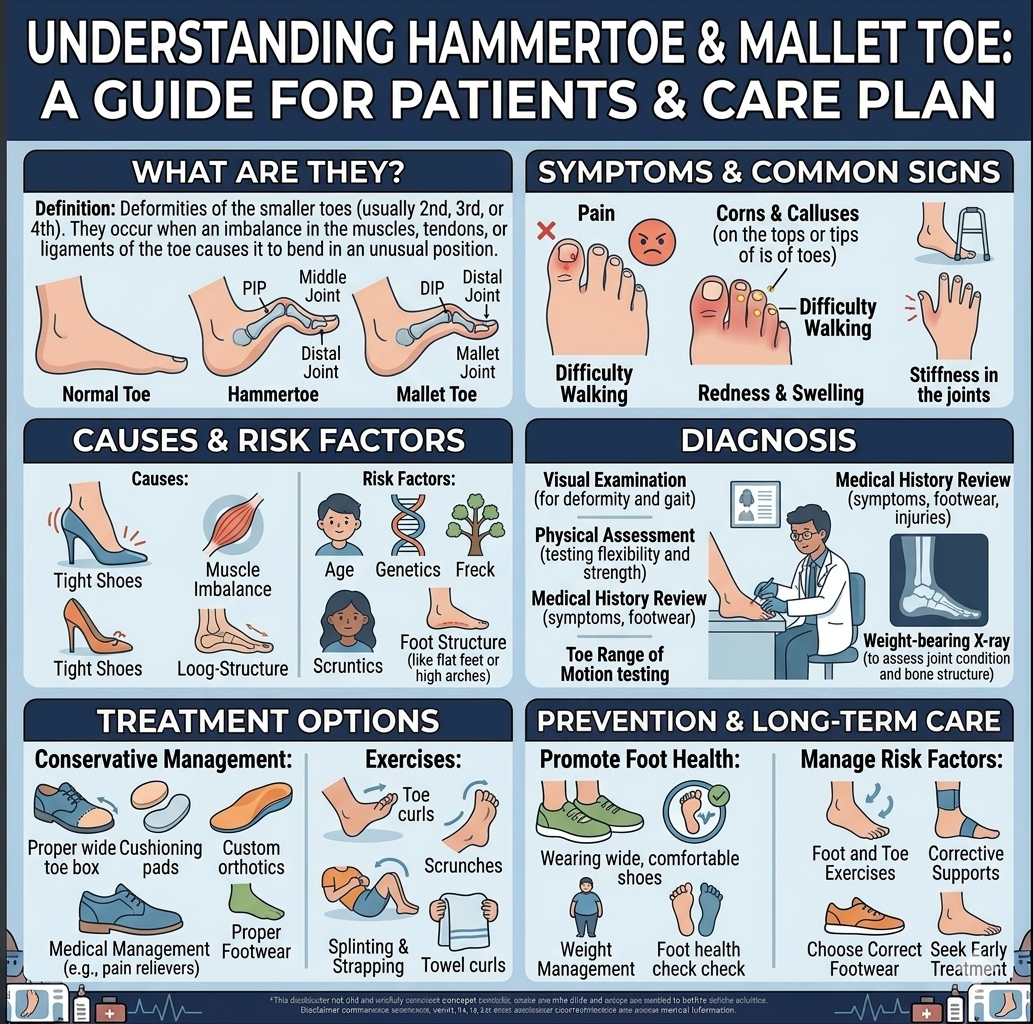
Hammertoe and mallet toe are common foot deformities where a toe bends abnormally. A hammertoe features a bend in the middle joint, causing the toe to resemble a hammer, while a mallet toe has a bend at the joint closest to the toenail. These conditions typically affect the second, third, or fourth toes and can stem from ill-fitting shoes, injuries, or muscle imbalances. Initially flexible, the toe can become rigid over time. Early treatment often involves footwear adjustments and inserts; surgery may be considered for severe cases or persistent pain.
Understanding the Condition
Hammertoe and Mallet Toe: Understanding and Care
Understanding the Condition
Common Symptoms
Pain: Pain when wearing shoes.
Restricted Movement: Difficulty moving the affected toe.
Stiffness: Toe stiffness.
Skin Changes: Redness, swelling, or changes in skin color on the affected toe.
Skin Lesions: Corns and calluses forming on the top or tip of the bent toe, due to rubbing against shoes or the ground.
Walking Difficulty: Trouble walking or maintaining balance due to toe discomfort.
Consultation Guide
Which Specialist to Meet
For persistent foot pain or noticeable toe deformities, you should first consult a general practitioner. They may then refer you to a specialist such as a podiatrist (a foot and ankle specialist) or an orthopedic surgeon who specializes in foot conditions.
Preparations Before Your Visit
Before your visit, make a list of your symptoms, including when they started and what makes them better or worse. Note any past foot injuries, existing medical conditions like diabetes or arthritis, and current medications. Be prepared to discuss your typical footwear choices and daily activities. Write down any questions you have for the doctor to ensure all your concerns are addressed.
Book a doctor visit near me
Pain-Relieving Medications: Over-the-counter non-steroidal anti-inflammatory drugs (NSAIDs) to reduce pain and inflammation. (Duration: As needed for symptom relief, short-term)
Diagnostic Procedures
A healthcare professional will inspect your foot and toes, assessing the specific bend, flexibility, and checking for corns, calluses, swelling, or redness. They may also observe how you walk to understand the impact on your gait.
What to Expect
You will be asked to remove your shoes and socks for visual inspection and gentle manipulation of your toes. The doctor will test the flexibility of your toe joints and may ask you to stand or walk a short distance. This examination is generally not painful, though you might feel some discomfort if your toe is already tender.
X-rays are imaging tests that use a small amount of radiation to create detailed images of the bones within your foot and toes. This helps the doctor visualize the bone structure, assess the exact degree of joint bending, and identify any underlying structural issues like arthritis or bone spurs.
What to Expect
You will be asked to sit or stand in various positions while a radiologic technologist takes images of your foot. You must remain very still for a few seconds during each X-ray exposure. The procedure is quick, painless, and usually takes less than 15 minutes. You will typically be asked to remove any metal objects from your feet or ankles before the imaging.
Treatment Options
Hammertoe and mallet toe are common foot deformities where a toe bends abnormally. A hammertoe features a bend in the middle joint, causing the toe to resemble a hammer, while a mallet toe has a bend at the joint closest to the toenail. These conditions typically affect the second, third, or fourth toes and can stem from ill-fitting shoes, injuries, or muscle imbalances. Initially flexible, the toe can become rigid over time. Early treatment often involves footwear adjustments and inserts; surgery may be considered for severe cases or persistent pain.
Non-Surgical Treatments
Orthotic Devices (Shoe Inserts): Custom or over-the-counter shoe inserts designed to provide support, cushioning, and correct foot mechanics, helping to redistribute pressure. (Duration: Long-term use)
Physical Therapy: Working with a physical therapist to learn specific exercises for strengthening foot muscles, improving balance, and stretching tight tendons. (Duration: Several weeks to months)
Corticosteroid Injections: In some cases, injections of anti-inflammatory medication directly into the joint to reduce severe pain and inflammation. (Duration: Temporary relief, effects last weeks to months)
Surgical Procedures
Prevention & Long-Term Wellbeing
Home Remedies & Lifestyle Adjustments
Appropriate Footwear: Wear shoes with a wide, deep toe box that allows toes to lie flat and comfortably. Avoid high heels and shoes with pointed toes. (Duration: Ongoing)
Padding and Taping: Apply non-medicated pads to corns and calluses to reduce friction, or tape the affected toe to a neighboring toe to help straighten it. (Duration: As needed, daily)
Stretching Exercises: Perform gentle stretches for the affected toe and foot muscles to improve flexibility and relieve tension. (Duration: Daily, 5-10 minutes)
Ice Application: Apply ice packs to the affected toe for 15-20 minutes to reduce pain and swelling, especially after activity. (Duration: As needed, 15-20 minutes per application)
Tendon Release/Transfer: If the toe is still flexible, surgeons may lengthen or reroute tendons to release tension and allow the toe to straighten. (Duration: Procedure takes less than an hour; recovery 6-12 weeks)
Arthroplasty (Joint Resection): Removing a small part of the bone at the bent joint to allow the toe to lie flat. (Duration: Procedure takes less than an hour; recovery 6-12 weeks)
Arthrodesis (Joint Fusion): Fusing the joint together after removing the cartilage to keep the toe permanently straight. This may involve placing a pin or small implant. (Duration: Procedure takes less than an hour; recovery 6-12 weeks, pins removed after 3-4 weeks)
Osteotomy: In rare cases, a small wedge of bone might be removed to realign the toe. (Duration: Procedure takes less than an hour; recovery 6-12 weeks)
Prevention
Wear Well-Fitting Shoes: Choose shoes with a wide, deep toe box and low heels that allow your toes to move freely. Shop for shoes at the end of the day when feet are slightly swollen, and always measure both feet, buying for the larger size.
Avoid Restrictive Footwear: Steer clear of pointed toes and high heels that cramp the toes and can force them into an unnatural bent position over time, increasing the risk of developing hammertoe or mallet toe.
Regular Foot Stretches: Perform simple toe stretches and exercises to maintain flexibility and strengthen the small muscles in your feet, promoting better toe alignment.
Prompt Injury Care: Seek medical attention for any toe injuries (stubbed, jammed, or broken toes) to ensure proper healing and reduce the risk of future deformities.
Long-Term Monitoring
Daily Foot Checks: Regularly inspect your feet and toes for any changes, such as new bends, redness, swelling, corns, or calluses, especially if you have conditions like diabetes.
Manage Health Conditions: If you have diabetes or arthritis, diligently manage these conditions with your doctor, as they can significantly impact foot health and increase the risk of foot deformities.
Early Podiatrist Consultation: If you notice any developing foot pain or toe changes, consult a podiatrist early for advice on conservative measures to prevent progression.
Orthotics Maintenance: If using shoe inserts, ensure they are still providing adequate support and replace them as recommended by your foot specialist.
Tags & Topics
Notice an error or need an update?
Help us keep medical information accurate. Report incorrect info or suggest an edit.


