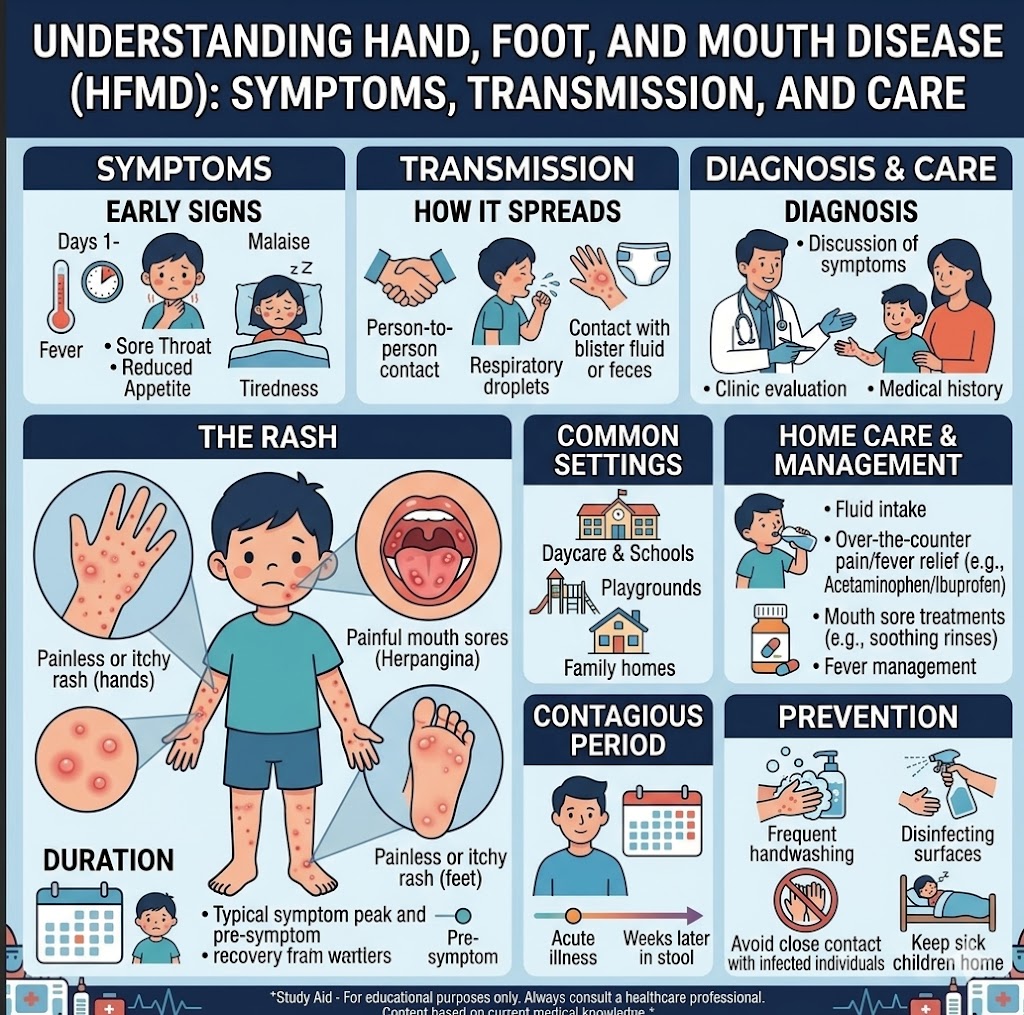
Hand-Foot-and-Mouth Disease (HFMD) is a common, generally mild viral infection primarily affecting young children, though it can occur in people of any age. It is most frequently caused by a virus called coxsackievirus A16. The illness spreads easily between individuals and through respiratory droplets. Key symptoms include painful sores in the mouth and a characteristic rash on the hands and feet. While there is no specific cure, symptoms typically resolve within 7 to 10 days, and supportive care can help manage discomfort. Practicing good hygiene, such as frequent hand-washing, helps prevent its spread.
Understanding the Condition
Hand-Foot-and-Mouth Disease (HFMD)
Understanding the Condition
Hand-Foot-and-Mouth Disease (HFMD) is a common, generally mild viral infection primarily affecting young children, though it can occur in people of any age. It is most frequently caused by a virus called coxsackievirus A16. The illness spreads easily between individuals and through respiratory droplets. Key symptoms include painful sores in the mouth and a characteristic rash on the hands and feet. While there is no specific cure, symptoms typically resolve within 7 to 10 days, and supportive care can help manage discomfort. Practicing good hygiene, such as frequent hand-washing, helps prevent its spread.
Common Symptoms
Fever: Often the first symptom to appear.
Sore Throat: A painful sensation in the throat, sometimes leading to difficulty swallowing.
Painful Mouth Sores: One to two days after a fever starts, small, painful, blister-like sores can develop in the mouth or throat. These commonly appear on the tongue, gums, and inside of the cheeks.
Skin Rash: A distinctive rash typically emerges on the palms of the hands and soles of the feet, and sometimes on the buttocks. This rash is not usually itchy but may sometimes feature small blisters. Its appearance can vary significantly based on skin tone, ranging from red, white, or gray spots to subtle tiny bumps.
Reduced Appetite: Individuals may experience a decrease in their desire to eat due to mouth pain or general unwellness.
General Unwell Feeling: A sense of being unwell, tired, or irritable, particularly common in young children who may become unusually fussy.
Consultation Guide
Which Specialist to Meet
For most cases, a primary care physician or pediatrician is the appropriate specialist to consult. They can accurately diagnose and recommend ways to manage the symptoms.
Preparations Before Your Visit
Before your visit, prepare a list of all observed symptoms, including when they started, how severe they are, and if a fever is present (including its highest temperature). Mention any recent contact with sick individuals or attendance at places where outbreaks are known (e.g., daycare, school). This information will help the doctor make an accurate diagnosis.
Book a doctor visit near me
A doctor will typically diagnose Hand-Foot-and-Mouth Disease based on a thorough physical examination of the mouth, throat, hands, and feet to identify the characteristic sores and rash. They will also ask about the patient's symptoms and recent medical history.
The doctor will carefully look inside the mouth and throat for lesions and examine the hands, feet, and possibly the buttocks for the distinctive rash. They may also check for fever and ask questions about when symptoms began, any pain levels, and if the patient has been around others who are sick. This examination is usually quick and non-invasive.
In unusual cases, such as when symptoms are severe, prolonged, or the diagnosis is unclear, the doctor might recommend laboratory tests. These tests involve collecting a sample (e.g., a throat swab, stool sample, or fluid from a blister) to identify the specific virus causing the illness.
Over-the-Counter Pain Relief: Non-prescription medications can help manage fever and general discomfort. These include pain and fever reducers suitable for the patient's age and weight. (Duration: As needed for symptoms, following dosage instructions carefully, typically for a few days.)
Topical Numbing Agents: For painful mouth sores, a doctor may recommend or prescribe oral numbing gels or sprays to temporarily relieve discomfort and make eating and drinking easier. (Duration: As needed for mouth pain, usually for a few days while sores are most bothersome.)
Stay Home When Sick: Individuals, particularly children, who are experiencing symptoms of Hand-Foot-and-Mouth Disease should stay home from school, daycare, or work to prevent transmitting the virus to others.
Monitor for Complications: While HFMD is typically mild and self-limiting, monitor for signs of dehydration (e.g., decreased urination, excessive thirst, lethargy) or worsening symptoms. Seek medical attention if symptoms persist beyond 10 days, worsen significantly, or if there are signs of dehydration.
Ensure Full Recovery: After symptoms resolve, ensure the individual has fully recovered before resuming normal activities, especially for children returning to group settings. The virus can still be shed in stool for several weeks, so continued good hygiene is important.
Consultation Guide
Depending on the sample needed, a healthcare professional might gently swab the back of the throat, collect a stool sample, or, less commonly, carefully collect fluid from a blister. These procedures are generally quick and cause only minor, temporary discomfort. Results may take several days to process.
Diagnostic Procedures
What to Expect
Laboratory Testing (Rarely Needed)
What to Expect
Treatment Options
Rest and Hydration: Encourage plenty of rest to support the body's immune response and ensure adequate fluid intake to prevent dehydration, especially important if mouth sores make drinking painful. Offer cold drinks like water or milk, and avoid acidic juices. (Duration: Throughout the illness, typically 7-10 days.)
Soothing Foods: Provide soft, bland foods that are easy to swallow and won't irritate mouth sores. Examples include yogurt, applesauce, mashed potatoes, and cool beverages. Avoid spicy, salty, or acidic foods. (Duration: As long as mouth sores are present and causing discomfort.)
Medications
Prevention & Long-Term Wellbeing
Prevention
Frequent Hand-Washing: Wash hands thoroughly with soap and water for at least 20 seconds, especially after using the restroom, changing diapers, and before eating. This is crucial for preventing the spread of the virus.
Avoid Close Contact: Limit contact with individuals who are sick with Hand-Foot-and-Mouth Disease. Avoid hugging, kissing, and sharing eating utensils or cups.
Disinfect Surfaces: Regularly clean and disinfect frequently touched surfaces, toys, and shared items, especially in households with young children, to reduce viral spread.
Tags & Topics
Notice an error or need an update?
Help us keep medical information accurate. Report incorrect info or suggest an edit.


