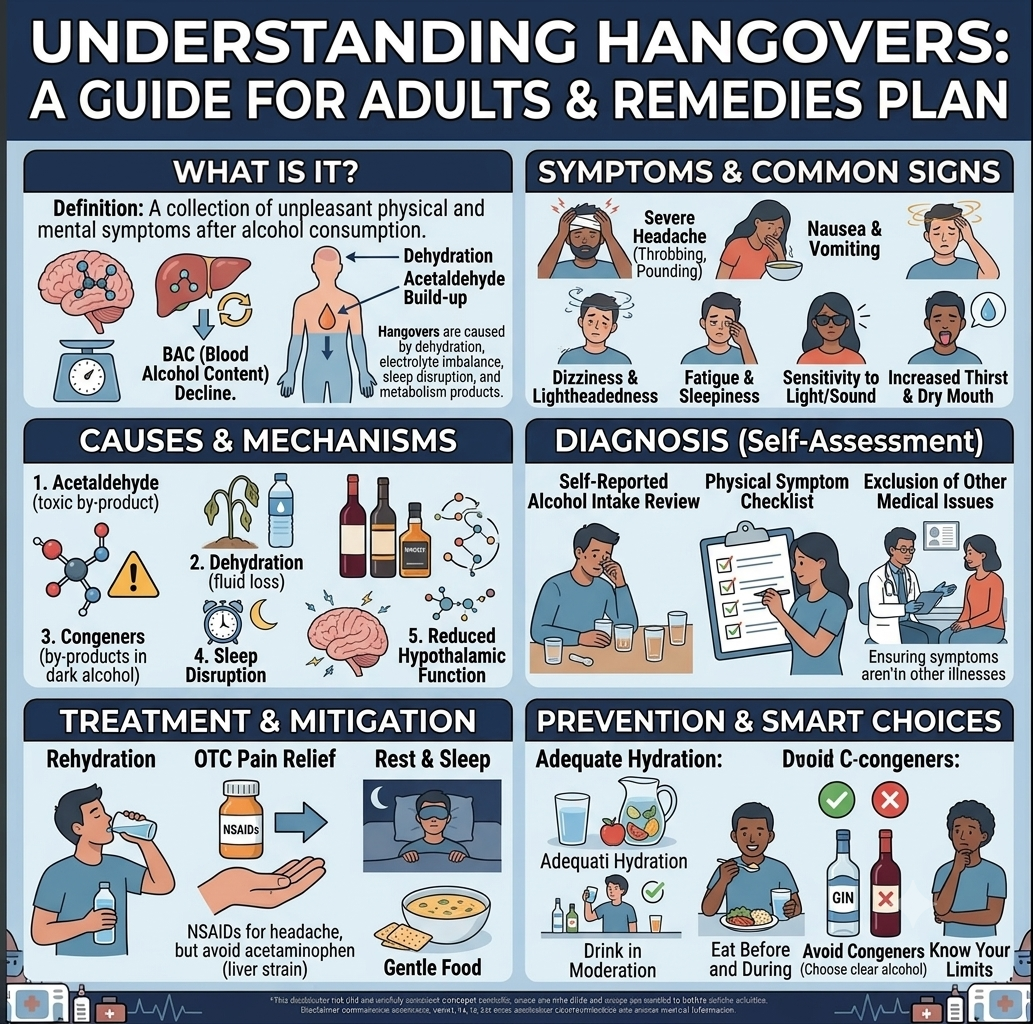
A hangover is a collection of unpleasant physical and mental symptoms that can occur after consuming too much alcohol. While typically temporary and resolving on their own within 24 hours, frequent hangovers are associated with decreased performance and increased conflict in daily life. Generally, the more alcohol consumed, the greater the likelihood and severity of a hangover the following day, though individual tolerance varies.
Understanding the Condition
Understanding Hangovers: Causes, Symptoms, and Prevention
Understanding the Condition
A hangover is a collection of unpleasant physical and mental symptoms that can occur after consuming too much alcohol. While typically temporary and resolving on their own within 24 hours, frequent hangovers are associated with decreased performance and increased conflict in daily life. Generally, the more alcohol consumed, the greater the likelihood and severity of a hangover the following day, though individual tolerance varies.
Common Symptoms
Fatigue and Weakness: Feeling extremely tired and lacking energy.
Thirst and Dry Mouth: An intense feeling of thirst coupled with a dry sensation in your mouth.
Headache and Muscle Aches: A throbbing or pounding headache, often accompanied by general body or muscle pain.
Stomach Upset: Nausea, vomiting, or pain in the belly area.
Poor Sleep Quality: Difficulty achieving restful sleep or waking up feeling unrested.
Sensitivity to Light and Sound: Feeling bothered or overwhelmed by normal levels of light and noise.
Dizziness: Feeling lightheaded or a sensation that your surroundings are spinning.
Shakiness and Sweating: Experiencing tremors or unusual sweating.
Difficulty Concentrating: Trouble focusing your thoughts or thinking clearly.
Mood Changes: Experiencing shifts in mood, such as feelings of sadness, anxiety, or irritability.
Rapid Heartbeat: Your heart beating faster than usual.
Consultation Guide
Which Specialist to Meet
If you experience frequent hangovers, are concerned about your alcohol consumption, or if your symptoms are severe or persistent, it is advisable to consult a primary care physician (such as a general practitioner or family doctor). They can assess your overall health and discuss strategies for safe alcohol consumption.
Preparations Before Your Visit
Before your appointment, be prepared to discuss the amount and frequency of your alcohol intake, any specific symptoms you experience, their duration, and any other medications or supplements you are taking. Also, mention any existing health conditions or family history of alcohol-related issues.
Book a doctor visit near me
A hangover is primarily diagnosed based on your symptoms and a recent history of alcohol consumption. There are typically no specific laboratory or imaging tests required to diagnose a hangover.
During a clinical assessment, your doctor will ask detailed questions about your symptoms, including when they started, their severity, and how much alcohol you consumed. They will also inquire about your general health, medical history, and any other substances you might have used. A physical examination may be performed to check for signs of dehydration or other underlying conditions. This process helps the doctor confirm the diagnosis and rule out other potential causes for your symptoms.
Rest and Sleep: Allowing your body ample time to rest and sleep helps it recover from the effects of alcohol. (Duration: Until symptoms subside (typically up to 24 hours).)
Consultation Guide
Hydration: Drinking plenty of water, fruit juice, or sports drinks helps replace lost fluids and electrolytes, counteracting dehydration caused by alcohol. (Duration: Throughout the hangover period.)
Antacids: These medications can help settle an upset stomach, reduce nausea, and relieve heartburn caused by alcohol's irritating effect on the stomach lining. (Duration: As directed, typically for a few hours.)
Choose Lighter-Colored Beverages: Drinks with fewer 'congeners' (byproducts of fermentation, often found more in darker liquors like brandy and bourbon) may cause less severe hangovers, though any alcohol can cause one.
Stay Hydrated with Water: Drink a full glass of water between each alcoholic beverage. This helps you stay hydrated and reduces the total amount of alcohol consumed.
Know and Stick to Your Limits: Decide beforehand how many alcoholic drinks you will have and stick to that limit. Do not feel pressured to drink more than you are comfortable with.
Pace Your Drinking: Avoid consuming more than one alcoholic drink per hour. This gives your body more time to process the alcohol.
Long-Term Wellbeing and Alcohol Use
Self-Assessment of Drinking Habits: Regularly reflect on your alcohol consumption patterns. If hangovers are a frequent occurrence, or if you find yourself needing alcohol to cope, it may be time to reassess your relationship with alcohol.
Seek Professional Guidance if Needed: If you struggle to control your drinking, or if alcohol negatively impacts your life, consulting a healthcare professional or an addiction specialist can provide support and resources.
Diagnostic Procedures
What to Expect
Treatment Options
Home Remedies and Self-Care
Over-the-Counter Medications
Pain Relievers: Over-the-counter medications can alleviate headaches and muscle aches. Choose options that are less likely to irritate your stomach, as some pain relievers can worsen stomach upset. (Duration: As directed, typically every 4-6 hours for a few hours.)
Prevention & Long-Term Wellbeing
Nutrient Replenishment: Consuming easily digestible foods, such as toast or crackers, can help stabilize your blood sugar and provide energy. Avoid fatty or irritating foods. (Duration: As needed during recovery.)
Prevention Strategies
Abstain or Drink in Moderation: The most effective way to prevent a hangover is to not drink alcohol at all, or to limit your intake to moderate levels (up to one drink per day for women, up to two for men).
Eat Before and While Drinking: Having food in your stomach before and during alcohol consumption slows down the absorption of alcohol into your bloodstream.
Prioritize Overall Health: Maintaining a healthy lifestyle through balanced nutrition, regular physical activity, and adequate sleep strengthens your body’s resilience and ability to cope with stressors, including alcohol.
Tags & Topics
Notice an error or need an update?
Help us keep medical information accurate. Report incorrect info or suggest an edit.


