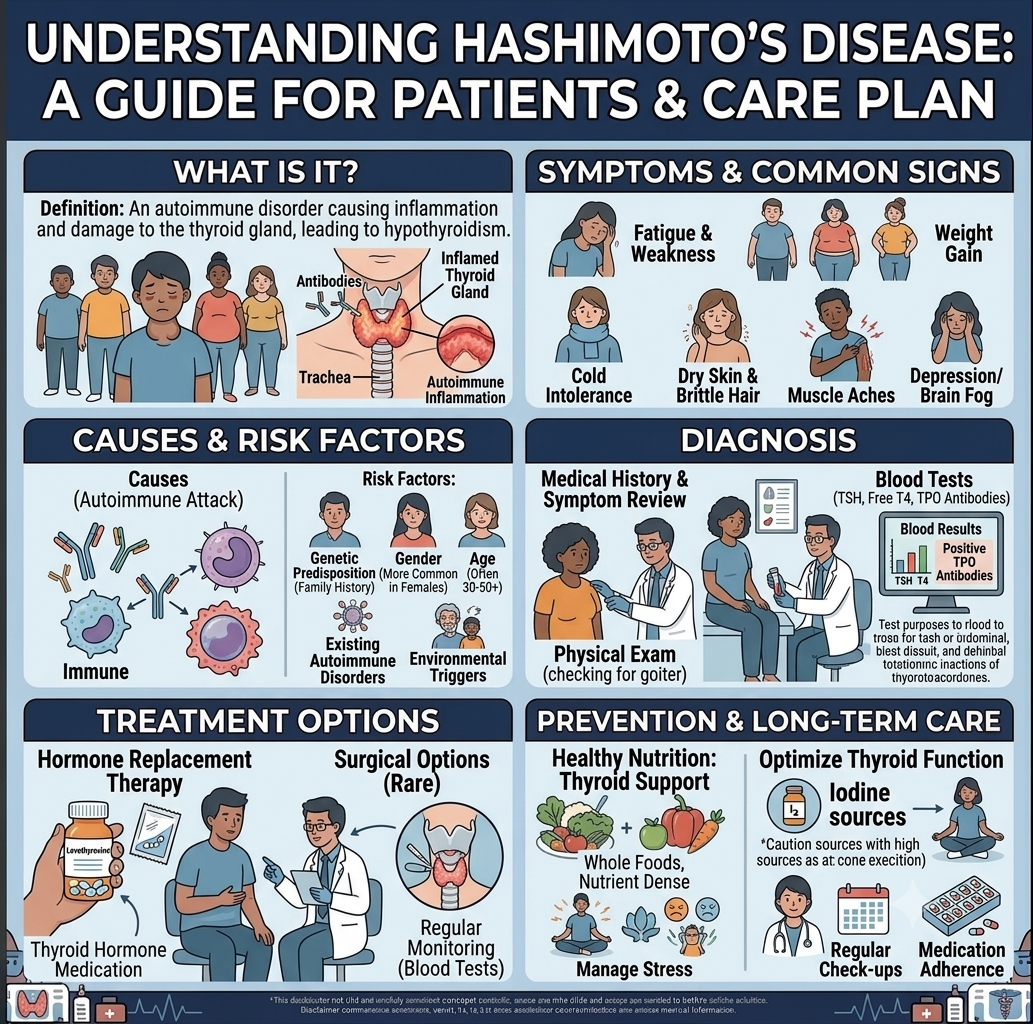
Hashimoto's disease is an autoimmune disorder that targets the thyroid, a small, butterfly-shaped gland located at the base of your neck. The thyroid produces hormones that control your body's metabolism and energy use. In Hashimoto's disease, the immune system mistakenly attacks healthy thyroid cells, causing chronic inflammation and leading to a slow decline in hormone production. This state of underactive thyroid is known as hypothyroidism. While it can affect anyone, the condition is most common in middle-aged women.
Understanding the Condition
Understanding Hashimoto's Disease
Understanding the Condition
Hashimoto's disease is an autoimmune disorder that targets the thyroid, a small, butterfly-shaped gland located at the base of your neck. The thyroid produces hormones that control your body's metabolism and energy use. In Hashimoto's disease, the immune system mistakenly attacks healthy thyroid cells, causing chronic inflammation and leading to a slow decline in hormone production. This state of underactive thyroid is known as hypothyroidism. While it can affect anyone, the condition is most common in middle-aged women.
Common Symptoms
Fatigue and Sluggishness: Feeling unusually tired, weak, or lacking energy, even after getting plenty of sleep.
To prepare for your visit, write down all your symptoms, when they started, and how they affect your daily life. Prepare a complete list of all medications, vitamins, and dietary supplements you take. Note any family history of thyroid disease or other autoimmune disorders, and write down questions you wish to ask your doctor.
Book a doctor visit near me
Consultation Guide
Increased Sensitivity to Cold: Feeling cold when others are comfortable, caused by a slowed-down metabolism.
Weight Gain: Unexplained weight gain or difficulty losing weight due to a slower metabolic rate.
Muscle and Joint Discomfort: Experiencing muscle weakness, aches, tenderness, or stiffness and swelling in the joints.
Skin and Hair Changes: Developing dry, pale, or rough skin, alongside brittle nails and thinning, dry hair.
Memory Problems or Depressed Mood: Experiencing forgetfulness, difficulty concentrating, or feeling down and depressed.
Consultation Guide
Which Specialist to Meet
A specific blood test used to look for antibodies that target thyroid proteins. The presence of TPO antibodies confirms that your underactive thyroid is caused by an autoimmune reaction, such as Hashimoto's disease.
Thyroidectomy (Thyroid Removal): The surgical removal of part or all of the thyroid gland. This is rarely needed for Hashimoto's, but may be considered if a very large goiter causes breathing or swallowing issues, or if cancerous nodules are suspected. (Duration: A one-time surgery, which must be followed by lifelong daily thyroid hormone replacement therapy.)
Diagnostic Procedures
You should start by consulting your Primary Care Physician (PCP) for initial screening. If thyroid dysfunction is detected, you will be referred to an Endocrinologist, a specialist who diagnoses and treats hormone-related conditions.
Preparations Before Your Visit
Thyroid Hormone Tests (TSH and Free T4)
These simple blood tests measure the levels of Thyroid-Stimulating Hormone (TSH) and thyroxine (T4) in your blood. High TSH and low T4 levels indicate an underactive thyroid.
What to Expect
A healthcare professional will insert a small needle into a vein in your arm to draw a tube of blood. The process is quick, taking less than five minutes, and you may feel a brief, mild pinch.
Thyroid Peroxidase (TPO) Antibody Test
What to Expect
This test is performed through a standard blood draw from your arm, identical to the hormone tests. No fasting or special preparation is usually required.
An imaging test that uses high-frequency sound waves to create a detailed picture of your thyroid gland, allowing doctors to evaluate its size, shape, and check for any nodules or inflammation.
What to Expect
You will lie on an exam table. A technician will apply warm gel to your neck and gently move a small wand called a transducer over your throat. The test is completely painless and takes about 15 to 20 minutes.
Hormone Level Monitoring: Routine blood tests to check your hormone levels, allowing your doctor to adjust your medication dosage as your body's needs change over time. (Duration: Ongoing throughout your lifetime, usually scheduled every 6 to 12 months once your dose is stabilized.)
Regular Blood Tests: Attend all scheduled follow-up appointments and blood tests to ensure your thyroid hormone levels remain in the target range.
Treatment Options
Medications
Synthetic Thyroid Hormone Replacement: An oral medication taken daily to replace the missing thyroid hormones and restore your body's metabolism to a healthy, balanced state. (Duration: Typically lifelong, requiring once-daily dosing.)
Therapies
Consistent Medication Routine: Take your thyroid medication at the same time every day on an empty stomach, usually in the morning, to ensure optimal absorption.
Prevention & Long-Term Wellbeing
Long-Term Monitoring
Dietary and Lifestyle Management
Avoid Excessive Iodine: Do not consume large amounts of iodine through supplements or kelp, as too much iodine can worsen hypothyroidism in people with Hashimoto's.
Stress Reduction and Rest: Practice stress-management techniques such as yoga, deep breathing, or meditation, and ensure you get 7 to 9 hours of quality sleep to help manage fatigue.
Tags & Topics
Notice an error or need an update?
Help us keep medical information accurate. Report incorrect info or suggest an edit.


