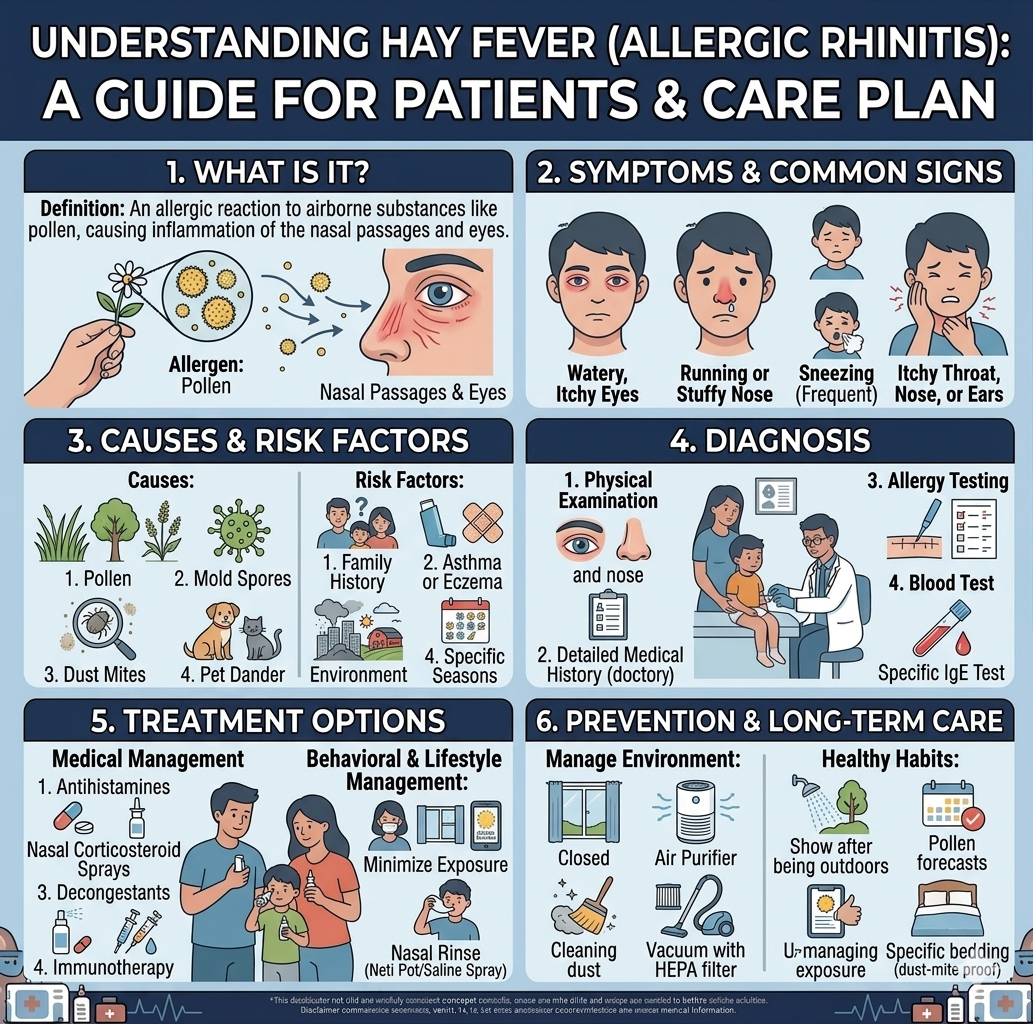
Hay fever, also known as allergic rhinitis, is a common condition that causes cold-like symptoms such as a runny nose, itchy eyes, congestion, sneezing, and sinus pressure. Unlike a common cold, hay fever is not caused by a virus but by the body's overreaction to harmless substances in the environment called allergens. Common allergens include pollen from trees, grasses, and weeds, as well as indoor triggers like dust mites, pet dander, and mold spores. While often just a nuisance, hay fever can significantly impact daily life, affecting sleep, work, and school performance. Effective strategies exist to manage symptoms and reduce their impact.
Understanding the Condition
Hay Fever: Understanding Allergic Rhinitis
Understanding the Condition
Hay fever, also known as allergic rhinitis, is a common condition that causes cold-like symptoms such as a runny nose, itchy eyes, congestion, sneezing, and sinus pressure. Unlike a common cold, hay fever is not caused by a virus but by the body's overreaction to harmless substances in the environment called allergens. Common allergens include pollen from trees, grasses, and weeds, as well as indoor triggers like dust mites, pet dander, and mold spores. While often just a nuisance, hay fever can significantly impact daily life, affecting sleep, work, and school performance. Effective strategies exist to manage symptoms and reduce their impact.
Common Symptoms
Runny Nose and Nasal Congestion: Clear, watery discharge from the nose, often accompanied by a stuffy feeling.
Watery, Itchy, Red Eyes: Irritation and inflammation of the eyes, sometimes appearing bloodshot.
Itchy Nose, Mouth Roof, or Throat: A persistent tickling or scratching sensation.
You should first consult your primary care doctor for an initial assessment. If your symptoms are severe or difficult to manage, they may refer you to an allergist/immunologist, a specialist in allergies and immune system disorders.
Preparations Before Your Visit
Before your appointment, be prepared to discuss your symptoms, when they occur, and potential triggers. List any over-the-counter or prescription medications you've tried and their effectiveness. Your doctor may advise you to stop taking certain allergy medications, such as antihistamines, a few days before allergy testing.
Book a doctor visit near me
Nasal Rinsing (Nasal Irrigation): Flushing nasal passages with a saline (saltwater) solution to wash away mucus and allergens, helping to relieve congestion. This can be done with a neti pot or squeeze bottle. Use distilled, sterile, or previously boiled and cooled water. (Duration: Daily or as needed during symptom flares)
Antihistamines: These medications block histamine, a chemical released by the body during an allergic reaction, reducing itching, sneezing, and runny nose. Available as pills, liquids, or nasal sprays. (Duration: Taken daily or as needed for symptoms, usually for the duration of allergen exposure)
Prevention & Symptom Management
Monitor Pollen Counts: Check local weather reports for daily pollen and mold counts. On high-count days, try to stay indoors, especially between 5 a.m. and 10 a.m. when pollen is often highest.
Maintain a Clean Indoor Environment: Use a vacuum cleaner with a HEPA filter, damp-mop floors, and regularly clean surfaces to reduce dust mites, pet dander, and mold. Wash bedding in hot water weekly.
Air Quality Control: Use an air conditioner in your home and car, rather than opening windows. Consider using an air purifier with a HEPA filter in your bedroom or common living areas.
Personal Hygiene: Shower and wash your hair before bed to remove pollen and other allergens. Change clothes after spending time outdoors.
Pet Management: If you have pets, keep them out of the bedroom and consider bathing them frequently to reduce dander.
Proactive Medication Use: If you have seasonal allergies, start taking your allergy medications (like antihistamines or nasal sprays) a week or two before your typical allergy season begins to prevent symptoms from flaring up.
Avoid Irritants: Stay away from smoke (including tobacco smoke), strong perfumes, air fresheners, and other chemicals that can irritate your nasal passages and worsen symptoms.
Regular Doctor Visits: Schedule follow-up appointments with your primary care doctor or allergist to review your symptoms, adjust treatment plans, and discuss any new concerns.
Symptom Diary: Keep a record of your symptoms, their severity, potential triggers, and the effectiveness of your medications. This can help your doctor fine-tune your treatment plan.
Consultation Guide
Postnasal Drip: Mucus dripping down the back of the throat, which can cause a cough or sore throat.
Allergic Shiners: Swollen, dark-appearing skin under the eyes, resembling bruises.
Fatigue: Extreme tiredness and lack of energy, often due to disturbed sleep.
Consultation Guide
Which Specialist to Meet
Diagnostic Procedures
These tests expose your skin to small amounts of suspected allergens to see if your body reacts. They are widely used to diagnose allergies to airborne substances like pollen, pet dander, and dust mites.
What to Expect
A healthcare professional will typically apply tiny drops of various allergen extracts to your skin, usually on your forearm or back. They then gently prick the skin's surface, allowing the allergen to enter just beneath the skin. This process is usually not painful, but it can feel like a slight scratch. After about 15-20 minutes, the nurse or doctor will check your skin for reactions. A raised, red, itchy bump (similar to a mosquito bite) indicates an allergy to that specific substance. In some cases, a small amount of allergen may be injected directly under the skin (intradermal test) to check for a delayed reaction.
Allergy Blood Tests (In vitro immunoglobulin E antibody tests)
These tests measure the amount of specific protective proteins (IgE antibodies) in your blood that the immune system produces in response to an allergen. They are an alternative for individuals who cannot undergo skin testing, such as those with certain skin conditions, or who are taking medications that interfere with skin test results.
What to Expect
A blood sample will be drawn from a vein, typically in your arm, by a healthcare professional. This sample is then sent to a laboratory for analysis. The results will indicate if you have antibodies to specific allergens. Blood tests are generally safe for all ages, including infants.
Treatment Options
Medications (Non-Prescription and Prescription)
Decongestants: Available as nasal sprays or oral medications, they help relieve nasal stuffiness by narrowing blood vessels in the nose. Nasal sprays should only be used for a few days to avoid rebound congestion. (Duration: Short-term use (oral) or up to 3 days (nasal spray))
Nasal Corticosteroid Sprays: These prescription or over-the-counter sprays reduce inflammation in the nasal passages, effectively managing congestion, sneezing, and runny nose. They are often the most effective treatment for hay fever. (Duration: Daily use, often for several weeks or months, depending on the allergen season)
Other Medications: Eye drops to relieve itchy, watery eyes, and leukotriene modifiers that block other immune system chemicals can also be prescribed. (Duration: As directed by a healthcare professional)
Allergy Shots: A series of injections containing tiny, increasing amounts of the allergens you are sensitive to. This helps your immune system build tolerance over time, reducing the severity of your allergic reactions. (Duration: Typically administered over 3-5 years, starting with weekly injections and gradually moving to monthly injections)
Prevention & Long-Term Wellbeing
Home Remedies & Lifestyle Adjustments
Allergen Avoidance: Reducing exposure to known triggers. This includes keeping windows closed during high pollen seasons, using air conditioning with a HEPA filter, showering after outdoor activities, washing bedding regularly, and using allergen-proof covers for mattresses and pillows. (Duration: Ongoing, as needed)
Tags & Topics
Notice an error or need an update?
Help us keep medical information accurate. Report incorrect info or suggest an edit.


