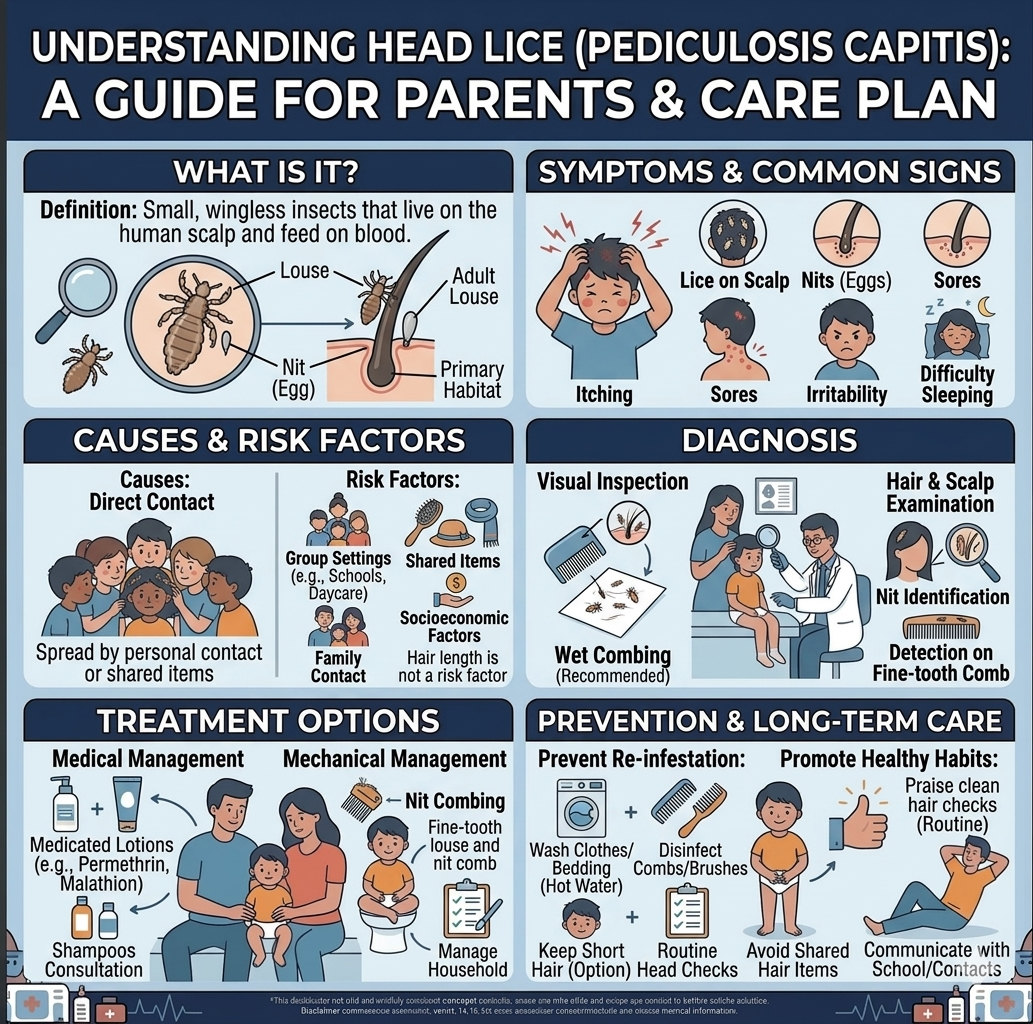
Head lice are tiny, wingless insects that live on the human scalp, feeding on small amounts of blood. They are common, especially among preschool and elementary school-aged children and their families. Head lice are not a sign of poor hygiene or an indicator of socioeconomic status. They are primarily spread through direct head-to-head contact.
Understanding the Condition
Common Symptoms
Intense Itching: The most common symptom, caused by an allergic reaction to lice saliva. This itching may start subtly and become more noticeable weeks after lice first appear.
Lice on Scalp: Adult lice are small, about the size of a sesame seed, and can be difficult to see as they move quickly and avoid light. They are typically brownish-gray.
Lice Eggs (Nits): Nits are tiny, oval-shaped eggs firmly attached to the hair shaft close to the scalp. They are often white or yellowish-white and can be mistaken for dandruff or hairspray droplets, but unlike dandruff, they cannot be easily flicked off. Empty eggshells (casings) may remain on the hair after hatching.
Sores on Scalp: Persistent scratching can lead to small bumps, scabs, or sores on the scalp, neck, and shoulders. These open sores can sometimes become infected with bacteria.
Irritability and Difficulty Sleeping: The itching, especially at night, can lead to discomfort, making it hard to sleep and causing irritability.
Consultation Guide
Which Specialist to Meet
Before your visit, make a list of symptoms, including when they started and their severity. Note any previous home remedies or over-the-counter treatments you may have tried and whether they were effective. Be ready to discuss any recent close contact with others who might have had head lice, such as at school or daycare. Prepare a list of questions for your doctor.
Book a doctor visit near me
Diagnostic Procedures
You should typically start by consulting your primary care provider, such as a family doctor or pediatrician. They can confirm the diagnosis and recommend appropriate treatment.
Preparations Before Your Visit
Visual Inspection for Lice and Nits
Head lice are typically diagnosed by visually inspecting the scalp and hair for live adult lice or nymphs (young lice), or for nits (eggs) attached to the hair shafts. Live lice are the definitive sign of an active infestation. Nits are most often found within a quarter-inch of the scalp, especially behind the ears and near the nape of the neck.
What to Expect
During the procedure, the healthcare provider will carefully examine your scalp and hair, often using a magnifying lens and a bright light. They will part your hair section by section, paying close attention to the areas behind the ears and at the back of the neck. A fine-toothed comb, often specifically designed for lice removal, may be used to comb through wet hair from the scalp to the ends to help identify and remove lice and nits. You should expect this examination to take several minutes. Finding live, moving lice is the clearest indication of an active infestation, but finding firmly attached nits very close to the scalp can also suggest one.
Treatment Options
Head Lice: Understanding, Treatment, and Prevention
Understanding the Condition
Head lice are tiny, wingless insects that live on the human scalp, feeding on small amounts of blood. They are common, especially among preschool and elementary school-aged children and their families. Head lice are not a sign of poor hygiene or an indicator of socioeconomic status. They are primarily spread through direct head-to-head contact.
Home-Based Management
Manual Removal (Wet-Combing): This method involves systematically combing through wet hair with a fine-toothed nit comb. Wetting the hair and applying conditioner can temporarily immobilize lice, making them easier to spot and remove. This needs to be done meticulously. (Duration: Perform every 2-3 days for at least 2-3 weeks, or until no live lice or new nits are found for several consecutive checks.)
Over-the-Counter Lice Treatments: These are shampoos, rinses, or lotions containing specific insecticidal ingredients that kill lice and often some nits. They are applied to the hair and scalp following package instructions, often requiring a waiting period before rinsing. (Duration: Typically, two applications are needed: an initial application, followed by a second application 7 to 10 days later to kill any newly hatched lice before they can reproduce.)
Prescription Topical Lice Treatments: For cases where over-the-counter treatments are ineffective or if there are concerns about resistance, a doctor may prescribe stronger topical medications. These work in various ways to kill lice and often their eggs. (Duration: Varies by medication, but typically involves one or two applications separated by 7 to 9 days.)
Prescription Oral Treatment: In specific situations, particularly for resistant or widespread infestations, an oral medication may be prescribed. This type of medication works throughout the body to kill lice. (Duration: Often a single dose, sometimes followed by a second dose if needed, as directed by a healthcare provider.)
Professional Procedure
Heated Air Device Treatment: This specialized treatment uses a device that applies controlled heated air to the scalp, dehydrating and killing both lice and their eggs. It is administered by trained personnel. (Duration: A single session, typically lasting 30-60 minutes.)
Post-Treatment Checks: Continue to check the scalp and hair for several weeks after treatment to ensure that all lice and nits have been eradicated and to catch any new infestations early.
Follow Re-treatment Guidelines: If live lice are found after the recommended treatment duration, consult your doctor about re-treating with the same or a different product, or considering alternative strategies. Resistance to certain treatments can occur.
Prevention & Long-Term Wellbeing
Prevention
Avoid Direct Head-to-Head Contact: Teach children to avoid head-to-head contact during play, sports activities, slumber parties, or when taking selfies, as this is the most common way lice spread.
Do Not Share Personal Items: Advise against sharing items that come into contact with the head, such as hats, scarves, combs, brushes, hair accessories, towels, and headphones.
Clean Contaminated Items: Wash infested clothing, bedding, stuffed animals, and towels in hot water (at least 130°F or 54°C) and dry them on high heat for at least 20 minutes. Items that cannot be washed can be sealed in airtight plastic bags for two weeks or dry-cleaned. Vacuum floors and furniture, paying attention to areas where heads may rest.
Regular Head Checks: Periodically check your child's head for lice, especially if there's an outbreak at school or daycare, or if they complain of itching. Early detection can prevent widespread infestation.
Long-Term Monitoring
Tags & Topics
Notice an error or need an update?
Help us keep medical information accurate. Report incorrect info or suggest an edit.


