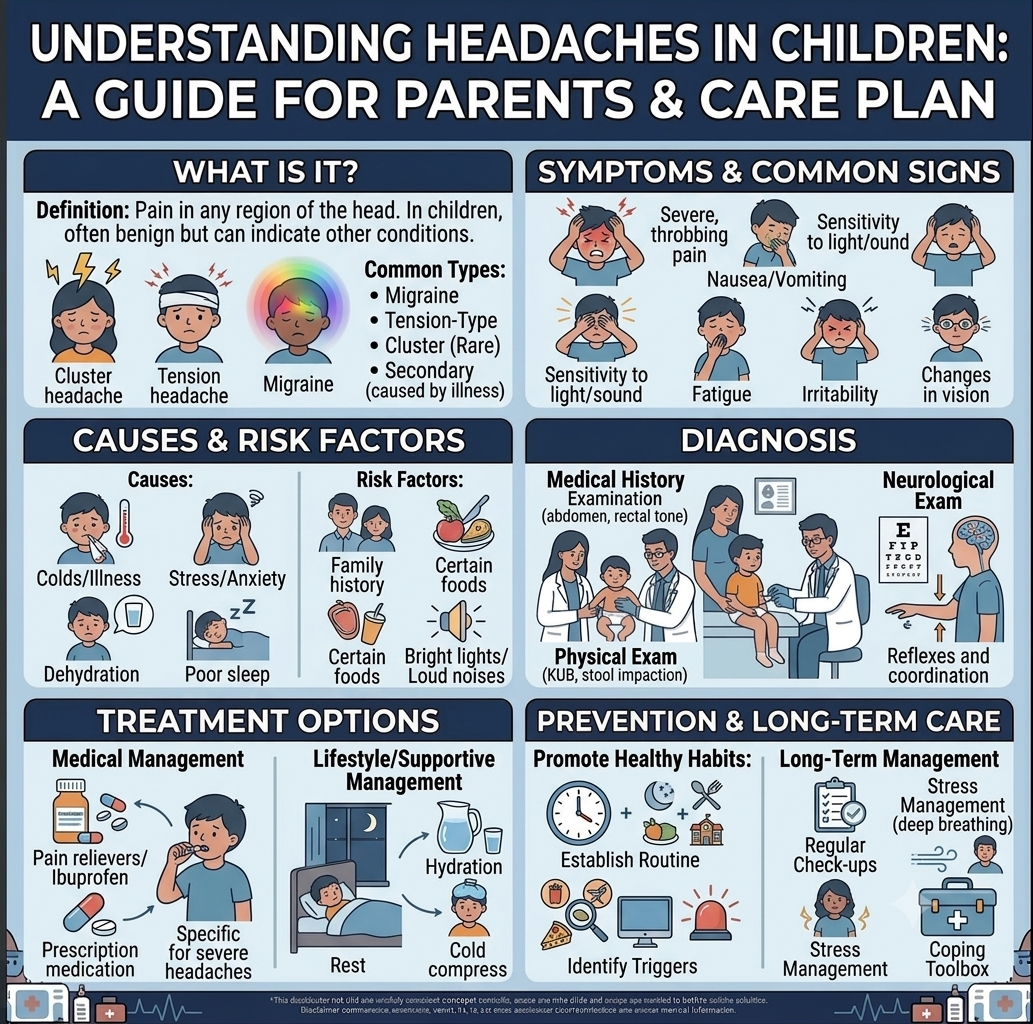
Headaches are common in children and usually not serious. They experience types like migraines and stress-related (tension-type) headaches. Some occur frequently, called chronic daily headaches. While often mild, causes can include infections, minor head injuries, or pain medicine overuse. Monitor symptoms and consult a professional if headaches worsen or become frequent. Simple pain relievers and healthy habits often manage most childhood headaches.
Understanding the Condition
Children's Headaches: A Parent's Guide
Understanding the Condition
Headaches are common in children and usually not serious. They experience types like migraines and stress-related (tension-type) headaches. Some occur frequently, called chronic daily headaches. While often mild, causes can include infections, minor head injuries, or pain medicine overuse. Monitor symptoms and consult a professional if headaches worsen or become frequent. Simple pain relievers and healthy habits often manage most childhood headaches.
Common Symptoms
General Concerns: Headaches that worsen, occur often, or change significantly. For infants, severe pain might present as increased crying, rocking, reduced play, or increased sleep.
Migraine: Pain is often throbbing, pounding, and typically on one side of the head (though can be both), lasting hours to a few days (often shorter in children). Associated symptoms include sensitivity to light and sound, nausea, vomiting, dizziness, abdominal pain, or visual 'aura' (e.g., flashing lights).
Tension-Type Headache (TTH): Pain is a dull, aching sensation, often described as a tight band around the head, affecting both sides. It can last from 30 minutes to several days. Less likely to have nausea or strong light/sound sensitivity compared to migraines.
Cluster Headache: (Rare in young children) Extremely severe, sharp, or stabbing pain located around one eye or temple, occurring in cycles. Associated symptoms on the affected side may include eye tearing/redness, drooping eyelid, stuffy/runny nose, or facial sweating.
Consultation Guide
Which Specialist to Meet
Start with your pediatrician or family doctor. For severe, frequent, or unusual headaches, a referral to a pediatric neurologist (a specialist in children's nervous system disorders) may be recommended.
Preparations Before Your Visit
Keep a detailed headache diary: note dates, times, duration, severity, potential triggers (e.g., foods, stress, lack of sleep), accompanying symptoms, and what helped. List all medications your child is taking (including over-the-counter and supplements). Be ready to discuss any recent behavioral, appetite, or sleep changes.
Book a doctor visit near me
The doctor will ask about symptoms and medical history, then conduct non-invasive tests of mental status, senses (sight, hearing), motor skills (strength, coordination), sensation, reflexes, and balance (e.g., walking, eye movements, checking reflexes). It is painless and may take minutes to over an hour.
Brain CT Scan (Computed Tomography)
Consultation Guide
Your child lies still on a table that slides into a large, doughnut-shaped scanner. A special contrast dye might be injected into an arm vein, which can cause a brief warm sensation. The scan is quick, and lower radiation doses are used for children, only when medically necessary.
Brain MRI (Magnetic Resonance Imaging)
Diagnostic Procedures
Neurological Examination
A doctor assesses the functioning of your child's brain, spinal cord, nerves, and muscles to identify any issues.
What to Expect
This imaging test uses X-rays and a computer to create detailed cross-sectional images of the brain, skull, and blood vessels. It provides quick imaging useful for showing bleeding, swelling, or tumors.
What to Expect
A diagnostic test that uses a strong magnet and radio waves (no radiation) to create highly detailed images of the brain, neck, and spine. It is useful for diagnosing conditions like stroke, tumors, or multiple sclerosis.
What to Expect
Your child lies on a table that slides into a long, tube-shaped machine. It makes loud banging and knocking noises, so ear protection is provided. Remaining completely still is essential for clear images. Sedation may be an option for very young or anxious children due to the enclosed space and noise. The procedure is painless but can last 30 minutes or more.
Lumbar Puncture (Spinal Tap)
This procedure involves inserting a thin needle into the lower back to collect a sample of cerebrospinal fluid (CSF) for testing. CSF analysis can diagnose infections (e.g., meningitis), inflammation, or other neurological conditions.
What to Expect
Your child will typically lie on their side with knees pulled to the chest. The skin is cleaned and numbed with local anesthetic. A thin needle is then carefully inserted to collect CSF; your child may feel pressure. After the needle is removed, a bandage is applied, and they may need to lie flat for a period to help prevent a headache.
Treatment Options
Medications (General Types)
Over-the-Counter Pain Relievers: Used for mild to moderate headaches (e.g., acetaminophen or ibuprofen). (Duration: Taken as needed for acute pain, used sparingly to prevent medication overuse headaches.)
Prescription Medications: For more severe headaches like migraines (acute relief) or for preventing frequent headaches (daily preventive medications). (Duration: Acute medications are taken at the onset of a headache. Preventive medications are taken daily for several weeks to months, as directed by a healthcare professional.)
Therapies
Biofeedback: A mind-body technique where your child learns to control certain body responses (e.g., heart rate, muscle tension) with real-time feedback from sensors. This helps manage stress and physical reactions linked to headaches. (Duration: Often involves 8-12 weekly sessions, with ongoing practice at home.)
Cognitive Behavioral Therapy (CBT): A type of talk therapy that helps your child identify and change negative thought patterns and behaviors contributing to pain or stress, providing effective coping skills. (Duration: Typically involves 8-16 structured sessions over several months, including 'homework' assignments to practice skills.)
Headache Diary: Continue tracking headaches, triggers, and treatment effectiveness to identify patterns and refine management strategies.
Regular Check-ups: Maintain regular follow-up appointments with your child's doctor or specialist to monitor headache patterns and overall health.
Prevention & Long-Term Wellbeing
Home Remedies & Lifestyle Adjustments
Rest & Quiet: Encourage rest in a dark, quiet room during a headache. (Duration: As advised)
Hydration: Ensure consistent water intake throughout the day. (Duration: As advised)
Healthy Habits: Maintain regular sleep schedules, balanced meals, and avoid skipped meals. (Duration: As advised)
Trigger Avoidance: Identify and avoid specific triggers, such as certain foods, environmental factors, or excessive screen time. (Duration: As advised)
Stress Reduction: Teach simple relaxation techniques or encourage calming activities. (Duration: As advised)
Consistent Routines: Stick to regular sleep and meal times to stabilize body rhythms.
Balanced Diet & Hydration: Encourage healthy, balanced meals and ensure plenty of water intake.
Regular Exercise: Promote moderate physical activity most days of the week to reduce stress.
Stress Management: Teach and practice relaxation techniques such as deep breathing or mindfulness.
Manage Screen Time: Limit exposure to screens (phones, tablets, TV) to prevent eye strain and overstimulation.
Tags & Topics
Notice an error or need an update?
Help us keep medical information accurate. Report incorrect info or suggest an edit.


