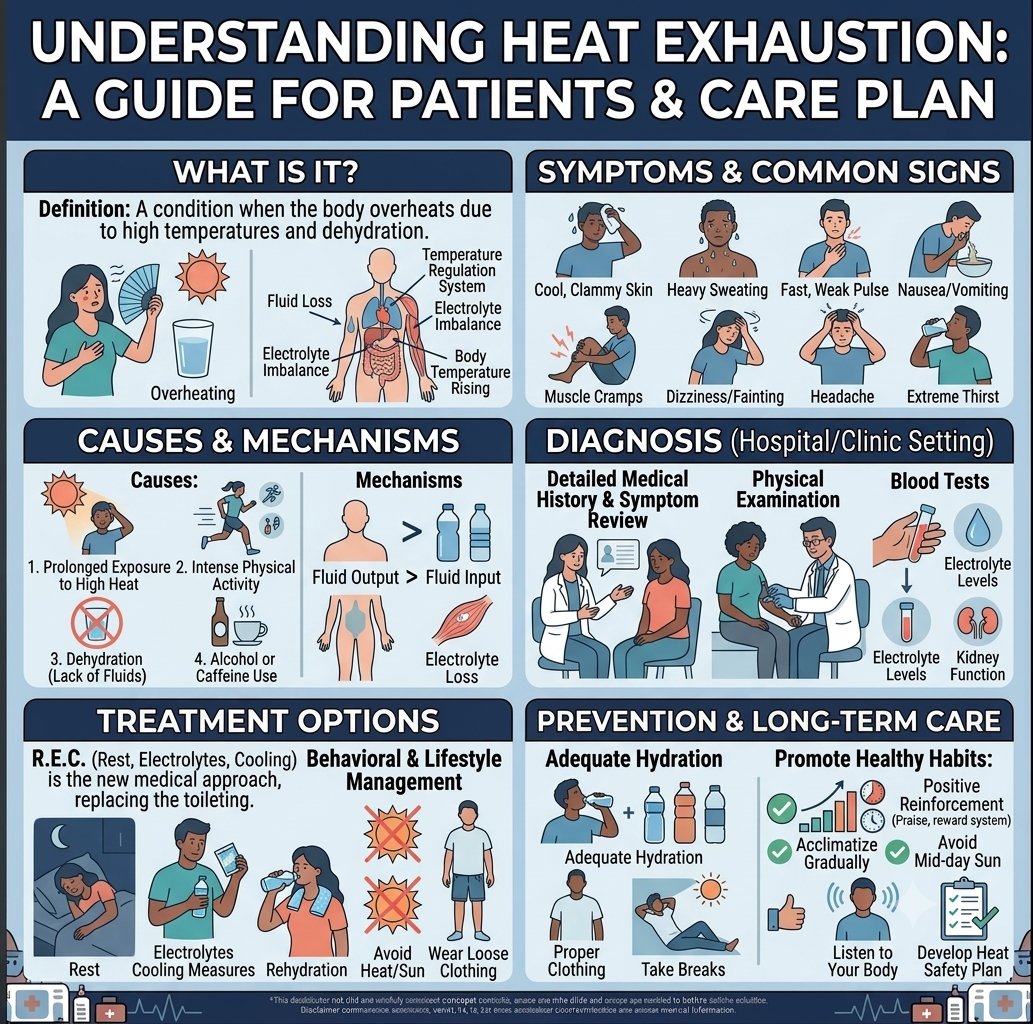
Heat exhaustion is a condition where your body significantly overheats, often due to high temperatures, humidity, or intense physical activity. It is a moderate form of heat-related illness, falling between milder heat cramps and the life-threatening heatstroke. Recognizing and treating heat exhaustion quickly is crucial, as it can otherwise worsen into heatstroke, which requires immediate medical attention and can cause permanent organ damage or even death. Fortunately, heat exhaustion is largely preventable by taking appropriate precautions in hot environments.
Understanding the Condition
Understanding the Condition
Common Symptoms
Heavy Sweating: Noticeably increased perspiration that may feel clammy.
Cool, Clammy Skin with Goosebumps: Your skin may feel cool and moist, sometimes with goosebumps, even when you are in a hot environment.
Weak, Fast Pulse: A heartbeat that feels quick and unusually faint.
Dizziness or Fainting: Feeling lightheaded, dizzy, or even passing out, especially when standing up.
Muscle Cramps: Painful, involuntary spasms in muscles, often in the legs or abdomen.
Fatigue and Weakness: Feeling unusually tired, drained of energy, or weak.
Nausea or Vomiting: Feeling sick to your stomach, with or without throwing up.
Headache: A persistent or throbbing head pain.
Consultation Guide
Which Specialist to Meet
For suspected heat exhaustion, consult a primary care physician. If symptoms are severe, worsen despite home treatment, or if you suspect heatstroke (e.g., confusion, very high body temperature, loss of consciousness), seek immediate emergency medical care.
Preparations Before Your Visit
Before your visit, be ready to describe your symptoms, when they started, and any recent activities or heat exposure. Inform your doctor about any existing health conditions, medications you are taking (including over-the-counter drugs and supplements), and recent alcohol consumption. Also, mention any changes in your environment, such as recent travel to a warmer climate.
Book a doctor visit near me
Rest in a Cool Environment: Immediately stop all physical activity and move to a cool, shaded, or air-conditioned place. Lie down if possible. (Duration: Continue until symptoms significantly improve, typically a few hours.)
Intravenous (IV) Fluid Replacement: If you cannot drink enough fluids, or your symptoms do not improve with home care, medical professionals may administer fluids directly into a vein to quickly rehydrate your body and restore electrolyte balance. (Duration: Typically administered over several hours in a medical setting, depending on the severity of dehydration and symptom resolution.)
Recognize Risk Factors: Be extra cautious if you are at higher risk, such as infants, young children, older adults, individuals with certain medical conditions, or those with obesity. Seek medical attention promptly if symptoms of overheating appear.
Consultation Guide
Heat exhaustion is a condition where your body significantly overheats, often due to high temperatures, humidity, or intense physical activity. It is a moderate form of heat-related illness, falling between milder heat cramps and the life-threatening heatstroke. Recognizing and treating heat exhaustion quickly is crucial, as it can otherwise worsen into heatstroke, which requires immediate medical attention and can cause permanent organ damage or even death. Fortunately, heat exhaustion is largely preventable by taking appropriate precautions in hot environments.
A healthcare professional will draw a small amount of blood, usually from a vein in your arm. This involves placing a tourniquet (a tight band) around your upper arm to make the veins more visible, cleaning the skin, and then inserting a needle, which may cause a brief pinch or sting. The blood sample is collected in tubes and sent to a lab for analysis.
Rehydrate with Fluids: Drink cool water or sports drinks containing electrolytes. Sip slowly and steadily; avoid very cold drinks, which can cause stomach cramps. (Duration: Continue regular fluid intake for several hours, or until fully rehydrated and urine is light yellow.)
Cool the Body: Apply cool, wet cloths to your skin, take a cool shower or bath, or use a fan to aid cooling and help your body temperature drop. (Duration: As needed to bring down body temperature and alleviate discomfort.)
Loosen Clothing: Remove any unnecessary clothing or loosen tight garments to allow air circulation and sweat evaporation, which helps cool the body. (Duration: As long as you are recovering.)
Diagnostic Procedures
This common test examines a sample of your urine. It helps doctors assess your hydration status by checking urine concentration and can detect signs of kidney strain or other issues that might be worsened by heat stress. For example, a concentrated urine sample can indicate dehydration.
What to Expect
You will be given a sterile cup and instructed to collect a 'midstream' urine sample. This means you start urinating into the toilet, then move the cup into the stream to collect urine, and finish urinating into the toilet. The sample is then sent to a lab for analysis, where its appearance, concentration, and content (such as presence of protein or blood) are checked.
Blood tests are often performed to check your body's balance of essential salts (electrolytes) like sodium and potassium, assess kidney function, and look for signs of muscle damage (like rhabdomyolysis) which can occur in more severe cases of heat illness. These tests provide important information about how your body is coping with heat stress and dehydration, and help guide treatment.
What to Expect
Treatment Options
Be Mindful of Medications: If you take medications that can affect your body's temperature regulation or hydration (e.g., for blood pressure, allergies, psychiatric conditions), discuss heat precautions with your doctor.
Never Leave Anyone in a Parked Car: Temperatures inside a parked car can rise dangerously fast, even with windows cracked, leading to life-threatening heatstroke in children, pets, or vulnerable adults. Always check your back seat.
Time Your Activities: Schedule strenuous outdoor activities or exercise for the coolest parts of the day, such as early morning or late evening, to avoid peak heat.
Acclimatize Gradually: If you're not used to hot weather, limit your initial exposure and gradually increase activity over several weeks. Your body needs time to adapt to higher temperatures.
Monitor the Heat Index: Pay attention to the heat index, which accounts for both temperature and humidity. Take extra precautions when the heat index is high, as humidity hinders sweat evaporation.
Prevention & Long-Term Wellbeing
Medical Monitoring and Support: In severe cases, or if there's concern about progression to heatstroke, you may be kept under observation in a hospital or clinic. This involves continuous monitoring of vital signs, body temperature, and kidney function to ensure safe recovery. (Duration: Can range from a few hours to a full day, or longer if complications arise.)
Prevention
Dress Appropriately: Wear loose-fitting, lightweight, and light-colored clothing. Avoid heavy or tight clothing that restricts sweat evaporation and cooling.
Protect Against Sunburn: Use broad-spectrum sunscreen with SPF 15 or higher, wear a wide-brimmed hat, and sunglasses. Sunburn impairs your body's ability to cool itself.
Stay Hydrated: Drink plenty of water and other fluids regularly, even if you don't feel thirsty, especially when active or in hot weather. Avoid alcohol and sugary drinks.
Tags & Topics
Notice an error or need an update?
Help us keep medical information accurate. Report incorrect info or suggest an edit.


