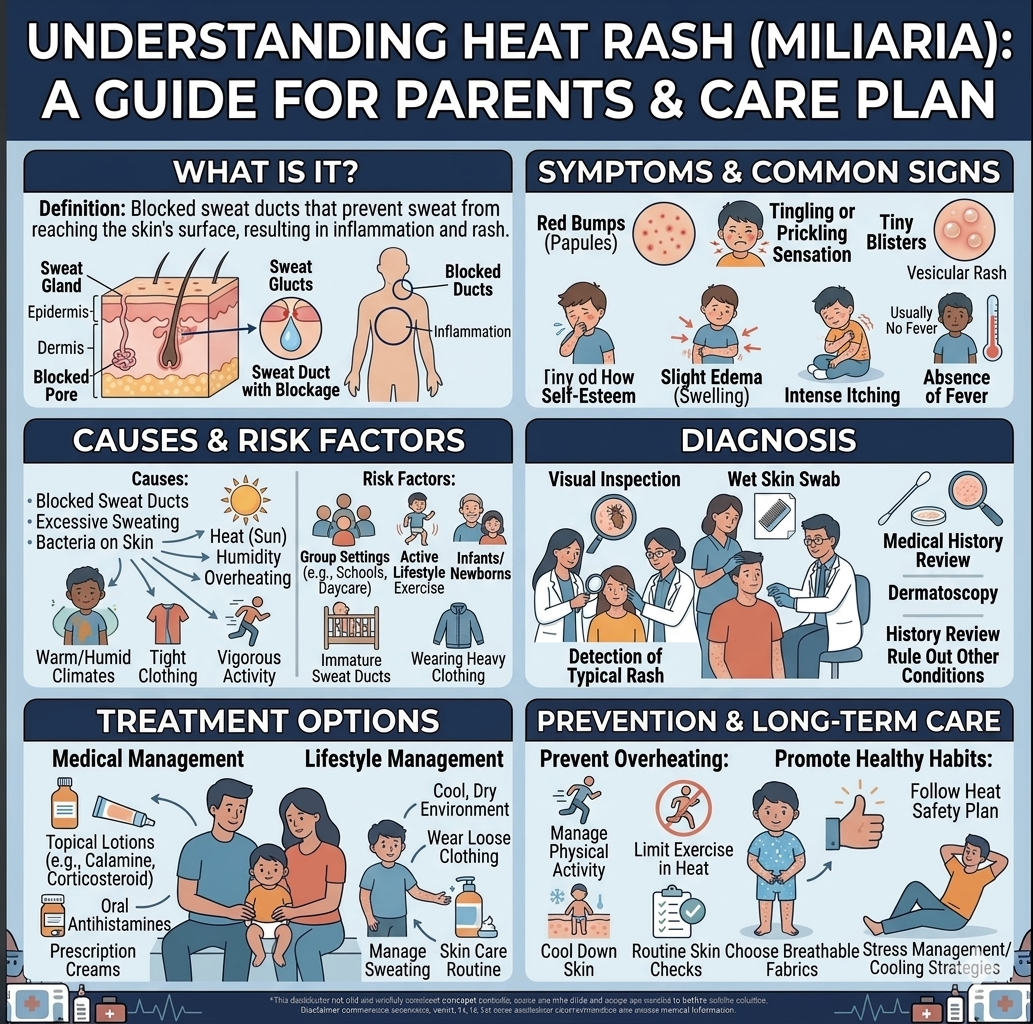
Heat rash, also known as prickly heat or miliaria, occurs when sweat becomes trapped under the skin. This common skin irritation isn't limited to babies; adults can get it too, especially in hot and humid conditions. It happens when the small ducts that carry sweat to the skin's surface get blocked or inflamed, leading to sweat buildup and irritation. Symptoms range from tiny, clear bumps to deep, red, inflamed lumps, and some types can be intensely itchy.
Understanding the Condition
Heat Rash (Prickly Heat): A Guide to Symptoms, Treatment, and Prevention
Understanding the Condition
Heat rash, also known as prickly heat or miliaria, occurs when sweat becomes trapped under the skin. This common skin irritation isn't limited to babies; adults can get it too, especially in hot and humid conditions. It happens when the small ducts that carry sweat to the skin's surface get blocked or inflamed, leading to sweat buildup and irritation. Symptoms range from tiny, clear bumps to deep, red, inflamed lumps, and some types can be intensely itchy.
Common Symptoms
Before your visit, make a list of your symptoms, including when they started, how long they've lasted, and how they feel (e.g., itchy, painful). Note any home remedies you've tried and their effectiveness. Be prepared to discuss your typical daily activities, recent exposure to heat, and any changes in clothing or skin products.
Book a doctor visit near me
Physical Examination and Symptom Review
Diagnosis of heat rash is typically straightforward and based on a visual examination of the skin and a discussion of your symptoms and recent activities. No specific laboratory tests or complex procedures are usually needed to confirm heat rash itself.
Cooling the Skin: Move to a cooler environment, take cool baths or showers, and use cool compresses on the affected areas. Allow the skin to air dry instead of rubbing. (Duration: Until symptoms resolve, usually within a few days.)
Loose, Breathable Clothing: Wear loose-fitting clothing made from natural fibers like cotton to allow air circulation and reduce friction on the skin. (Duration: Continue wearing until the rash clears and to prevent recurrence.)
Calamine Lotion or Moisturizer: Apply calamine lotion or a non-greasy moisturizer to soothe irritated skin and reduce itching. Avoid heavy creams or ointments that can further block pores. (Duration: As needed to relieve discomfort.)
Medications (for more severe symptoms)
Topical Steroid Creams: A doctor may prescribe a mild topical corticosteroid cream to reduce inflammation and itching in more severe cases of miliaria rubra. (Duration: Use exactly as prescribed by your doctor, typically for a few days to a week.)
Oral Antihistamines: For intense itching, an oral antihistamine can help reduce discomfort and promote better sleep. (Duration: As directed by your doctor or pharmacist, usually for the duration of significant itching.)
Antibacterial Washes: In rare cases where secondary bacterial infection occurs due to scratching, an antibacterial wash might be recommended. (Duration: As advised by your doctor, typically for a specified period to clear the infection.)
Consultation Guide
Miliaria Crystallina (Clear Bumps): This mild form appears as tiny, clear, fluid-filled blisters that usually don't cause pain or itching. They occur when sweat is trapped just beneath the skin's outermost layer.
Miliaria Rubra (Red, Itchy Bumps): Often called 'prickly heat,' this type presents as clusters of small, red, inflamed bumps that can be intensely itchy and feel prickly or tingly. It happens when sweat is trapped deeper in the skin, causing more irritation.
General Appearance and Location: Heat rash can also appear as larger, deeper, inflamed lumps. In adults, it commonly develops in skin folds or where clothing rubs, such as the neck, chest, back, and groin. In infants, the rash is frequently found on the neck, shoulders, chest, armpits, and diaper area.
Consultation Guide
Which Specialist to Meet
You should see a primary care physician (family doctor or general practitioner) for most cases of heat rash. If the rash is severe, persistent, or recurs frequently, a dermatologist (skin specialist) may be recommended.
Preparations Before Your Visit
Diagnostic Procedures
What to Expect
During the appointment, your doctor will carefully inspect the affected areas of your skin to identify the characteristic appearance of heat rash. They will ask you questions about when the rash first appeared, how long it has lasted, what makes it better or worse, and your exposure to hot or humid conditions. They may also inquire about any remedies you've tried. This process is usually quick and painless.
Prevention & Long-Term Wellbeing
Prevention and Long-Term Wellbeing
Stay Cool and Dry: Avoid prolonged exposure to hot and humid environments. Use air conditioning or fans to keep your surroundings cool. Take regular breaks in cool areas if you must be in the heat.
Dress Appropriately: Wear loose-fitting, lightweight clothing made of breathable fabrics like cotton. Avoid tight clothing or synthetic materials that can trap sweat against the skin.
Maintain Good Hygiene: Shower or bathe regularly, especially after sweating, to keep skin clean and clear sweat ducts. Use mild soaps and pat your skin dry thoroughly.
Avoid Overdressing Infants: Dress babies in light clothing and avoid bundling them too much, especially in warm weather, as their sweat glands are not fully developed.
Stay Hydrated: Drink plenty of fluids to help regulate body temperature and prevent excessive sweating due to dehydration.
Avoid Irritating Products: Do not use heavy creams, lotions, or powders that can further block sweat pores. Choose non-comedogenic (pore-friendly) products if needed.
Tags & Topics
Notice an error or need an update?
Help us keep medical information accurate. Report incorrect info or suggest an edit.


