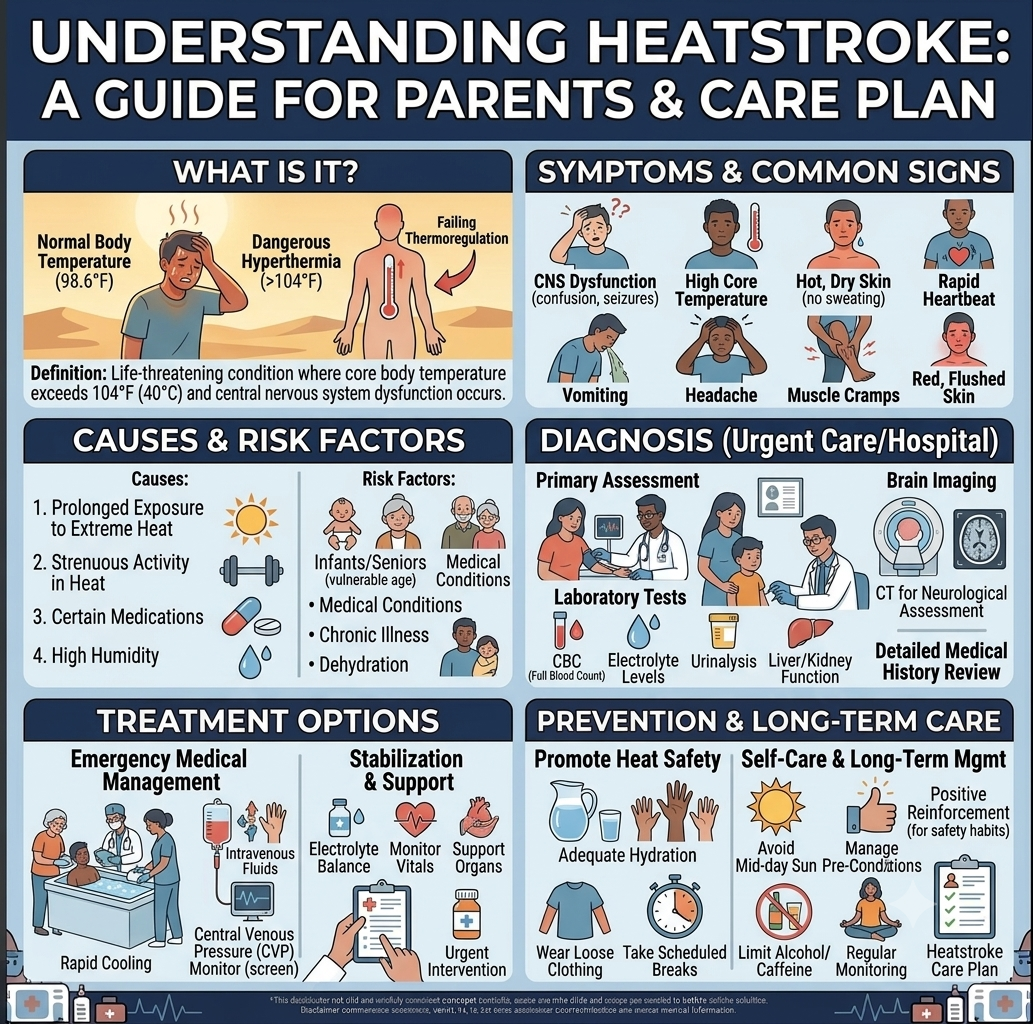
Heatstroke is the most severe and life-threatening form of heat-related illness, occurring when your body's core temperature rises to 104°F (40°C) or higher and it can no longer cool itself. This condition is a medical emergency that requires immediate attention. Without rapid treatment, heatstroke can quickly damage vital organs like the brain, heart, kidneys, and muscles, potentially leading to permanent disability or even death. It commonly results from prolonged exposure to high temperatures (non-exertional heatstroke) or intense physical activity in hot environments (exertional heatstroke), especially when the body is not accustomed to the heat. Factors like age, certain medications, and existing health conditions can increase your risk.
Understanding the Condition
Heatstroke: Understanding, Symptoms, and Emergency Care
Understanding the Condition
Common Symptoms
High Body Temperature: A core body temperature of 104°F (40°C) or higher is the defining sign of heatstroke.
Changes in Mental State or Behavior: Confusion, agitation, slurred speech, irritability, delirium, seizures, or even coma can occur.
Nausea and Vomiting: Feeling sick to the stomach or throwing up is a common symptom.
Flushed (Red) Skin: The skin may appear red as the body's temperature increases.
Rapid Breathing: Breathing may become quick and shallow.
Racing Heart Rate: The pulse can significantly speed up as the heart works harder to help cool the body.
Headache: A throbbing headache may be present.
Consultation Guide
Which Specialist to Meet
If you suspect someone is experiencing heatstroke, call emergency medical services (like 911) immediately. Paramedics and emergency room doctors are the primary specialists for initial care. Following stabilization, a general practitioner or primary care provider will manage follow-up care. If organ damage occurred, referrals to specialists such as a neurologist, cardiologist, or kidney specialist might be necessary.
Preparations Before Your Visit
For an immediate emergency, your priority is to call for help. While waiting for emergency services, move the person to a cooler environment, loosen any tight clothing, and try to cool them down with wet cloths, a cool bath if possible, or fanning. Do not give them fluids if they are unconscious or confused. For any follow-up appointments, be prepared to share details about when symptoms started, recent activities, any medications you are taking, and your overall medical history.
Book a doctor visit near me
Monitor if at Increased Risk: If you are elderly, very young, have chronic health conditions, are overweight, or have a history of heatstroke, be extra vigilant. Avoid extreme heat and act quickly if you notice symptoms of overheating.
Consultation Guide
Changes in Sweating Pattern: Skin may feel hot and dry to the touch in heatstroke caused by hot weather. However, in heatstroke from strenuous exercise, there may be heavy sweating.
You will typically be asked to remove any metal objects or jewelry and may be given a gown to wear. You will stand, sit, or lie on an X-ray table, and a technician will position your body to capture the necessary images. You must remain very still for a few seconds while the X-ray beam passes through your body. The procedure is generally fast and causes no discomfort. In some cases, a contrast medium might be used to highlight specific areas, but this is less common for general heatstroke assessment.
Never Leave Anyone in a Parked Car: Temperatures inside a parked car can rise dangerously quickly, even with windows cracked. This is a leading cause of heat-related deaths, especially in children. Always check your vehicle before locking it.
Diagnostic Procedures
Urinalysis (Urine Test)
A urinalysis is a common laboratory test that examines your urine. It is used to detect and manage a variety of conditions, including urinary tract infections, kidney disease, and dehydration, which can be associated with heatstroke.
What to Expect
You will be provided with a sterile container to collect a urine sample. You may be instructed on how to perform a 'clean-catch' method, which involves cleaning your genital area before urinating and collecting a mid-stream sample to prevent contamination. The sample is then sent to a lab for analysis, where its appearance, concentration, and content (such as protein, sugar, or blood cells) are checked. This is a quick, painless, and routine procedure.
An X-ray is a quick and painless imaging test that uses a small amount of radiation to create pictures of structures inside your body, particularly bones. It helps doctors visualize organs like the heart and lungs, or identify potential injuries or abnormalities that might be complications of heatstroke, such as lung problems from aspiration or bone fractures from falls during seizures.
What to Expect
Limit Strenuous Activity in Heat: Avoid intense physical exertion during the hottest parts of the day. If activity is unavoidable, schedule it for cooler times (early morning or evening), drink fluids often, and take frequent breaks in a cool, shaded area.
Acclimate to Hot Weather: Gradually increase your exposure and activity levels in hot weather over several days or weeks. Your body needs time to adjust; people not used to heat are more vulnerable.
Utilize Air Conditioning: During prolonged periods of high heat, air conditioning is the most effective way to cool down and reduce humidity in your environment, providing superior relief compared to fans alone.
Treatment Options
Heatstroke is the most severe and life-threatening form of heat-related illness, occurring when your body's core temperature rises to 104°F (40°C) or higher and it can no longer cool itself. This condition is a medical emergency that requires immediate attention. Without rapid treatment, heatstroke can quickly damage vital organs like the brain, heart, kidneys, and muscles, potentially leading to permanent disability or even death. It commonly results from prolonged exposure to high temperatures (non-exertional heatstroke) or intense physical activity in hot environments (exertional heatstroke), especially when the body is not accustomed to the heat. Factors like age, certain medications, and existing health conditions can increase your risk.
Emergency Medical Care
Rapid Body Cooling: The most crucial step is to quickly lower the body's temperature. This involves methods like immersion in cold water, applying ice packs to key areas (armpits, groin, neck, back), using cooling blankets, or spraying cool water while fanning the person. (Duration: Initiated immediately upon arrival of medical personnel and continued until the body temperature drops to a safe level (typically 100-102°F or 37.8-38.9°C).)
Intravenous (IV) Fluids and Electrolyte Management: Fluids are administered directly into a vein to rehydrate the body and correct any imbalances of essential salts (electrolytes) that can occur due to severe dehydration and heat stress. (Duration: Continues as needed for rehydration and until electrolyte levels normalize, typically several hours to days depending on severity.)
Organ Support and Monitoring: Vital signs (heart rate, blood pressure, breathing, temperature) and organ function (brain, kidneys, heart, liver) are closely monitored. Medications and other interventions may be used to manage complications like seizures, kidney failure, or heart problems. (Duration: Ongoing throughout hospitalization, potentially for days or weeks depending on the extent of organ damage and recovery.)
Immediate First Aid (While awaiting emergency services)
Move to a Cooler Place: Immediately get the person to a shaded area or an air-conditioned environment. (Duration: Ongoing until medical help arrives.)
Loosen Clothing: Remove any tight or unnecessary layers of clothing to aid cooling. (Duration: Immediate.)
Cool the Skin: Apply cool, wet cloths or ice packs to the armpits, groin, neck, and back. You can also fan the person or spray them with cool water. (Duration: Continuously until medical help arrives.)
Be Cautious with Certain Medicines: If you take medications that affect your body's hydration or heat response (e.g., specific blood pressure drugs, diuretics, some antidepressants, stimulants), discuss heat safety with your doctor and take extra precautions.
Prevention & Long-Term Wellbeing
Prevention and Ongoing Health
Wear Loose, Lightweight Clothing: Choose breathable fabrics like cotton or linen that allow sweat to evaporate and help your body cool naturally.
Protect Against Sunburn: Sunburn impairs your body's ability to cool itself. Use broad-spectrum sunscreen (SPF 15 or higher), wear a wide-brimmed hat, and sunglasses when outdoors. Reapply sunscreen frequently.
Stay Well Hydrated: Drink plenty of fluids, especially water, throughout the day to support sweating and maintain normal body temperature. Limit alcohol intake, as it can hinder your body's temperature regulation.
Tags & Topics
Notice an error or need an update?
Help us keep medical information accurate. Report incorrect info or suggest an edit.


