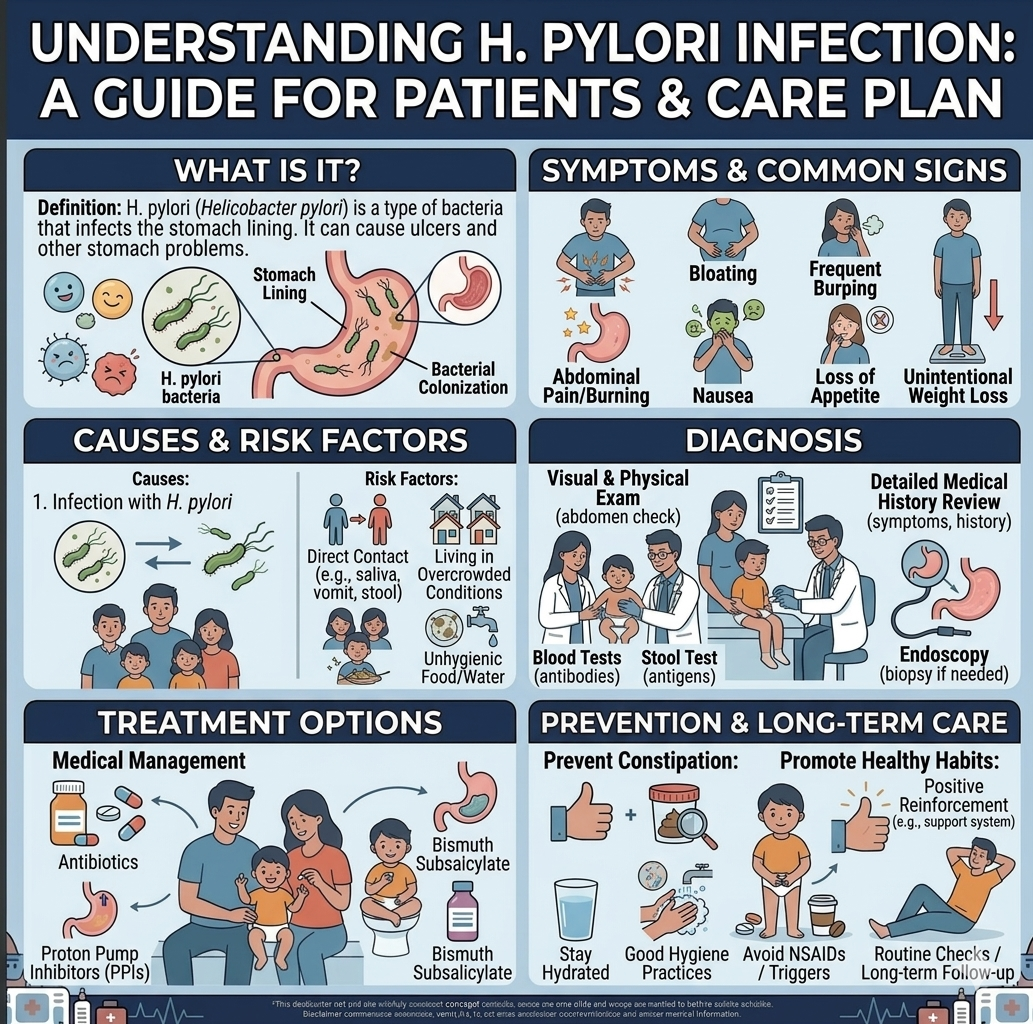
Helicobacter pylori (H. pylori) is a common type of bacteria that infects the stomach, affecting over half the world's population, often starting in childhood. These bacteria can spread through contact with an infected person's bodily fluids (like vomit, stool, or saliva), poor hygiene, and contaminated food or water. While many infected individuals show no symptoms, H. pylori can cause stomach discomfort, bloating, and gas. In some cases, it leads to painful sores called peptic ulcers in the stomach or small intestine, and rarely, it can increase the risk of stomach cancer. Treatment typically involves a course of antibiotics.
Understanding the Condition
H. pylori Infection: Understanding a Common Stomach Bacterium
Understanding the Condition
Helicobacter pylori (H. pylori) is a common type of bacteria that infects the stomach, affecting over half the world's population, often starting in childhood. These bacteria can spread through contact with an infected person's bodily fluids (like vomit, stool, or saliva), poor hygiene, and contaminated food or water. While many infected individuals show no symptoms, H. pylori can cause stomach discomfort, bloating, and gas. In some cases, it leads to painful sores called peptic ulcers in the stomach or small intestine, and rarely, it can increase the risk of stomach cancer. Treatment typically involves a course of antibiotics.
Common Symptoms
Common Stomach Symptoms: Many people with H. pylori infection experience no symptoms. When symptoms do occur, they are often related to inflammation of the stomach lining or a peptic ulcer. These can include a dull or burning stomach pain (which may worsen when your stomach is empty and improve after eating or taking antacids), bloating, a feeling of fullness, frequent burping, nausea, or loss of appetite.
Less Common Symptoms: Some individuals may experience unintentional weight loss as a result of chronic discomfort or appetite changes.
When to Seek Urgent Medical Help: It's important to get immediate medical attention if you experience severe or persistent stomach pain, difficulty swallowing, bloody or black stools (which may look like tar), vomit that is bloody or looks like coffee grounds, or sudden, unexplained weight loss. These could indicate more serious complications.
Consultation Guide
Which Specialist to Meet
You should start by consulting your primary care doctor if you experience ongoing stomach pain or other concerning digestive symptoms. If H. pylori is suspected or diagnosed, your doctor may refer you to a gastroenterologist, who is a specialist in digestive system disorders.
Preparations Before Your Visit
Before your appointment, keep a detailed diary of your symptoms, noting when they occur, what makes them better or worse, and how long they last. Make a list of all medications, vitamins, and supplements you are currently taking. Be prepared to discuss your medical history and any recent travel. Your doctor may advise you to stop taking certain medications, such as antacids or acid-reducing drugs, before specific H. pylori tests, so follow their instructions carefully. Write down any questions you have for your doctor.
Book a doctor visit near me
Dietary Adjustments: While there isn't a specific diet that cures H. pylori, avoiding foods that tend to irritate your stomach (such as very spicy foods, acidic foods like citrus and tomatoes, or excessive caffeine and alcohol) can help manage symptoms during treatment and promote healing of the stomach lining. (Duration: During treatment and ongoing as needed for comfort.)
Monitor for Recurrence or Complications: If you have a history of peptic ulcers or other significant complications from H. pylori, regular follow-up with your doctor is important. This helps monitor for any symptom recurrence, potential long-term issues, or the need for further evaluation.
Consultation Guide
Stress Management: Although stress does not cause H. pylori infection, managing stress through relaxation techniques, mindfulness, or other methods can help reduce overall stomach discomfort and improve your general well-being. (Duration: Ongoing as a general health practice.)
Diagnostic Procedures
H. pylori Breath Test (Urea Breath Test)
This non-invasive test detects the presence of H. pylori by checking for a specific gas produced by the bacteria. If H. pylori is present, it breaks down a special liquid you drink, releasing a gas that can be measured in your breath.
What to Expect
You will typically need to fast (not eat or drink) for several hours before the test. You'll drink a flavored liquid containing a harmless substance. After a short waiting period, you'll breathe into a collection bag. The entire process is quick and painless.
H. pylori Stool Test (Stool Antigen Test)
This test identifies specific proteins (antigens) from H. pylori in a sample of your stool, indicating an active infection.
What to Expect
You will receive a kit to collect a small stool sample at home. Carefully follow the provided instructions for collection and storage, then return the sample to the lab or your doctor's office. This is a non-invasive test.
Upper Endoscopy (Esophagogastroduodenoscopy - EGD)
An upper endoscopy is a procedure where a doctor uses a thin, flexible tube with a camera on the end (called an endoscope) to visually examine the lining of your esophagus (food pipe), stomach, and the first part of your small intestine (duodenum). During this procedure, tiny tissue samples (biopsies) can be taken to test directly for H. pylori, as well as to check for ulcers or other issues.
What to Expect
You will need to fast for several hours before the procedure. You'll receive medication, often through an IV, to help you relax or sleep during the test. Your throat may also be numbed with a spray. The doctor will gently guide the endoscope down your throat. You might feel some pressure or fullness, but you should not feel pain. The procedure typically takes 15-30 minutes. Afterward, you'll recover from the sedation for a while and will need someone to drive you home. You might experience a mild sore throat for a day or two.
Confirm Eradication: After completing your H. pylori treatment, your doctor will likely recommend a follow-up test (such as a breath test or stool test) to confirm that the bacteria have been completely eliminated from your stomach. This step is important to ensure successful treatment and prevent recurrence.
Treatment Options
Medications
Antibiotic Combination Therapy: Multiple different antibiotic medications are prescribed together to effectively kill the H. pylori bacteria. Using a combination of antibiotics helps to increase their effectiveness and reduce the risk of the bacteria becoming resistant. (Duration: Typically 10-14 days.)
Acid-Reducing Medications: These medications work by reducing the amount of acid your stomach produces, which helps to heal any existing ulcers and relieve stomach pain. Examples include proton pump inhibitors (PPIs) or H2 blockers. (Duration: Often taken for several weeks, sometimes alongside antibiotics and continued afterward to ensure ulcer healing.)
Bismuth Subsalicylate: This medication can be added to the antibiotic regimen as part of a multi-drug approach. It helps to kill the bacteria and protects the stomach lining. (Duration: Same duration as the antibiotic treatment, typically 10-14 days.)
Endoscopic Interventions for Complications: If an H. pylori infection has led to complications such as bleeding ulcers, a doctor can use specialized tools passed through an endoscope during an upper endoscopy to stop the bleeding, remove abnormal tissue, or treat other related issues directly. (Duration: One-time procedure, but may require follow-up depending on the specific complication.)
Prevention & Long-Term Wellbeing
Lifestyle and Supportive Care
Prevention
Practice Good Hand Hygiene: Wash your hands thoroughly with soap and water for at least 20 seconds, especially after using the restroom and before handling food or eating. This is crucial for preventing the spread of germs, including H. pylori.
Ensure Food and Water Safety: Consume food that has been properly cooked and prepared in clean, sanitary conditions. Drink water only from safe, clean sources. Avoid sharing food, drinks, or eating utensils with others to minimize potential transmission.
Long-Term Monitoring
Tags & Topics
Notice an error or need an update?
Help us keep medical information accurate. Report incorrect info or suggest an edit.


