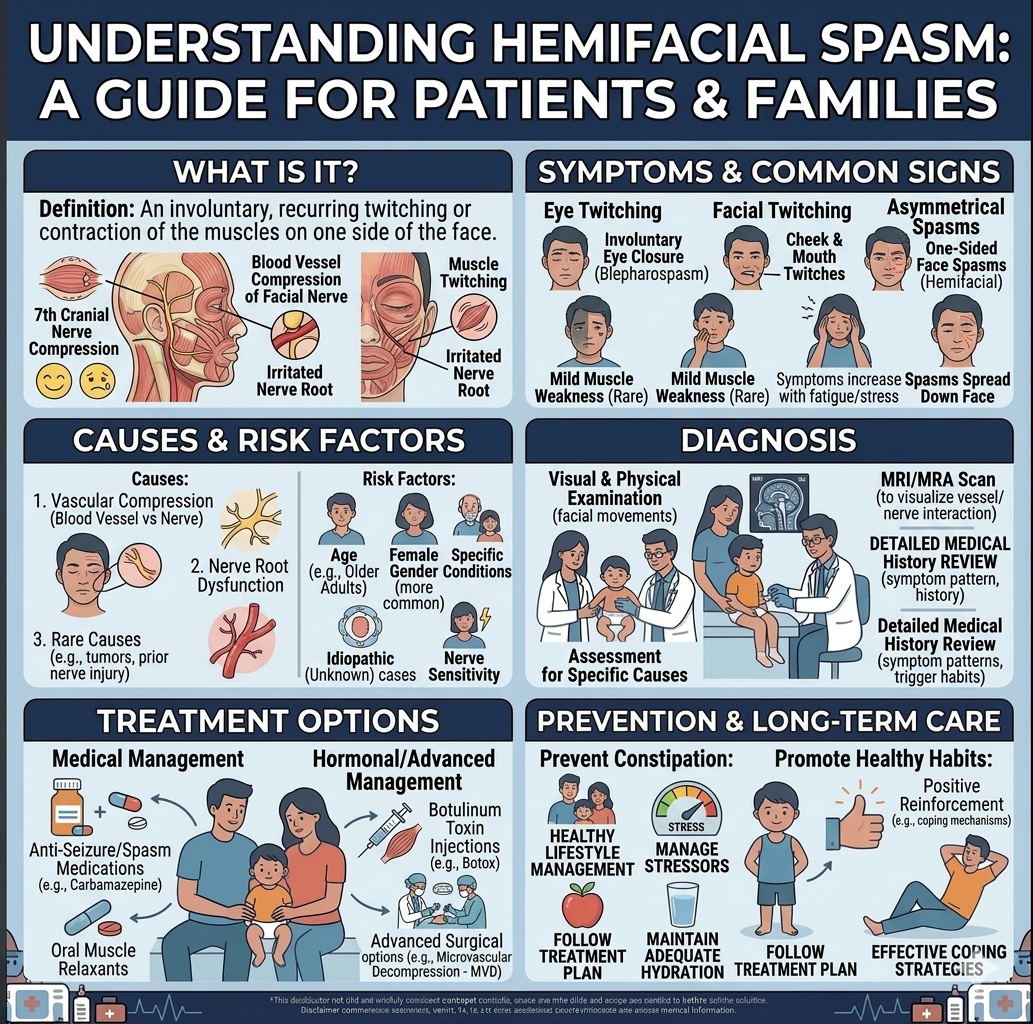
Hemifacial spasm is a neurological condition where muscles on one side of the face involuntarily twitch or spasm. These uncontrolled movements typically begin around one eye and can gradually spread to other areas on the same side of the face, like the cheek and mouth. The most common cause is a blood vessel gently pressing on the facial nerve. While not life-threatening, these spasms can be uncomfortable, affect daily activities, and impact social interactions. Sometimes, the exact cause remains unknown.
Understanding the Condition
Hemifacial Spasm: Understanding Uncontrolled Facial Twitches
Understanding the Condition
Common Symptoms
Uncontrollable Facial Twitches: Involuntary muscle movements or contractions that you cannot stop. These often start subtly around one eyelid and can progress to involve the cheek, mouth, and other muscles on the same side of the face.
Progressive Nature: Initially, spasms may occur occasionally and then disappear. However, over several months to years, they typically become more frequent and constant, occurring almost all the time. The speed at which they spread and their intensity can vary greatly from person to person.
Occurrence During Sleep: Unlike some other facial twitches, hemifacial spasms can continue even while you are asleep.
One-Sided Presentation: These spasms nearly always affect only one side of the face. While it's rare, they can sometimes occur on both sides, though typically not at the exact same time.
Exacerbating Factors: Certain activities or states can make the spasms more noticeable or frequent. These include moving facial muscles (like smiling or talking) or feeling tired or stressed. The spasms are usually painless but can be bothersome.
Consultation Guide
Which Specialist to Meet
Before your appointment, it's helpful to:* Keep a detailed diary of your symptoms, noting when they started, how often they occur, what makes them better or worse, and which facial areas are affected.* Make a list of all medications, vitamins, and supplements you are currently taking.* Be prepared to discuss your medical history, including any past injuries, other health conditions, and family medical history.* Write down any questions you have for the doctor, such as what tests might be needed or what treatment options are available.
Book a doctor visit near me
You will be asked about your symptoms and medical history. The doctor will visually examine your face and test your facial muscle strength and sensation by asking you to smile, frown, close your eyes tightly, and make other expressions. This exam is typically quick and painless.
Magnetic Resonance Imaging (MRI)
Prevention and Symptom Management
Stress and Fatigue Management: Although there's no known way to prevent hemifacial spasm from developing, proactively managing stress and ensuring sufficient rest can help to lessen the severity and frequency of existing symptoms. Techniques like mindfulness, yoga, and regular, gentle exercise can be beneficial.
Avoiding Triggers: Identifying and, where possible, avoiding specific activities or situations that seem to worsen your spasms (like intense facial movements or prolonged screen time if it contributes to eye strain) can help in day-to-day management.
Long-Term Monitoring and Support
Symptom Diary: Continuing to track your symptoms, their frequency, intensity, and any potential triggers can provide valuable information for your healthcare team and help you feel more in control of your condition.
Emotional and Psychological Support: Living with a chronic condition that affects your appearance and social interactions can be challenging. Seeking support from family, friends, support groups, or a mental health professional can provide strategies for coping and improving overall quality of life.
Consultation Guide
Hemifacial spasm is a neurological condition where muscles on one side of the face involuntarily twitch or spasm. These uncontrolled movements typically begin around one eye and can gradually spread to other areas on the same side of the face, like the cheek and mouth. The most common cause is a blood vessel gently pressing on the facial nerve. While not life-threatening, these spasms can be uncomfortable, affect daily activities, and impact social interactions. Sometimes, the exact cause remains unknown.
An MRI uses powerful magnets and radio waves to create detailed images of your brain and the nerves in your head. For hemifacial spasm, it's used to identify if a blood vessel is pressing on your facial nerve, or to rule out other causes like a tumor or lesion that might be affecting the nerve.
Diagnostic Procedures
To accurately diagnose and manage hemifacial spasm, you should consult a neurologist, a specialist in disorders of the brain and nervous system. If surgical treatment is considered, a neurosurgeon specializing in facial nerve conditions may also be involved in your care.
Preparations Before Your Visit
Neurological Examination
This is an initial physical check-up where your doctor will assess your facial muscle movements, reflexes, and nerve function. They will observe the spasms and might ask you to make various facial expressions.
What to Expect
What to Expect
You will lie on a movable table that slides into a large, tunnel-like machine. It's a non-invasive and generally painless procedure, but the machine can be noisy. You may be given earplugs. Depending on the images needed, the procedure can take 30 to 60 minutes. Sometimes, a special dye (contrast agent) is injected into a vein to make certain structures clearer in the images. You will need to remain very still during the scan.
Treatment Options
Medications and Injections
Oral Medications: Certain medications, such as muscle relaxants or anti-seizure drugs, may be prescribed to help reduce muscle twitching. However, these are often less effective for hemifacial spasm compared to other treatments. (Duration: As prescribed, typically ongoing if effective.)
Botulinum Toxin Injections: Small amounts of a purified toxin are injected into the affected facial muscles. This temporarily weakens the muscles, reducing or stopping the spasms. It is a highly effective, non-surgical treatment. (Duration: Effects typically last for 3 to 6 months, requiring repeat injections to maintain relief.)
Surgical Procedures
Regular Medical Follow-ups: Maintain regular appointments with your neurologist to monitor your condition, assess the effectiveness of treatments, and adjust your care plan as needed.
Prevention & Long-Term Wellbeing
Lifestyle Adjustments and Home Care
Managing Stress and Fatigue: While not a cure, actively managing stress levels through relaxation techniques (like deep breathing, meditation) and ensuring adequate rest can sometimes help reduce the frequency or intensity of spasms. (Duration: Ongoing, as needed.)
Microvascular Decompression (MVD): This is a surgical procedure designed to permanently relieve pressure on the facial nerve. During the operation, a surgeon carefully moves the blood vessel that is pressing on the nerve and places a small, soft pad between them to prevent future contact. (Duration: A single surgical procedure with long-term or permanent relief for many patients. Recovery typically takes several weeks.)
Tags & Topics
Notice an error or need an update?
Help us keep medical information accurate. Report incorrect info or suggest an edit.


