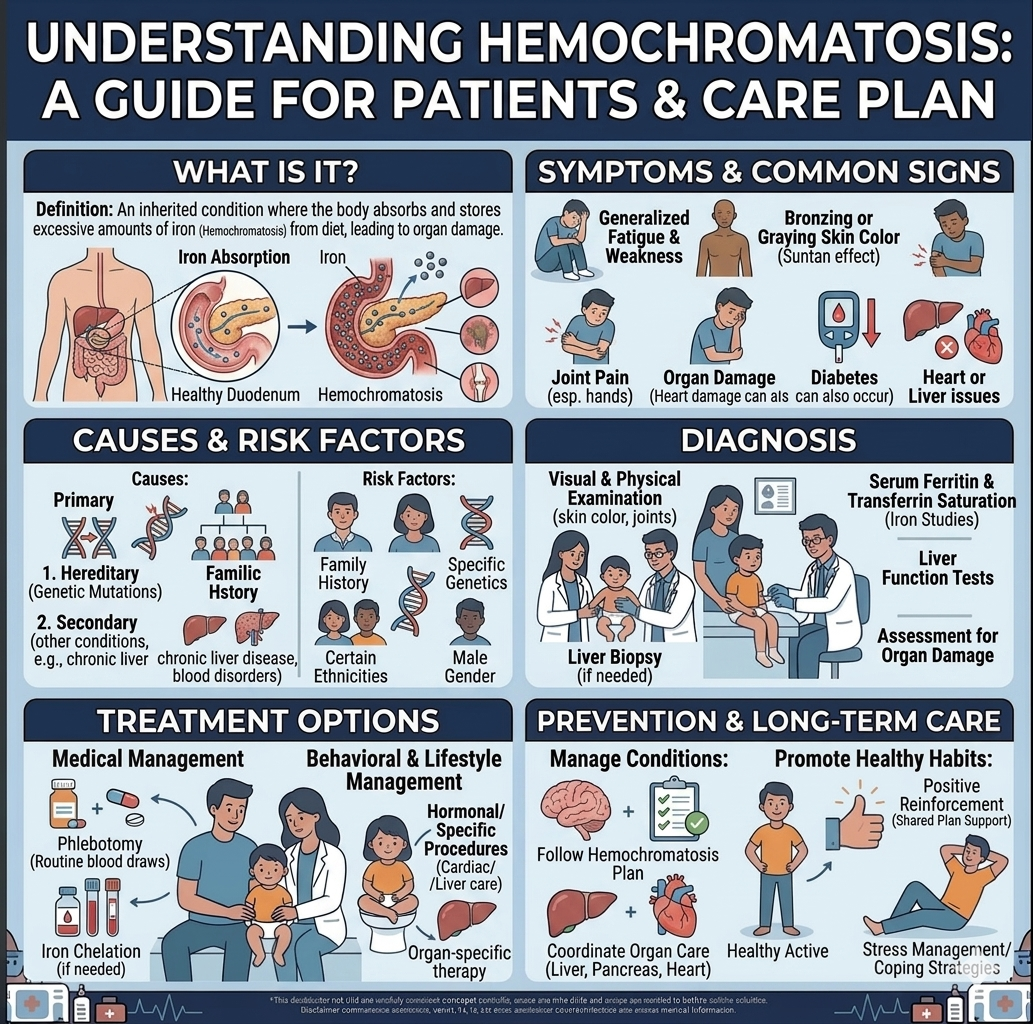
Hemochromatosis is a condition where your body absorbs too much iron from food, leading to its buildup in organs like the liver, heart, and pancreas. This excess iron can cause severe damage, resulting in life-threatening conditions such as liver disease, heart problems, and diabetes. The most common form is inherited, though not everyone with the gene develops serious issues. Symptoms often appear in midlife, and treatment typically involves regular blood removal to lower iron levels.
Understanding the Condition
Hemochromatosis: Understanding and Managing Excess Iron
Understanding the Condition
Hemochromatosis is a condition where your body absorbs too much iron from food, leading to its buildup in organs like the liver, heart, and pancreas. This excess iron can cause severe damage, resulting in life-threatening conditions such as liver disease, heart problems, and diabetes. The most common form is inherited, though not everyone with the gene develops serious issues. Symptoms often appear in midlife, and treatment typically involves regular blood removal to lower iron levels.
Common Symptoms
Vague Early Symptoms: Many individuals have no symptoms, or early ones are general. Symptoms typically emerge later: after age 40 for men, and after age 60 for women (often post-menopause, as menstruation previously helped reduce iron).
Joint Pain: Persistent aches and stiffness, often in knuckles and larger joints.
Belly Pain: Discomfort in the abdominal area, possibly related to liver or pancreas.
Loss of Sex Drive: Decreased libido in both men and women due to hormonal imbalances from iron overload.
Heart Problems: Excess iron affects heart's pumping ability, causing shortness of breath, fatigue, leg swelling, or irregular rhythms.
Liver Issues: Fatigue, weakness, and later signs like jaundice or fluid retention from liver damage.
Start with your primary care physician, who may refer you to specialists like a gastroenterologist (liver), cardiologist (heart), endocrinologist (diabetes), or hematologist (blood disorders). A genetic counselor can also assist. Prepare by listing symptoms, family medical history, and current medications. Have questions ready for your doctor.
Preparations Before Your Visit
Before your visit, compile a list of your symptoms and when they started. Gather your family's medical history, noting any instances of hemochromatosis or related conditions like liver disease or diabetes. Bring a list of all current medications, including over-the-counter drugs and supplements. Prepare a list of questions for your doctor to ensure all your concerns are addressed.
Book a doctor visit near me
Consultation Guide
Bronze or Gray Skin Color: Iron deposits in skin cells can cause a metallic, tanned, or grayish tint.
Memory Fog: Difficulty concentrating, confusion, or a general feeling of mental fogginess.
Consultation Guide
Which Specialist to Meet
Diagnostic Procedures
Examines DNA for specific gene changes (e.g., HFE gene mutations like C282Y, H63D) causing hereditary hemochromatosis. Confirms diagnosis and assesses family risk.
What to Expect
A blood sample (from arm vein) or cheek swab is taken. Minimal discomfort. Prenatal tests (amniocentesis/CVS) carry a small pregnancy loss risk and are done only if specifically indicated and discussed with your healthcare provider.
Blood tests measuring enzymes and proteins in your blood to assess liver function and detect damage. Elevated or reduced levels can signal liver problems due to iron overload.
What to Expect
A blood sample is drawn, usually from your arm. This is a quick procedure with minimal discomfort. Fasting is typically not required unless specified by your doctor. Your doctor will explain what your results mean.
Needle Biopsy (Liver Biopsy)
Removes a small liver tissue sample for lab analysis to determine iron accumulation, damage extent (e.g., cirrhosis), and rule out other conditions.
What to Expect
The skin over your liver (right side) is cleaned and numbed with a local anesthetic. A thin needle is inserted; you may feel pressure or a dull ache. You might be asked to hold your breath briefly. The procedure takes about 15-30 minutes. Afterward, you will rest for several hours, and some soreness at the biopsy site is expected for a few days.
Family Screening: If hereditary hemochromatosis is present, close family members (parents, siblings, children) should get tested or screened. Early detection allows timely treatment, preventing organ damage.
Regular Blood Tests: Ongoing monitoring of iron levels (ferritin, transferrin saturation) and liver function tests is essential. Helps adjust treatment and detect complications early.
Scheduled Medical Check-ups: Regular visits with doctors and specialists monitor overall health, organ function, and manage complications from iron overload.
Treatment Options
Therapeutic Phlebotomy: This primary treatment involves regularly drawing blood, similar to donation. Removing blood reduces iron levels, as most iron is in red blood cells. (Duration: Initially frequent (e.g., weekly) until iron normalizes. Maintenance is less often (e.g., every 2-3 months) for life to keep iron healthy.)
Medications
Iron Chelation Therapy: Used when phlebotomy isn't suitable (e.g., for anemia, severe heart conditions). Medications bind to iron, allowing its excretion from the body. (Duration: Ongoing, as prescribed, to continuously manage iron levels and prevent accumulation.)
Prevention & Long-Term Wellbeing
Dietary Adjustments
Avoid Iron Supplements and Multivitamins with Iron: Crucial to avoid all supplements or multivitamins containing iron. (Duration: Lifelong)
Limit Vitamin C Intake with Iron-Rich Foods: Vitamin C increases iron absorption. Limit high-dose Vitamin C supplements and avoid consuming Vitamin C-rich foods/supplements alongside iron-rich meals. (Duration: Lifelong)
Avoid Raw Shellfish: High iron increases susceptibility to infections from bacteria in raw seafood. Consume only thoroughly cooked seafood. (Duration: Lifelong)
Limit Alcohol Consumption: Alcohol heightens liver damage risk with iron overload. Reducing or avoiding alcohol protects liver health. (Duration: Lifelong, or as advised by your physician)
Prevention
Lifestyle Adjustments
Maintain a Healthy Diet: Eat a balanced, nutritious diet (fruits, vegetables, whole grains) to support overall health and liver function. Discuss changes with your doctor.
Avoid Liver-Damaging Substances: Minimize alcohol and avoid recreational drugs that stress the liver, crucial given the increased risk of liver damage from hemochromatosis.
Tags & Topics
Notice an error or need an update?
Help us keep medical information accurate. Report incorrect info or suggest an edit.


