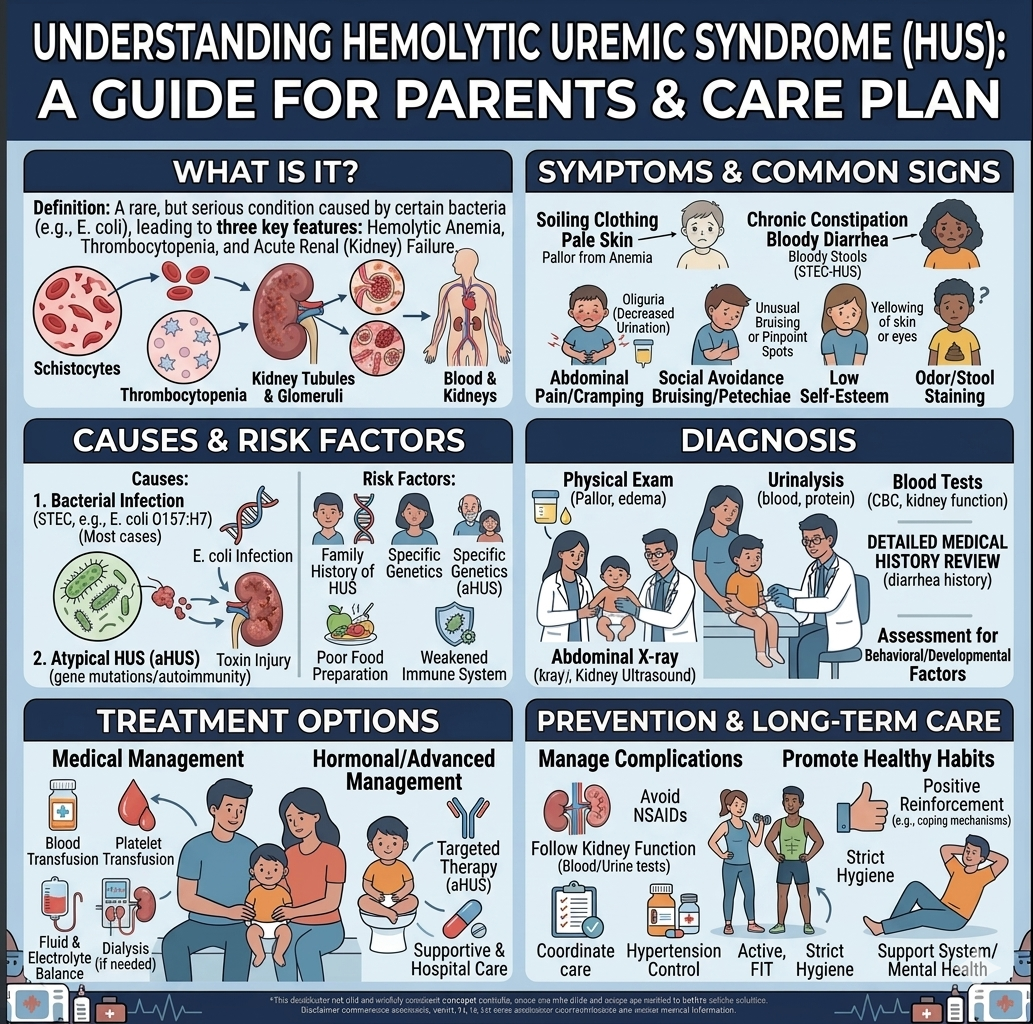
Hemolytic Uremic Syndrome (HUS) is a serious condition where tiny blood vessels throughout the body, especially in the kidneys, become damaged and inflamed. This leads to small blood clots forming and red blood cells breaking down (anemia), alongside low platelet counts. These clots can severely harm the kidneys, potentially causing kidney failure. While anyone can get HUS, it's most common in young children. The primary cause is often infection with certain E. coli bacteria strains that produce a harmful toxin. Other causes include different infections, certain medications, or underlying health issues like pregnancy, cancer, or autoimmune diseases. Rarely, it's due to inherited gene changes. Early treatment is crucial, often leading to a full recovery, especially in children.
Understanding the Condition
Hemolytic Uremic Syndrome (HUS): A Guide for Non-Medical Persons
Understanding the Condition
Common Symptoms
Diarrhea: Often severe and bloody, especially with E. coli-related HUS.
Abdominal Pain: Cramping or bloating in the stomach area.
Pale Skin: Loss of natural skin color due to red blood cell breakdown.
Extreme Tiredness: Feeling very fatigued and weak.
Easy Bruising: Bruising without significant injury.
Unusual Bleeding: Bleeding from the nose or mouth.
Changes in Urination: Urinating less than usual, or seeing blood in the urine.
Swelling (Edema): Swelling in the legs, feet, ankles, or sometimes the face or hands.
Neurological Issues: Confusion, seizures, or in severe cases, a stroke.
High Blood Pressure: Abnormally elevated blood pressure.
Consultation Guide
Which Specialist to Meet
You should first consult your primary care doctor or a pediatrician (for children). They may then refer you to a kidney specialist (nephrologist) due to the potential for kidney damage, or an infectious disease specialist if an infection is suspected.
Preparations Before Your Visit
Before your visit, make a list of all your symptoms, including when they started and how severe they are. Bring a list of any medications you are currently taking, including over-the-counter drugs and supplements. Be prepared to discuss your recent diet, travel, and any potential exposures to illnesses. Write down any questions you have for the doctor.
Book a doctor visit near me
Fluid and Electrolyte Management: Maintaining proper hydration and mineral balance (like sodium and potassium) through intravenous fluids or careful oral intake to support kidney function and overall body health. (Duration: Ongoing as needed, typically until symptoms resolve and kidney function improves (days to weeks).)
Watch for Recurrence: Be aware of the symptoms and risk factors for HUS, especially for individuals with genetic predispositions, to seek prompt medical attention if symptoms recur.
Consultation Guide
Hemolytic Uremic Syndrome (HUS) is a serious condition where tiny blood vessels throughout the body, especially in the kidneys, become damaged and inflamed. This leads to small blood clots forming and red blood cells breaking down (anemia), alongside low platelet counts. These clots can severely harm the kidneys, potentially causing kidney failure. While anyone can get HUS, it's most common in young children. The primary cause is often infection with certain E. coli bacteria strains that produce a harmful toxin. Other causes include different infections, certain medications, or underlying health issues like pregnancy, cancer, or autoimmune diseases. Rarely, it's due to inherited gene changes. Early treatment is crucial, often leading to a full recovery, especially in children.
A healthcare professional will draw a small amount of blood, usually from a vein in your arm, using a needle. The process is quick and generally causes minor discomfort.
This test checks for the presence of specific bacteria, like certain E. coli strains that produce toxins, in your stool. This helps identify the cause of HUS in cases linked to bacterial infection.
Other Medications: Depending on the specific cause and type of HUS (e.g., atypical HUS), certain medications might be used to target underlying processes or reduce inflammation. Antibiotics are generally not recommended for E. coli HUS as they can worsen toxin release. (Duration: Varies by medication and patient response.)
Diagnostic Procedures
This test measures creatinine, a waste product from muscle activity, in your blood or urine. Healthy kidneys filter creatinine out, so high levels can indicate that your kidneys aren't working properly.
What to Expect
For a blood test, a small sample of blood will be drawn, usually from a vein in your arm. You might be asked to fast (not eat) overnight beforehand, or to temporarily stop eating meat or taking creatine supplements, as these can affect results. For a urine test, you might collect all your urine over a 24-hour period using special containers provided by the clinic.
A general examination of your urine to check its appearance, concentration, and content. It can help detect signs of infections, kidney disease, or other conditions.
What to Expect
You will provide a urine sample, typically by urinating into a sterile cup. The sample will then be analyzed in a lab. Changes like cloudy urine or the presence of protein or blood can indicate a problem.
Complete Blood Count (CBC)
A common blood test that measures different components of your blood, including red blood cells, white blood cells, and platelets. In HUS, it helps detect the breakdown of red blood cells (anemia) and low platelet levels.
What to Expect
What to Expect
You will collect a small sample of your stool at home using a kit provided by your doctor. Specific instructions will be provided on how to collect and store the sample before returning it to the lab for analysis.
Treatment Options
Supportive Care and Procedures
Blood Pressure Control: Medications may be given to manage high blood pressure, which can occur due to kidney damage and contribute to further complications. (Duration: As needed, potentially short-term or long-term if chronic high blood pressure develops.)
Blood Transfusion: Receiving donated blood or specific blood components (like red blood cells or platelets) through an IV line to replace what has been lost or damaged, helping to address severe anemia or bleeding problems. (Duration: Typically a single several-hour session, possibly repeated based on needs.)
Hemodialysis: A medical procedure where a machine filters waste products, excess salts, and fluid from your blood, essentially taking over the job of your kidneys when they are no longer able to function adequately. (Duration: Temporary (days to weeks) for acute failure; long-term (several times a week) for chronic kidney failure.)
Peritoneal Dialysis: A method of filtering waste products from the blood using the lining of your abdomen (peritoneum) as a natural filter. A cleansing fluid is introduced into the abdomen through a tube, absorbs wastes, and is then drained out. This can often be done at home. (Duration: Similar to hemodialysis; temporary or ongoing several times daily/overnight for chronic kidney failure.)
Prevention & Long-Term Wellbeing
Prevention of E. coli HUS
Food Safety Practices: Always wash hands thoroughly before eating and after using the restroom or changing diapers. Cook meat to an internal temperature of at least 160°F (71°C). Thaw meat in the refrigerator or microwave, not on the counter. Keep raw foods separate from cooked foods. Store raw meat below produce in the refrigerator.
Avoid Unpasteurized Products: Do not consume unpasteurized milk, juice, or cider, as these can contain harmful bacteria like E. coli.
Safe Swimming Habits: Avoid swimming in unclean bodies of water or public pools that may be contaminated. Do not swim if you have diarrhea.
Personal Hygiene: Practice good hand hygiene, especially after contact with farm animals or people who are ill.
Long-Term Monitoring & Management
Regular Medical Check-ups: Patients who have experienced HUS, especially those with kidney involvement, need ongoing follow-up with a doctor or kidney specialist to monitor kidney function, blood pressure, and overall health to detect and manage potential long-term complications.
Blood Pressure Management: Closely monitor and manage blood pressure, as HUS can lead to chronic high blood pressure.
Tags & Topics
Notice an error or need an update?
Help us keep medical information accurate. Report incorrect info or suggest an edit.


