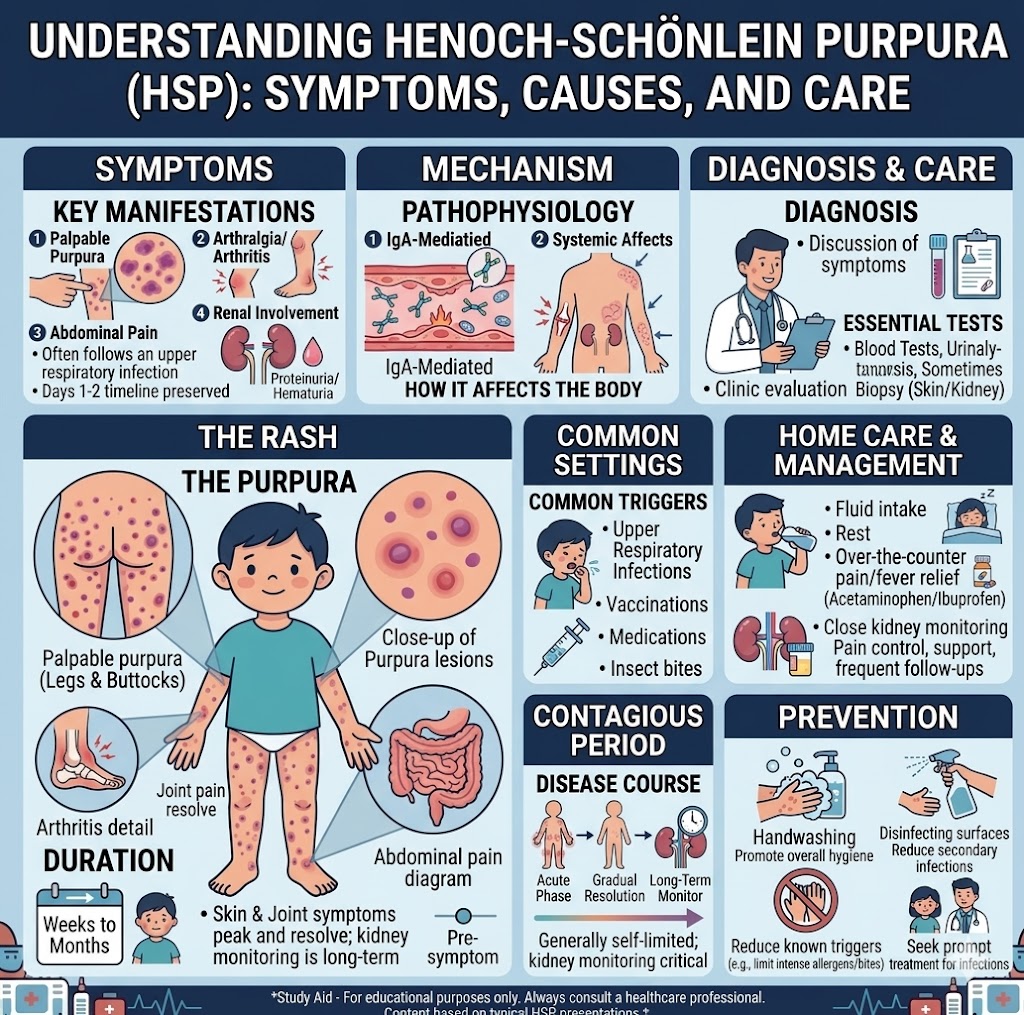
Henoch-Schonlein purpura (HSP), also known as IgA vasculitis, is a condition characterized by inflammation and bleeding of small blood vessels in the skin, joints, intestines, and kidneys. It typically presents with a distinct rash, often on the legs and feet, alongside belly pain and aching joints. While usually mild and self-resolving, HSP can, in rare instances, lead to serious kidney damage. It most commonly affects children between 3 and 10 years old, often following an upper respiratory illness like a cold.
Understanding the Condition
Henoch-Schonlein Purpura (IgA Vasculitis): A Guide for Non-Medical Persons
Understanding the Condition
Common Symptoms
Rash (Purpura): A prominent rash of small, bruise-like red or purple spots, typically found on the legs, buttocks, and feet. These spots do not fade when pressed.
Belly Pain: Cramping abdominal pain, which can sometimes be severe. This may be accompanied by nausea, vomiting, or bloody stools.
Aching Joints: Pain and swelling in the joints, most commonly affecting the knees and ankles.
Before your visit, make a list of all symptoms, including when they started and how often they occur. Note any recent illnesses, especially respiratory infections. Prepare a list of all medications, vitamins, and supplements being taken, and any questions you have for the doctor.
Book a doctor visit near me
Rest and Hydration: Adequate rest helps the body recover, and staying well-hydrated supports overall health. (Duration: Until symptoms resolve)
Pain Management: Over-the-counter pain relievers can help manage joint pain and belly discomfort. (Duration: As needed, until symptoms resolve)
Corticosteroids: For more severe symptoms, such as significant joint pain, severe belly pain, or serious kidney involvement, certain anti-inflammatory medications may be prescribed to reduce inflammation. (Duration: Typically a few weeks, or as directed by physician, with gradual tapering)
Regular Follow-ups: Even after symptoms resolve, regular check-ups, especially urine tests, are crucial for several months to monitor for late-onset kidney complications.
Monitor for Recurrence: Be aware that HSP can sometimes recur, so watch for reappearance of rash, joint pain, or belly pain and report them to your doctor.
Consultation Guide
Kidney Problems: Although less common, some individuals may develop kidney inflammation, leading to blood or protein in the urine. Rarely, this can cause serious, long-term kidney damage.
Consultation Guide
Which Specialist to Meet
You should seek care from a primary care physician, especially a pediatrician if your child is affected. Depending on the severity and affected organs, specialists such as a rheumatologist (for joint issues), gastroenterologist (for digestive problems), or nephrologist (for kidney involvement) may be consulted.
Preparations Before Your Visit
A non-invasive medical imaging test that uses sound waves to create images of organs and structures inside the belly. In the context of HSP, it can be used to assess for complications like bowel inflammation, swelling, or a rare condition called intussusception (where one part of the intestine slides into another), which can cause severe belly pain.
Blood Pressure Medications: If kidney involvement causes high blood pressure, medications to manage blood pressure may be necessary. (Duration: Long-term, as directed by physician)
Diagnostic Procedures
Henoch-Schonlein purpura (HSP), also known as IgA vasculitis, is a condition characterized by inflammation and bleeding of small blood vessels in the skin, joints, intestines, and kidneys. It typically presents with a distinct rash, often on the legs and feet, alongside belly pain and aching joints. While usually mild and self-resolving, HSP can, in rare instances, lead to serious kidney damage. It most commonly affects children between 3 and 10 years old, often following an upper respiratory illness like a cold.
A common test to examine a urine sample for various substances. It helps detect and monitor conditions like urinary tract infections, kidney disease, and diabetes. For HSP, it's crucial for checking for blood or protein in the urine, which indicates kidney involvement.
What to Expect
You will be asked to provide a urine sample, usually in a sterile cup. The sample is then sent to a lab where it's checked for appearance, concentration, and content, including microscopic examination for blood cells or protein.
A procedure where a small sample of skin tissue is removed for laboratory testing. For HSP, a skin biopsy can confirm the diagnosis by showing inflammation of small blood vessels and specific immune deposits (IgA) characteristic of the condition.
What to Expect
The area of skin to be biopsied will be numbed with a local anesthetic. The doctor will use a specialized tool (scalpel or punch tool) to remove a small piece of skin. Depending on the depth and size, stitches may be needed to close the wound. The sample is then sent for microscopic examination.
What to Expect
You will lie on an examination table. A gel will be applied to your abdomen, and a handheld device called a transducer will be moved over the skin. The transducer sends sound waves that bounce off internal organs and create images on a monitor. The procedure is generally painless and takes 15-30 minutes.
What to Expect
You will lie on your stomach, and the skin over your kidney will be numbed with local anesthetic. An imaging device, such as an ultrasound, will be used to guide a thin needle through the skin to the kidney to collect a tissue sample. You may feel some pressure or discomfort. After the biopsy, you will need to lie still for several hours to prevent bleeding.
Treatment Options
A procedure where a small piece of kidney tissue is removed using a needle for microscopic examination. This is often recommended if there are signs of serious kidney involvement to determine the extent of damage and guide treatment.
Supportive Care and Home Remedies
Medications
Hospitalization and Monitoring: In cases with severe belly pain, significant kidney involvement, or other complications, hospital care may be needed for close monitoring and intravenous treatments. (Duration: Varies from a few days to several weeks, depending on severity)
Prevention & Long-Term Wellbeing
Long-Term Monitoring and Prevention
Healthy Lifestyle: Maintain a balanced diet, stay hydrated, and ensure adequate rest to support overall immune function and recovery.
Education: Understand the condition and its potential complications to recognize warning signs early and seek appropriate medical attention.
Tags & Topics
Notice an error or need an update?
Help us keep medical information accurate. Report incorrect info or suggest an edit.


