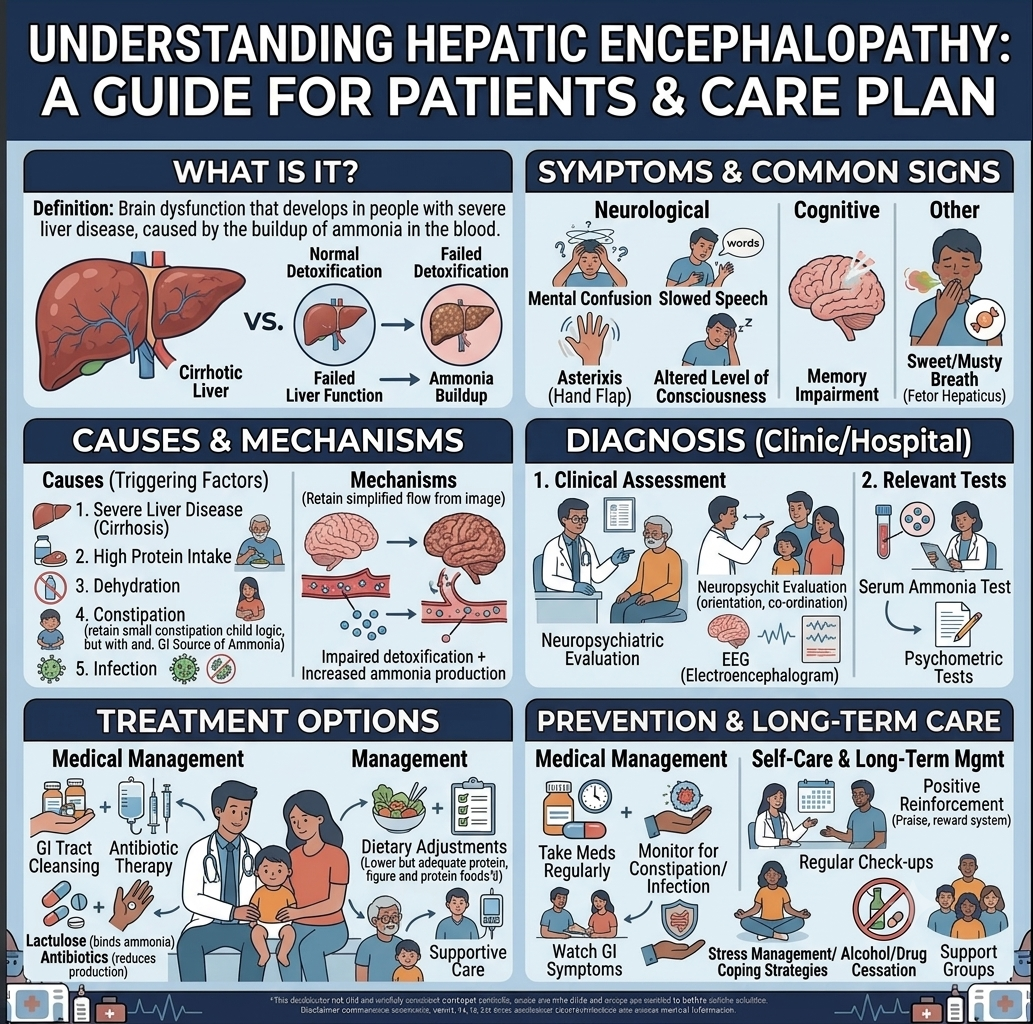
Hepatic encephalopathy (pronounced huh-PAT-ik en-sef-uh-LOP-uh-thee) is a severe brain disorder that develops when the liver can no longer properly remove harmful substances from the blood. The liver's main job is to filter toxins, like ammonia from the gut, which then build up and travel to the brain. This buildup interferes with brain function, leading to a range of mental and physical changes. If not treated quickly and effectively, hepatic encephalopathy can progress to unresponsiveness, a coma, and even be fatal.This condition often results from severe liver damage, such as from chronic liver disease (like cirrhosis, where it affects 30-40% of individuals), liver injury, or cancer. Other triggers include alcohol misuse, infections, certain medications, and blood clots.Hepatic encephalopathy can appear suddenly (acute) or develop over time and be long-lasting (chronic). Symptoms can be subtle and hard to notice (covert), or very clear and severe (overt), ranging from mild confusion to a deep coma. Prompt medical attention is crucial for successful management.
Understanding the Condition
Hepatic Encephalopathy: Understanding a Complex Liver Condition
Understanding the Condition
Hepatic encephalopathy (pronounced huh-PAT-ik en-sef-uh-LOP-uh-thee) is a severe brain disorder that develops when the liver can no longer properly remove harmful substances from the blood. The liver's main job is to filter toxins, like ammonia from the gut, which then build up and travel to the brain. This buildup interferes with brain function, leading to a range of mental and physical changes. If not treated quickly and effectively, hepatic encephalopathy can progress to unresponsiveness, a coma, and even be fatal.This condition often results from severe liver damage, such as from chronic liver disease (like cirrhosis, where it affects 30-40% of individuals), liver injury, or cancer. Other triggers include alcohol misuse, infections, certain medications, and blood clots.Hepatic encephalopathy can appear suddenly (acute) or develop over time and be long-lasting (chronic). Symptoms can be subtle and hard to notice (covert), or very clear and severe (overt), ranging from mild confusion to a deep coma. Prompt medical attention is crucial for successful management.
Common Symptoms
Changes in Thinking: Difficulty focusing, paying attention, or remembering things. Feeling confused, disoriented, or unsure of your surroundings.
Sleep Disturbances: Feeling excessively sleepy during the day and having trouble sleeping at night.
Mood and Personality Shifts: Noticeable changes in mood, behavior, or personality, sometimes leading to irritability or inappropriate actions.
Motor Skill Issues: Slurred speech, clumsy movements, or a characteristic 'flapping' tremor in the hands and arms when outstretched.
Severe Impairment: In advanced stages, symptoms can include loss of consciousness and falling into a coma, which is a medical emergency.
Consultation Guide
Which Specialist to Meet
If you suspect hepatic encephalopathy, consult a primary care physician, who will likely refer you to a specialist such as a **hepatologist** (liver specialist) or a **gastroenterologist**. In severe or emergency situations, critical care physicians and neurologists may also be involved.
Preparations Before Your Visit
Before your visit, gather all your medical records, a comprehensive list of all medications (prescription, over-the-counter, supplements), and detailed notes on your symptoms (when they started, frequency, and what influences them). Inform your doctor about your alcohol consumption history and any existing liver conditions. Bringing a family member or close friend can be helpful, as they may have observed subtle changes in your behavior or thinking.
Book a doctor visit near me
Awareness of Subtle Changes: Monitor for any shifts in thinking, mood, sleep, or coordination. Family members can be crucial in identifying covert symptoms. Report concerns promptly.
Comprehensive Health Management: Effectively manage other health conditions like kidney disease. Engage in appropriate physical activity and maintain muscle mass. Educate yourself and your family about HE.
Consultation Guide
A small blood sample is drawn, usually from a vein in your arm, using a needle. This is a quick procedure that typically causes only minor discomfort, like a brief pinch. The blood sample is then sent to a lab for analysis, and no special preparation is usually needed.
CT (Computed Tomography) Scan
An imaging technique that uses a series of X-ray images taken from different angles around your body. A computer then processes these images to create detailed cross-sectional views ('slices') of bones, blood vessels, and soft tissues, offering more detail than standard X-rays. For hepatic encephalopathy, it can help visualize the liver, detect internal bleeding, assess shunts, or rule out other causes of brain changes.
You will lie still on a motorized table that slides into a large, doughnut-shaped machine. You may hear buzzing or clicking noises. Sometimes, a contrast dye is given intravenously or orally to enhance the images; this might cause a warm sensation. The entire procedure is painless and usually takes 15-30 minutes.
Electroencephalogram (EEG)
Diagnostic Procedures
C-Reactive Protein (CRP) Test
A blood test measuring C-reactive protein, a substance produced by the liver. Elevated levels suggest inflammation in the body, which can trigger or worsen hepatic encephalopathy, or indicate an infection. A high-sensitivity version (hs-CRP) is more precise in detecting low levels of inflammation.
What to Expect
What to Expect
A test that measures and records the electrical activity of your brain. Small metal discs (electrodes) are attached to your scalp to detect the electrical impulses that brain cells use to communicate. The activity appears as wavy lines on a recording. An EEG can help identify abnormal brain activity associated with hepatic encephalopathy, assess its severity, and distinguish it from other neurological conditions like seizures.
What to Expect
A technician will attach about 16-25 small electrodes to your scalp using a sticky paste. You'll sit or lie comfortably, and the technician may ask you to close your eyes, open them, breathe deeply, or look at a flashing light at different points. The test is painless and typically takes 30-60 minutes.
MELD (Model for End-Stage Liver Disease) Score
Not a procedure itself, but a scoring system that estimates the severity of chronic liver disease and predicts a person's risk of death within three months. It is calculated using several blood test results, including bilirubin, creatinine, and INR (a measure of blood clotting). The score, ranging from 6 to 40, helps prioritize individuals aged 12 and older for liver transplant, with higher scores indicating greater urgency.
What to Expect
Your doctor will order routine blood tests to get the necessary values (bilirubin, creatinine, INR). You will typically have a blood draw, similar to the CRP test. The MELD score is then calculated using a formula based on these lab results, without any additional direct actions required from you beyond the blood test.
Treatment Options
Medications to Reduce Toxins
Ammonia-Lowering Agents: Oral medications that either draw ammonia from the blood into the gut for excretion or reduce gut bacteria that produce ammonia. (Duration: Ongoing, often lifelong, or as needed)
Other Medications: Diuretics for fluid retention (monitored carefully) and prompt antibiotics for underlying infections that can trigger HE. (Duration: As prescribed, duration varies)
Interventional Procedures
Controlling Internal Bleeding: Procedures, often endoscopic, to stop bleeding in the digestive system, as blood in the gut raises ammonia levels. (Duration: Acute, as needed)
Shunt Management: Interventions to modify or close shunts (blood diversions) that excessively bypass the liver and contribute to HE. (Duration: One-time procedure, or as needed)
Surgical Procedures
Liver Transplant: Replacement of a severely damaged, failing liver with a healthy donor liver, a definitive treatment for advanced liver failure and severe recurrent HE. (Duration: One-time surgery, followed by lifelong post-transplant care)
Strict Medication Adherence: Take all prescribed medications for liver disease and related conditions precisely as directed. Do not alter dosages without medical advice.
Prompt Infection Treatment: Seek immediate medical care for any signs of infection, as infections are frequent triggers for HE episodes.
Long-Term Monitoring and Support
Regular Medical Check-ups: Attend all scheduled appointments for liver disease monitoring to detect early HE signs and adjust treatment.
Prevention & Long-Term Wellbeing
Lifestyle and Dietary Adjustments
Protein Management: Carefully adjusting dietary protein intake, focusing on plant and dairy sources, to balance nutrition and reduce ammonia load. (Duration: Ongoing, lifelong)
Hydration and Bowel Regularity: Ensuring adequate fluid intake and preventing constipation to aid toxin elimination and reduce ammonia absorption. (Duration: Ongoing, lifelong)
Prevention and Self-Care
Dietary and Lifestyle Adherence: Follow nutritional guidelines from your healthcare team, including protein management. Avoid alcohol, sedatives, opioids, and benzodiazepines unless specifically directed by your doctor. Stay hydrated and prevent constipation.
Tags & Topics
Notice an error or need an update?
Help us keep medical information accurate. Report incorrect info or suggest an edit.


