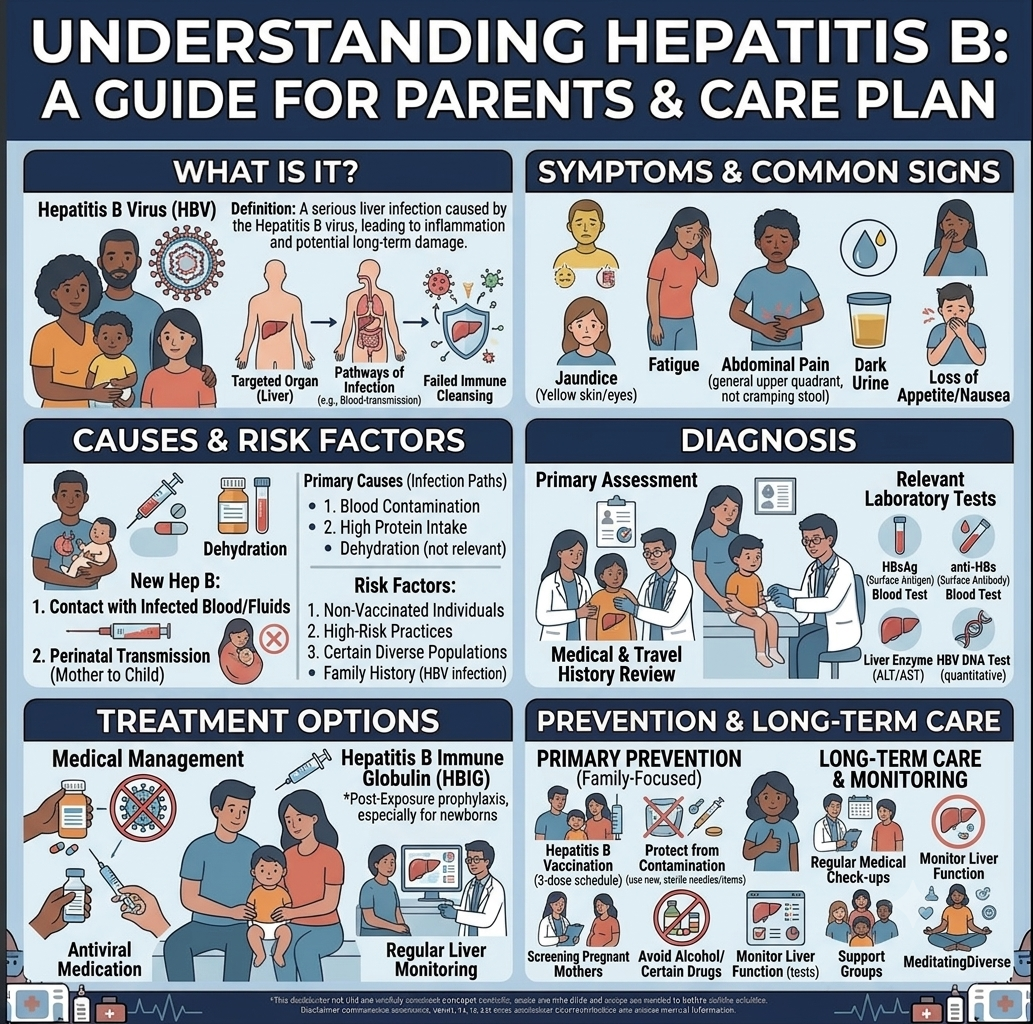
Hepatitis B is a serious liver infection caused by the Hepatitis B virus (HBV). For most adults, it's a short-term (acute) illness from which they recover fully within six months. However, for others, particularly infants and young children, it becomes a long-lasting (chronic) infection. Chronic Hepatitis B significantly increases the risk of severe liver damage, including scarring (cirrhosis), liver failure, and liver cancer. A highly effective vaccine can prevent HBV infection. Treatment varies based on whether the infection is acute or chronic, with some requiring medication and others potentially needing a liver transplant in severe cases. Taking precautions can prevent the virus's spread.
Understanding the Condition
Common Symptoms
Abdominal Pain: Discomfort or pain in the stomach area.
Dark Urine: Urine that appears unusually dark or tea-colored.
Joint Pain: Aches or soreness in the joints.
Loss of Appetite: A reduced desire to eat.
Nausea and Vomiting: Upset stomach and throwing up.
Weakness and Extreme Tiredness: Feeling unusually weak and profoundly fatigued.
Jaundice: Yellowing of the skin and the whites of the eyes, which can be harder or easier to see depending on skin tone. Symptoms typically appear 1 to 4 months after infection but can be as early as two weeks. Many, especially young children, may have no symptoms at all.
Consultation Guide
Which Specialist to Meet
A general healthcare provider is your first point of contact. For chronic infections or significant liver damage, a liver specialist (hepatologist) is recommended for specialized care.
Preparations Before Your Visit
Supportive Care (Acute Hepatitis B): For short-term (acute) hepatitis B, treatment focuses on managing symptoms and ensuring adequate rest, nutrition, and hydration as the body naturally fights off the infection. Most adults recover fully without specific antiviral drugs. (Duration: Typically less than six months, with symptoms resolving over this period.)
Consultation Guide
Hepatitis B is a serious liver infection caused by the Hepatitis B virus (HBV). For most adults, it's a short-term (acute) illness from which they recover fully within six months. However, for others, particularly infants and young children, it becomes a long-lasting (chronic) infection. Chronic Hepatitis B significantly increases the risk of severe liver damage, including scarring (cirrhosis), liver failure, and liver cancer. A highly effective vaccine can prevent HBV infection. Treatment varies based on whether the infection is acute or chronic, with some requiring medication and others potentially needing a liver transplant in severe cases. Taking precautions can prevent the virus's spread.
Diagnostic Procedures
Hepatitis B: Understanding, Diagnosis, Treatment, and Prevention
Understanding the Condition
If you suspect exposure to the hepatitis B virus, contact your healthcare provider immediately; preventive treatment within 24 hours can significantly reduce infection risk. If pregnant or planning pregnancy, discuss HBV testing with your doctor. If starting medications that weaken the immune system (e.g., for chemotherapy), get tested for HBV and consult a hepatologist if positive before beginning treatment.
Book a doctor visit near me
Liver Function Tests (LFTs)
These are a group of blood tests that check the health of your liver by measuring levels of certain enzymes and proteins. Irregular results can suggest liver disease or damage.
What to Expect
A healthcare professional will draw a small sample of blood, usually from a vein in your arm. The process is quick and may involve a brief pinch or sting.
Alanine Aminotransferase (ALT) Blood Test
Checks for liver cell irritation or damage. ALT is an enzyme found mainly in the liver; elevated levels in the blood suggest liver cell problems.
What to Expect
A small blood sample will be drawn from your arm by a healthcare professional.
Aspartate Aminotransferase (AST) Blood Test
Also checks for liver damage. AST is an enzyme found predominantly in the liver, heart, and muscles; elevated levels can indicate damage to these tissues.
What to Expect
Similar to an ALT test, a small blood sample will be drawn from your arm.
Alkaline Phosphatase (ALP) Blood Test
Checks bone and liver health. ALP is an enzyme made mostly in the liver and bones; high levels can indicate issues in these areas.
What to Expect
A healthcare professional will take a small blood sample from your arm.
Hepatitis B Virus (HBV) Blood Tests
Specific tests to detect the presence of the hepatitis B virus itself, its antibodies, and how active the infection is. These confirm infection and help monitor its progression.
What to Expect
A healthcare professional will draw a small sample of blood from your arm.
A procedure to remove a tiny sample of liver tissue for microscopic examination in a lab. It helps to diagnose liver damage or disease and assess its severity, guiding treatment decisions.
What to Expect
You'll receive local anesthesia to numb the area, and sometimes a mild sedative. A thin needle is inserted through your skin into your liver to collect a tissue sample. You might feel pressure or a dull ache. The procedure usually takes 15-30 minutes, followed by a period of observation.
MELD (Model for End-Stage Liver Disease) Score
A scoring system for people aged 12 and older with liver disease, ranging from 6 to 40. It assesses how urgently someone needs a liver transplant within the next three months, with higher scores indicating greater urgency.
What to Expect
This is a calculation based on specific blood test results (bilirubin, creatinine, INR) and does not involve a separate procedure. Your doctor will use your lab results to determine your score.
Protecting Others if Infected: If you are infected, inform your sexual partners and household contacts so they can get tested and vaccinated. Take precautions to prevent the spread of the virus through blood and body fluid exposure.
Treatment Options
Medications
Antiviral Medications (Chronic Hepatitis B): For long-term (chronic) hepatitis B, specific antiviral drugs are used to slow down the virus's reproduction, reduce liver inflammation, and prevent serious complications like cirrhosis and liver cancer. These medications do not cure the infection but help manage it. (Duration: Often long-term, potentially for many years or life, depending on the individual's response and liver health.)
Surgical Procedures
Liver Transplant (Severe Chronic Hepatitis B): In cases of severe chronic hepatitis B leading to irreversible liver failure or liver cancer where other treatments are ineffective, a liver transplant may be necessary. This involves surgically replacing the diseased liver with a healthy liver from a deceased or living donor. (Duration: A complex surgery requiring a hospital stay, followed by lifelong follow-up care, including immunosuppressant medications to prevent rejection.)
Adherence to Treatment: If prescribed antiviral medications, take them consistently as directed by your doctor to control the virus, reduce liver damage, and prevent disease progression.
Manage Immune-Weakening Medications: If you have chronic HBV and need medications that suppress the immune system (e.g., for chemotherapy or autoimmune conditions), inform your doctor. You may need specific monitoring or antiviral treatment to prevent HBV reactivation.
Avoid Alcohol and Liver Toxins: Minimize alcohol consumption and avoid other substances known to harm the liver to reduce further stress on the organ, especially if you have existing liver damage.
Prevention & Long-Term Wellbeing
Prevention
Hepatitis B Vaccination: The most effective way to prevent hepatitis B is through vaccination. The vaccine is typically given in a series of shots over several months. It is recommended for all infants at birth, children, adolescents, and adults up to age 59, and for older adults at high risk of exposure.
Practice Safe Sex: Use condoms consistently and correctly, especially when having sex with new partners or someone infected with HBV, to prevent transmission through body fluids.
Avoid Sharing Needles: Never share needles, syringes, or any other drug injection equipment, as HBV spreads easily through contaminated blood.
Do Not Share Personal Items: Avoid sharing personal items like razors, toothbrushes, or nail clippers that might carry traces of blood.
Prevent Perinatal Transmission: Pregnant individuals with HBV can pass the virus to their babies during childbirth. Newborns of infected mothers should receive the hepatitis B vaccine and an antibody shot at birth to prevent infection.
Follow Occupational Safety Guidelines: Healthcare workers and others exposed to human blood should follow universal precautions, including wearing protective equipment and safe needle handling practices.
Long-Term Monitoring and Management
Regular Medical Check-ups: For individuals with chronic hepatitis B, regular visits to a healthcare provider, often a liver specialist, are essential to monitor liver health, assess virus activity, and manage potential complications.
Tags & Topics
Notice an error or need an update?
Help us keep medical information accurate. Report incorrect info or suggest an edit.


