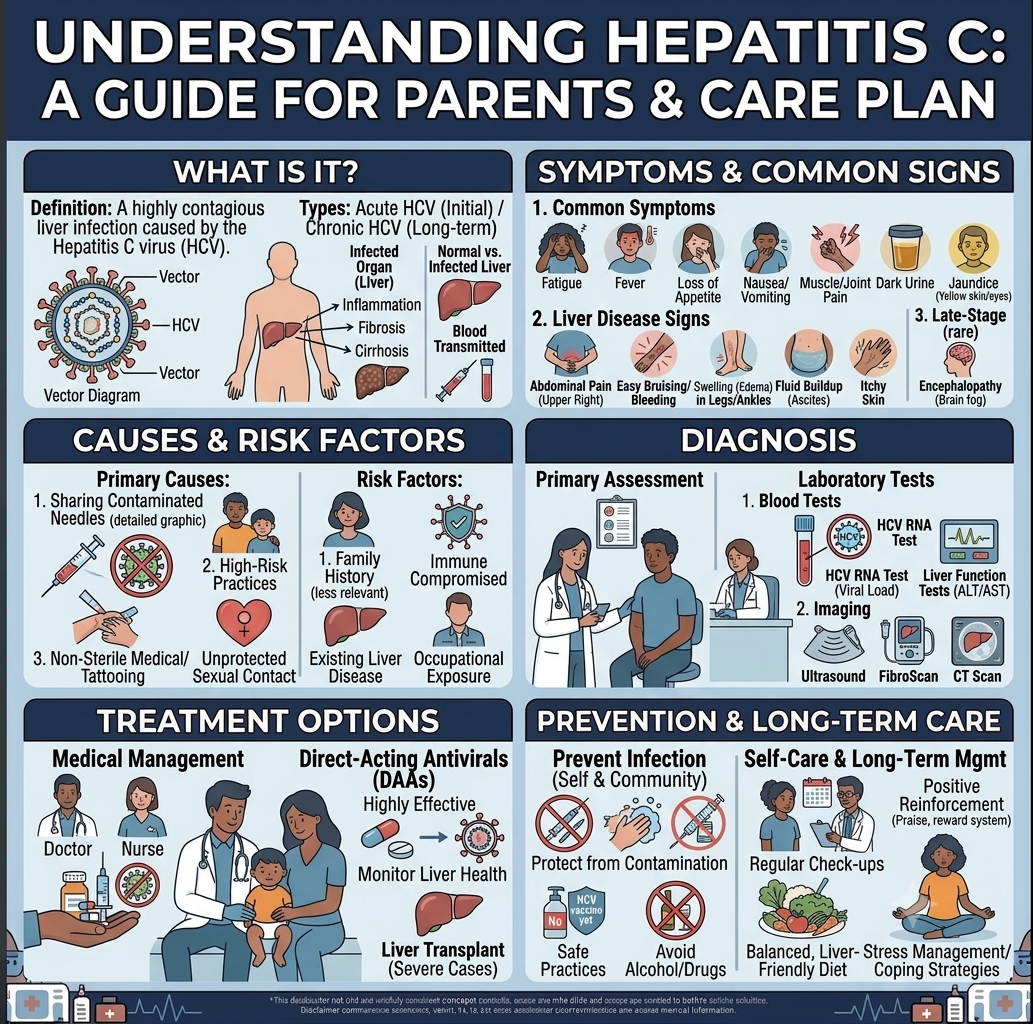
Hepatitis C is a viral infection that causes swelling and damage to the liver. This can lead to serious, long-term health problems if left untreated. The hepatitis C virus (HCV) spreads when infected blood enters the bloodstream of another person. Many individuals with hepatitis C don't realize they have it, as symptoms often develop slowly over many years, even decades. Therefore, medical guidelines recommend screening all adults aged 18 to 79 for hepatitis C. Fortunately, highly effective antiviral medications can often cure chronic hepatitis C once diagnosed.
Understanding the Condition
Hepatitis C is a viral infection that causes swelling and damage to the liver. This can lead to serious, long-term health problems if left untreated. The hepatitis C virus (HCV) spreads when infected blood enters the bloodstream of another person. Many individuals with hepatitis C don't realize they have it, as symptoms often develop slowly over many years, even decades. Therefore, medical guidelines recommend screening all adults aged 18 to 79 for hepatitis C. Fortunately, highly effective antiviral medications can often cure chronic hepatitis C once diagnosed.
Common Symptoms
Acute Phase (Early Stage): The initial infection usually causes no noticeable symptoms, so it's rarely diagnosed at this stage. If symptoms do occur, they are generally mild and temporary: Jaundice (yellowish skin or eyes), Fatigue (unusual tiredness), Nausea (feeling sick to your stomach), Fever (elevated body temperature), Muscle Aches (soreness in muscles).
Chronic Phase (Long-Term Stage): This long-term infection typically has no symptoms for many years. Signs only appear once the virus has caused significant liver damage. These indicate advanced liver issues: Easy Bleeding/Bruising (skin shows bruises or bleeds easily), Poor Appetite (lack of desire to eat), Jaundice (yellowing of the skin and whites of the eyes), Dark Urine (unusually dark-colored urine), Itchy Skin (persistent, unexplained itching), Fluid Buildup (Ascites - swelling in the belly from fluid), Leg Swelling (swelling in the ankles and legs), Weight Loss (unexplained decrease in body weight), Confusion/Speech Changes (Hepatic Encephalopathy - difficulty thinking, drowsiness, or slurred speech due to toxin buildup), Spider-Like Blood Vessels (Spider Angiomas - small, red, web-like blood vessels visible on the skin).
Consultation Guide
Which Specialist to Meet
Before your appointment, list all your symptoms, including their onset and frequency. Compile a complete list of your current and past medications, supplements, and any illicit drug use. Be prepared to discuss your medical history, including any potential exposures to blood, previous tattoos, piercings, or surgeries. Note down any questions you have for your doctor.
Book a doctor visit near me
Get Screened: All adults aged 18 to 79 should be screened for hepatitis C, even without symptoms, for early detection.
Long-Term Wellbeing and Monitoring
Monitor for Complications: Be vigilant for any new or worsening symptoms that could indicate liver complications like cirrhosis or liver cancer, and report them to your healthcare provider immediately.
Consultation Guide
A healthcare professional will draw a small blood sample, usually from a vein in your arm. The process is quick and causes minimal discomfort.
Liver Transplant: For individuals with severe, irreversible liver damage (such as advanced cirrhosis, liver failure, or liver cancer) caused by hepatitis C, a liver transplant may be the only viable treatment option. This surgery replaces the diseased liver with a healthy one, either from a deceased donor or a portion from a living donor. (Duration: The surgery is a complex, multi-hour procedure, followed by an intensive recovery period in the hospital and at home. Lifelong immunosuppressant medications are necessary to prevent rejection of the new organ.)
Diagnostic Procedures
Hepatitis C: Understanding, Diagnosis, and Care
Understanding the Condition
Begin by discussing concerns with your primary healthcare provider. If diagnosed or suspected of having hepatitis C, you will typically be referred to a liver specialist (hepatologist) or a gastrointestinal specialist for further evaluation and treatment.
Preparations Before Your Visit
Hepatitis C Antibody Test (HCV Ab Test)
A blood test that detects antibodies produced by your body in response to HCV exposure. A positive result indicates past or present infection but doesn't confirm an active, ongoing infection.
What to Expect
Hepatitis C RNA Test (HCV Viral Load)
If the antibody test is positive, this blood test directly measures the amount of active hepatitis C virus (RNA) in your bloodstream. It confirms a current infection and helps identify the viral type (genotype), which can inform treatment choices.
What to Expect
This is a standard blood draw, similar to the antibody test, performed by taking a sample from your arm.
Liver Enzyme Blood Tests (ALT, AST, ALP)
A panel of blood tests that measure the levels of specific enzymes, such as Alanine Aminotransferase (ALT), Aspartate Aminotransferase (AST), and Alkaline Phosphatase (ALP). Elevated levels often indicate irritation, inflammation, or damage to liver cells.
What to Expect
A small blood sample will be drawn from a vein in your arm, typically as part of a routine blood workup.
A medical procedure where a tiny piece of liver tissue is removed and examined under a microscope. This helps diagnose the specific liver disease, determine the extent of damage (e.g., scarring or inflammation), and guide treatment plans.
What to Expect
Under local anesthesia (and sometimes sedation), a thin needle is inserted through the skin, typically into the abdomen, to reach the liver and collect a tissue sample. You will need to remain still and may be asked to hold your breath briefly. Potential risks include localized pain and bleeding.
MELD Score (Model for End-Stage Liver Disease)
A numerical score (ranging from 6 to 40) used for individuals aged 12 and older with liver disease. It helps healthcare providers assess the severity of liver disease and prioritize patients for liver transplantation based on their risk of dying while waiting. Higher scores indicate greater urgency.
What to Expect
There is no specific procedure for the MELD score itself. It is a calculation derived from results of routine blood tests (bilirubin, INR, and creatinine) that you would have already had as part of your liver disease evaluation.
Treatment Options
Medications
Direct-Acting Antiviral Therapy: These oral medications are highly effective at targeting and eliminating the hepatitis C virus from the body, often leading to a complete cure. (Duration: Typically 8 to 12 weeks, though the exact length can vary based on the specific viral type, prior treatment history, and the degree of liver damage.)
Surgical Procedures
Regular Medical Follow-ups: Maintain consistent appointments with your liver specialist for ongoing monitoring and management, even after successful treatment for hepatitis C.
Abstain from Alcohol: It is strongly recommended to avoid alcohol, particularly if you have a history of hepatitis C or any existing liver concerns, as it can worsen liver damage and increase complication risks.
Prevention & Long-Term Wellbeing
Prevention
Avoid Injecting Drugs: Never share or reuse needles or syringes. If you use illegal drugs, seek help to stop.
Safe Body Art: Choose licensed tattoo and piercing parlors that follow strict sterilization protocols. Always ensure new, sterile needles are used.
Practice Safer Sex: While sexual transmission risk is low in stable relationships, it increases with multiple partners or in situations involving blood contact during sex. Using condoms can reduce this risk.
Do Not Share Personal Items: Avoid sharing razors, toothbrushes, nail clippers, or other personal items that might carry traces of blood.
Healthy Lifestyle: Discuss strategies with your doctor to support overall liver health, including a balanced diet and maintaining a healthy weight.
Tags & Topics
Notice an error or need an update?
Help us keep medical information accurate. Report incorrect info or suggest an edit.


