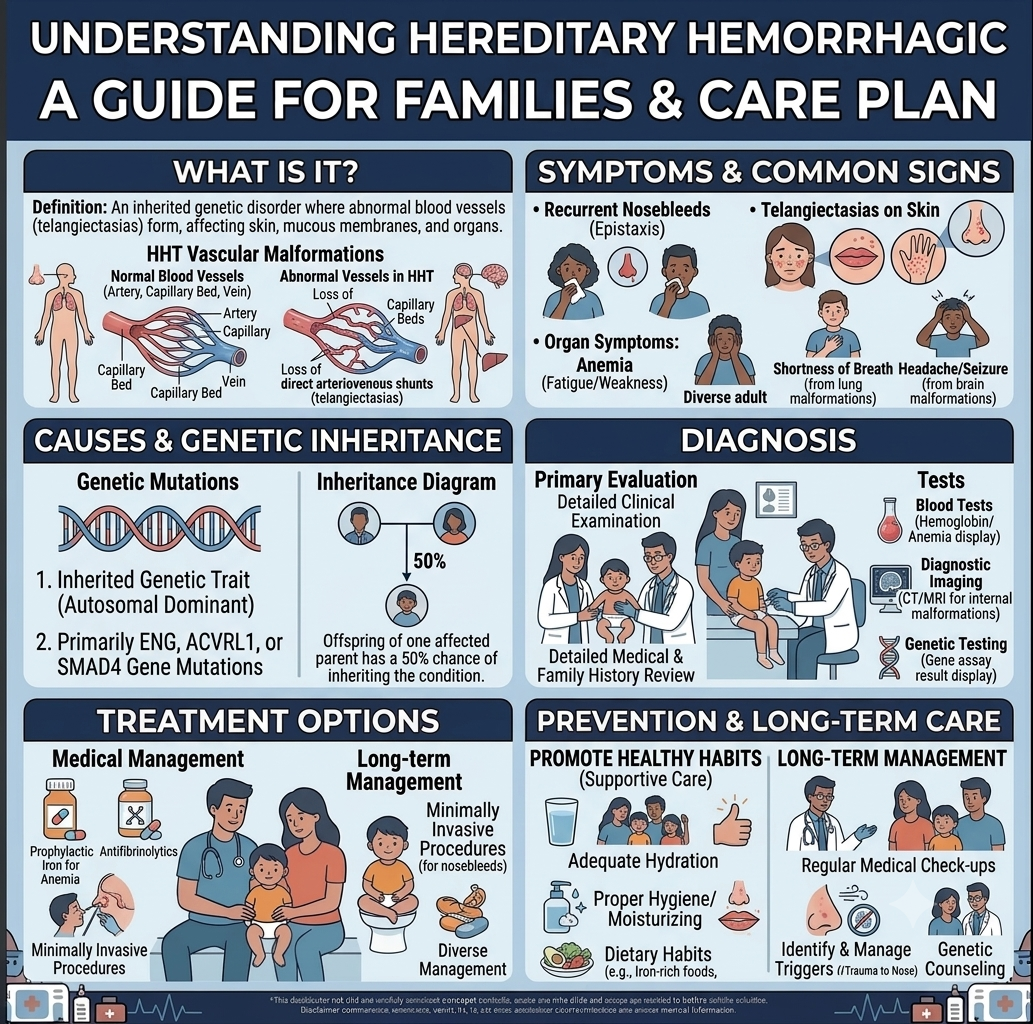
Hereditary Hemorrhagic Telangiectasia (HHT), also known as Osler-Weber-Rendu disease, is a rare genetic disorder affecting blood vessel formation. It causes fragile blood vessels, called telangiectasias, that bleed easily, especially in the nose, mouth, and gastrointestinal tract. More seriously, it can lead to abnormal connections between arteries and veins, called arteriovenous malformations (AVMs), in vital organs like the lungs, brain, liver, and spinal cord. These AVMs can cause serious health problems if they rupture or interfere with organ function. Because HHT is inherited, family members should also be screened.
Understanding the Condition
Hereditary Hemorrhagic Telangiectasia (HHT): Understanding a Genetic Blood Vessel Disorder
Understanding the Condition
Common Symptoms
Frequent Nosebleeds: Recurrent, sometimes severe, nosebleeds are the most common symptom, often starting in childhood. These can lead to significant blood loss and anemia.
Red Spots on Skin and Mucus Membranes: Small, red or purple spots (telangiectasias) may appear on the lips, tongue, inside of the nose, fingertips, and face. These fragile blood vessels can bleed.
Brain Arteriovenous Malformations (AVMs): AVMs in the brain can cause headaches, seizures, stroke-like symptoms, or bleeding within the brain, which can be life-threatening.
Liver Arteriovenous Malformations (AVMs): AVMs in the liver may cause symptoms such as shortness of breath, abdominal pain, or, in severe cases, heart failure or other liver problems.
Before your visit, prepare a detailed family medical history, noting any relatives with similar symptoms or diagnosed HHT. List all your symptoms, when they started, and how often they occur. Bring a list of any medications and supplements you are currently taking, and write down any questions you have for the doctor.
Book a doctor visit near me
Your doctor will ask about symptoms, family history of HHT, and look for characteristic signs like recurrent nosebleeds and red spots on skin/mucous membranes.
Regular Screenings for AVMs: Crucial for early detection and treatment of potentially dangerous AVMs in lungs, brain, and liver, even without symptoms.
Protect Nasal Passages: Avoid picking, vigorous blowing, and trauma to the nose. Use humidifiers in dry environments to prevent nosebleeds.
Inform All Healthcare Providers: Ensure all doctors, including dentists, know about your HHT to take necessary precautions.
Consistent Medical Follow-Up: Regular visits with your HHT specialist team to monitor the condition, manage symptoms, and screen for new AVMs.
Consultation Guide
Hereditary Hemorrhagic Telangiectasia (HHT), also known as Osler-Weber-Rendu disease, is a rare genetic disorder affecting blood vessel formation. It causes fragile blood vessels, called telangiectasias, that bleed easily, especially in the nose, mouth, and gastrointestinal tract. More seriously, it can lead to abnormal connections between arteries and veins, called arteriovenous malformations (AVMs), in vital organs like the lungs, brain, liver, and spinal cord. These AVMs can cause serious health problems if they rupture or interfere with organ function. Because HHT is inherited, family members should also be screened.
Bleeding in the Gut (Gastrointestinal Tract): Fragile blood vessels in the stomach or intestines can cause internal bleeding, leading to dark stools or blood in stool, and often chronic iron deficiency anemia.
Lung Arteriovenous Malformations (AVMs): Abnormal blood vessel connections in the lungs can cause shortness of breath, coughing up blood, fatigue, or lead to stroke or brain abscess due to clots bypassing the lungs' filtering system.
Spinal Cord Arteriovenous Malformations (AVMs): Less common, AVMs in the spinal cord can cause numbness, weakness, or paralysis, affecting movement and sensation.
Consultation Guide
Which Specialist to Meet
Checks for anemia (low red blood cell count), often caused by chronic bleeding in HHT.
Used to find AVMs in the liver, which can affect heart function or cause discomfort.
Iron Supplements: Replenishes iron stores to treat anemia caused by chronic bleeding, reducing fatigue. (Duration: Ongoing, as needed to maintain iron levels.)
Diagnostic Procedures
You may need to consult with a team of specialists, including an Ear, Nose, and Throat (ENT) doctor for nosebleeds, a lung specialist (pulmonologist), a brain and nervous system specialist (neurologist), a heart specialist (cardiologist), a stomach and intestine specialist (gastroenterologist), and a geneticist to confirm the diagnosis and provide family counseling.
Preparations Before Your Visit
Medical History and Physical Exam
What to Expect
A quick, painless examination of your skin, mouth, and nose, alongside listening to your heart and lungs.
This test identifies specific gene mutations responsible for HHT, confirming the diagnosis.
What to Expect
A small blood or saliva sample is collected (standard blood draw or cheek swab). Results typically take several weeks.
What to Expect
A quick blood draw from a vein in your arm.
Imaging for Lung AVMs (CT Scan or Bubble Echocardiogram)
Detects abnormal blood vessel connections in the lungs that can lead to serious complications like stroke.
What to Expect
CT Scan: You lie on a table inside a large scanner, holding your breath briefly. Contrast dye may be injected. Painless but noisy. Bubble Echocardiogram: Gel is applied to your chest; a transducer is used. Saline with tiny bubbles is injected into your arm vein. The doctor observes if bubbles cross into the heart's left side, indicating a lung AVM.
Brain MRI (Magnetic Resonance Imaging)
Creates detailed images of the brain to identify AVMs, preventing strokes or bleeding.
What to Expect
Lie still on a table inside a tunnel-like machine. It's noisy, so ear protection is provided. Can take 30-60 minutes.
Abdominal Imaging (CT, MRI, or Ultrasound)
What to Expect
Similar to chest CT/MRI, or for ultrasound, gel is applied to your abdomen and a device is moved over the skin. Generally painless.
Endoscopy or Colonoscopy
For suspected gastrointestinal bleeding, a flexible tube with a camera visualizes the digestive tract to find bleeding sites.
What to Expect
You will be sedated. The scope is inserted orally (endoscopy) or rectally (colonoscopy). You won't feel pain or remember the procedure. You'll need a ride home.
Treatment Options
Nasal Saline Sprays and Humidifiers: Keeping nasal passages moist reduces nosebleed frequency by preventing dryness and irritation. (Duration: Ongoing, daily use.)
Medications
Bleeding-Reducing Medications: Medications that strengthen blood vessels or improve clotting, decreasing nosebleeds and gut bleeding. (Duration: Ongoing, as prescribed.)
Embolization for AVMs: Blocks abnormal blood vessels (AVMs) in organs like lungs or brain by injecting a sealing substance through a thin tube. (Duration: Typically a one-time procedure per AVM; follow-up may be needed.)
Laser or Cautery Treatment: Uses laser or heat to seal off fragile blood vessels causing nosebleeds or visible skin lesions. (Duration: As needed, short sessions with potential for repeat treatments.)
Therapies
Blood Transfusions: Replenishes blood cells for severe or acute anemia resulting from significant blood loss. (Duration: Short-term, as needed.)
Surgical Procedures
Surgical Removal of AVMs: Direct surgical removal of large or high-risk AVMs, particularly in the brain or spinal cord. (Duration: Typically a one-time procedure.)
Anemia Management: Continuously monitor and manage blood iron levels through supplementation or other treatments to maintain health.
Prevention & Long-Term Wellbeing
Prevention
Lifestyle Adjustments
Maintain Hydration and Gentle Nasal Care: Stay well-hydrated and use saline nasal sprays/gels to keep nasal passages moist, reducing bleeding.
Tags & Topics
Notice an error or need an update?
Help us keep medical information accurate. Report incorrect info or suggest an edit.


